
Last Updated: September 7, 2026
Table of Contents
- Quick Answer: Can Indian Students Study MBBS in Europe in 2026?
- Why Study Medicine (MBBS) in Europe? Key Advantages for Indian Students
- Top European Countries for MBBS (Medicine) — Detailed Country-by-Country Breakdown
- Top 20 NMC-Recognized Medical Universities in Europe for Indian Students (2026)
- MBBS vs MD in Europe — Understanding the Terminology Difference
- NEET Requirements & Eligibility for Studying MBBS in Europe (2026)
- Tuition Fees Comparison: 20 European Medical Universities vs Indian Private Colleges (2026)
- Scholarships & Financial Aid for Indian Medical Students in Europe (2026)
- NMC Screening Test / FMGE / NExT Exam: What Indian Medical Graduates from Europe Must Know
- Student Visa Process & Required Documents for Studying Medicine in Europe
- 10 Common Mistakes Indian Students Make When Choosing to Study Medicine in Europe
- 10 Expert Tips for Indian Students Planning MBBS in Europe — From Saumitra Rajput, Founder, Kadamb Overseas (Ahmedabad)
- Frequently Asked Questions (FAQs): MBBS in Europe for Indian Students 2026
- Key Takeaways: Study Medicine (MBBS) in Europe for Indian Students 2026
- Ready to Start Your Medical Journey in Europe? Contact Kadamb Overseas Today!
🕑 23 min read
Last Updated: March 2026 | Dreaming of becoming a doctor but worried about the fierce competition in Indian medical colleges? Every year, over 20 lakh students appear for NEET, yet only a fraction secure seats in government medical colleges. The good news? Studying Medicine (MBBS) in Europe has emerged as a life-changing pathway for Indian students in 2026. European medical universities offer NMC-recognized, WHO-listed MBBS/MD programs taught in English, with tuition fees often 60-80% lower than private medical colleges in India. Countries like Germany, Italy, Hungary, Poland, Czech Republic, Romania, Bulgaria, and Georgia welcome Indian students with world-class infrastructure, clinical training in top hospitals, and degrees valid across 50+ countries. This comprehensive guide by Kadamb Overseas, Ahmedabad covers everything you need to know — from country comparisons, NMC-recognized universities, fees in EUR and INR, NEET eligibility, scholarships, visa process, FMGE preparation, and expert tips to help you make the smartest decision for your medical career in 2026.
Quick Answer: Can Indian Students Study MBBS in Europe in 2026?
Yes, absolutely! Indian students can pursue a 5-6 year English-taught Medicine (MBBS/MD) program in multiple European countries. Here is a snapshot:
| Parameter | Details for 2026 |
|---|---|
| Degree Name | MD (equivalent to Indian MBBS) |
| Duration | 5 to 6 years (including clinical rotations) |
| Medium of Instruction | English (in most programs listed below) |
| Annual Tuition Range | €0 – €18,000/year (approx. €0 – INR 16.5 lakh/year) |
| NEET Requirement | NEET qualification mandatory (NMC rule since 2018) |
| NMC/WHO Recognition | Many universities are NMC-recognized & WHO-listed |
| Return to India | Must pass FMGE/NExT exam to practice in India |
| Top Countries | Germany, Italy, Poland, Hungary, Czech Republic, Romania, Bulgaria, Georgia |
*Exchange rate used: 1 EUR ≈ INR 92 (March 2026 approximate). Actual rates may vary.
Why Study Medicine (MBBS) in Europe? Key Advantages for Indian Students
Europe has become the most sought-after destination for Indian medical aspirants, and for very good reason. Let us break down the core advantages that make studying medicine in Europe a smart, strategic decision in 2026.
| Advantage | Details |
|---|---|
| NMC & WHO Recognition | Dozens of European medical universities are listed in the NMC (National Medical Commission) approved list and the WHO World Directory of Medical Schools, ensuring your degree is valid for practice in India after clearing FMGE/NExT. |
| Affordable Tuition Fees | Many European countries offer tuition from €0 (Germany public universities) to €8,000–€16,000/year — far cheaper than Indian private medical colleges charging INR 15–75 lakh/year. |
| English-Taught Programs | Countries like Hungary, Poland, Czech Republic, Romania, and Bulgaria offer complete 6-year MD programs entirely in English — no local language proficiency needed at admission. |
| No Donation / Capitation | European admissions are strictly merit-based. There is zero donation or capitation fee culture, unlike many private colleges in India. |
| World-Class Clinical Training | Students train in advanced university hospitals with cutting-edge technology, gaining hands-on experience from the 3rd or 4th year. |
| Global Degree Validity | A European medical degree (MD) is recognized across the EU, UK, USA, Canada, Australia, and Middle East — opening doors to a truly global medical career. |
| Safe & Multicultural Environment | Europe ranks among the safest continents. Universities have strong international student support systems, Indian communities, and vegetarian food availability. |
| Schengen Visa Travel | A student visa in any Schengen country allows you to travel across 27 European nations freely — a massive personal and professional exposure benefit. |
| Part-Time Work Allowed | Most European countries allow medical students to work 20 hours/week during semesters, helping offset living expenses. |
| Post-Study Residency Options | After graduation, many countries offer pathways to medical residency (specialization) within Europe itself, with stipends of €2,000–€5,000/month. |
“Studying medicine in Europe is no longer an alternative — it is a mainstream, strategic choice. Indian students gain NMC-recognized degrees, world-class clinical exposure, and global career mobility at a fraction of the cost of Indian private colleges.”
— Saumitra Rajput, Founder, Kadamb Overseas (Ahmedabad)
Top European Countries for MBBS (Medicine) — Detailed Country-by-Country Breakdown
Not all European countries are the same when it comes to medical education for international students. Below is a detailed comparison of the top 8 countries Indian students should consider in 2026.
| Country | Duration | Tuition/Year (EUR) | Tuition/Year (INR) | Language | Living Cost/Month | NMC Status | Key Highlights |
|---|---|---|---|---|---|---|---|
| Germany | 6 years | €0 – €1,500 | INR 0 – 1.38L | German (mostly); some English pre-clinical | €850–€1,100 (INR 78K–1.01L) | Recognized | Tuition-free at public universities; requires Studienkolleg or DSH; top research infrastructure |
| Italy | 6 years | €500 – €4,000 | INR 0.46L – 3.68L | English (IMAT pathway) | €700–€1,000 (INR 64K–92K) | Recognized | English-taught IMAT programs; very low tuition at public universities; IMAT entrance exam required |
| Hungary | 6 years | €14,000 – €18,200 | INR 12.88L – 16.74L | English | €500–€750 (INR 46K–69K) | Recognized | Pioneer in English-medium medicine for internationals; Semmelweis, Szeged, Pecs — all globally ranked |
| Poland | 6 years | €10,000 – €15,000 | INR 9.2L – 13.8L | English | €450–€700 (INR 41K–64K) | Recognized | 13+ English-medium medical schools; affordable living; strong clinical training; EU member |
| Czech Republic | 6 years | €10,000 – €15,500 | INR 9.2L – 14.26L | English | €500–€800 (INR 46K–74K) | Recognized | Charles University (est. 1348) among world’s oldest; rigorous entrance exam; excellent labs |
| Romania | 6 years | €5,000 – €7,500 | INR 4.6L – 6.9L | English | €350–€550 (INR 32K–51K) | Recognized | Most affordable EU option; growing Indian community; EU-recognized degree; simple admission |
| Bulgaria | 6 years | €7,000 – €9,000 | INR 6.44L – 8.28L | English | €350–€500 (INR 32K–46K) | Recognized | Very low living costs; Medical University Sofia & Plovdiv popular; EU member state |
| Georgia | 6 years | €4,000 – €8,000 | INR 3.68L – 7.36L | English | €300–€450 (INR 28K–41K) | Recognized (select) | Lowest overall cost; NMC-recognized universities like Tbilisi State; strong Indian student base |
“Germany and Italy offer near-zero tuition, while Hungary and Poland provide the best English-medium clinical programs. Romania and Bulgaria are ideal for families on a tighter budget. The key is matching your priorities — language, budget, and career goals — to the right country.”
— Saumitra Rajput, Founder, Kadamb Overseas (Ahmedabad)
Top 20 NMC-Recognized Medical Universities in Europe for Indian Students (2026)
Choosing the right university is the most critical decision. Below is a curated list of 20 NMC-recognized, WHO-listed medical universities in Europe that offer English-medium programs and are popular among Indian students.
| # | University | Country | Duration | Tuition/Year (EUR) | Tuition/Year (INR) | Language | NMC |
|---|---|---|---|---|---|---|---|
| 1 | Semmelweis University | Hungary | 6 years | €18,200 | INR 16.74L | English | ✓ Yes |
| 2 | University of Szeged | Hungary | 6 years | €15,800 | INR 14.54L | English | ✓ Yes |
| 3 | University of Pecs | Hungary | 6 years | €15,200 | INR 13.98L | English | ✓ Yes |
| 4 | University of Debrecen | Hungary | 6 years | €16,500 | INR 15.18L | English | ✓ Yes |
| 5 | Charles University, Prague | Czech Republic | 6 years | €14,500 | INR 13.34L | English | ✓ Yes |
| 6 | Masaryk University, Brno | Czech Republic | 6 years | €12,200 | INR 11.22L | English | ✓ Yes |
| 7 | Jagiellonian University, Krakow | Poland | 6 years | €13,500 | INR 12.42L | English | ✓ Yes |
| 8 | Medical University of Warsaw | Poland | 6 years | €12,800 | INR 11.78L | English | ✓ Yes |
| 9 | Medical University of Lodz | Poland | 6 years | €11,000 | INR 10.12L | English | ✓ Yes |
| 10 | Medical University of Gdansk | Poland | 6 years | €12,000 | INR 11.04L | English | ✓ Yes |
| 11 | Sapienza University of Rome | Italy | 6 years | €2,500 | INR 2.3L | English (IMAT) | ✓ Yes |
| 12 | University of Milan | Italy | 6 years | €3,500 | INR 3.22L | English (IMAT) | ✓ Yes |
| 13 | University of Bologna | Italy | 6 years | €2,800 | INR 2.58L | English (IMAT) | ✓ Yes |
| 14 | Carol Davila University, Bucharest | Romania | 6 years | €6,000 | INR 5.52L | English | ✓ Yes |
| 15 | Iuliu Hatieganu University, Cluj-Napoca | Romania | 6 years | €7,000 | INR 6.44L | English | ✓ Yes |
| 16 | Medical University of Sofia | Bulgaria | 6 years | €8,000 | INR 7.36L | English | ✓ Yes |
| 17 | Medical University of Plovdiv | Bulgaria | 6 years | €7,500 | INR 6.9L | English | ✓ Yes |
| 18 | Tbilisi State Medical University | Georgia | 6 years | €5,500 | INR 5.06L | English | ✓ Yes |
| 19 | University of Pavia | Italy | 6 years | €3,000 | INR 2.76L | English (IMAT) | ✓ Yes |
| 20 | Palacky University, Olomouc | Czech Republic | 6 years | €11,800 | INR 10.86L | English | ✓ Yes |
*Tuition figures are approximate for the 2026-27 academic year and may vary. Always confirm with the university or your counsellor. INR conversions at 1 EUR ≈ INR 92.
“Italian public universities like Sapienza and Bologna offer medical education at fees lower than most Indian private colleges — sometimes under INR 3 lakh per year. That is extraordinary value for a globally recognized MD degree.”
— Saumitra Rajput, Founder, Kadamb Overseas (Ahmedabad)
MBBS vs MD in Europe — Understanding the Terminology Difference
One of the biggest sources of confusion for Indian students and parents is the degree nomenclature. In India, the undergraduate medical degree is called MBBS (Bachelor of Medicine, Bachelor of Surgery). However, in most European countries, the equivalent undergraduate medical degree is called MD (Doctor of Medicine) or its local equivalent. This does NOT mean it is a postgraduate degree — it is the primary medical qualification.
| Parameter | India | Europe |
|---|---|---|
| Degree Name | MBBS (Bachelor of Medicine & Surgery) | MD (Doctor of Medicine) / MUDr. (Czech, Slovak) |
| Level | Undergraduate (after 12th) | Undergraduate (after 12th — integrated Master’s level) |
| Duration | 5.5 years (4.5 years + 1 year internship) | 6 years (5 years study + 1 year clinical clerkship) |
| Clinical Training | 1 year compulsory rotating internship | Integrated clinical rotations from Year 3–4 onwards |
| Equivalence | Recognized by NMC India | Recognized by NMC India (for listed universities) as equivalent to MBBS |
| Post-Graduation Path | MD/MS (via NEET PG) | Residency / Specialization (via national licensing exam) |
Important Note: When NMC India evaluates a European MD degree, it treats it as equivalent to MBBS. So a student who completes MD from Semmelweis University (Hungary) or Charles University (Czech Republic) holds a qualification equivalent to MBBS for NMC/FMGE purposes. Do not confuse the European “MD” with the Indian postgraduate “MD” (e.g., MD in Internal Medicine). They are entirely different qualifications.
NEET Requirements & Eligibility for Studying MBBS in Europe (2026)
Since 2018, the National Medical Commission (NMC) of India has made it mandatory for all Indian students seeking a medical degree abroad to qualify NEET. Here is a comprehensive breakdown of the eligibility criteria for 2026.
| Eligibility Criterion | Requirement |
|---|---|
| NEET Qualification | Must qualify NEET UG (any year from 2023 onwards accepted by most universities for 2026 intake) |
| NEET Minimum Score | Must score above the NMC qualifying percentile (50th percentile for General; 40th for SC/ST/OBC) |
| Age Requirement | Minimum 17 years by December 31 of the admission year |
| Academic Qualification | 12th pass with Physics, Chemistry, Biology/Biotechnology, and English |
| Minimum Marks in 12th | Minimum 50% aggregate in PCB (40% for SC/ST/OBC); some European universities ask for 60%+ |
| Country-Specific Entrance Exams | Italy requires IMAT; Czech universities have their own entrance test; Hungary has an entrance exam; Poland & Romania accept based on academic profile + NEET |
| Passport | Valid Indian passport (minimum 18 months validity from date of travel) |
| English Proficiency | Some universities require IELTS (6.0–6.5) or TOEFL; many accept English-medium 12th certificate as proof |
| NMC Eligibility Certificate | Must obtain an Eligibility Certificate from NMC before departing India (mandatory since 2021) |
| Financial Proof | Bank statement showing sufficient funds (varies by country: €8,000–€11,000 in blocked account for Germany; varies for others) |
“Many families panic about low NEET scores. But here is the reality: you only need to qualify NEET, not top it. A score of 300-400 in NEET, combined with strong 12th marks, can get you into some of Europe’s finest medical universities. The admission process values your academic profile holistically.”
— Saumitra Rajput, Founder, Kadamb Overseas (Ahmedabad)
Tuition Fees Comparison: 20 European Medical Universities vs Indian Private Colleges (2026)
One of the most powerful reasons to study medicine in Europe is the dramatic cost advantage. Below is a detailed fee comparison showing annual tuition, total program cost, and how it stacks up against a typical Indian private medical college.
| # | University | Country | Annual (EUR) | Annual (INR) | Total 6-Yr (INR) | Indian Private 5.5-Yr (INR) | You Save (INR) |
|---|---|---|---|---|---|---|---|
| 1 | Sapienza University, Rome | Italy | €2,500 | 2.30L | 13.80L | 75.00L | 61.20L |
| 2 | University of Bologna | Italy | €2,800 | 2.58L | 15.46L | 75.00L | 59.54L |
| 3 | University of Pavia | Italy | €3,000 | 2.76L | 16.56L | 75.00L | 58.44L |
| 4 | University of Milan | Italy | €3,500 | 3.22L | 19.32L | 75.00L | 55.68L |
| 5 | Tbilisi State Medical University | Georgia | €5,500 | 5.06L | 30.36L | 75.00L | 44.64L |
| 6 | Carol Davila University, Bucharest | Romania | €6,000 | 5.52L | 33.12L | 75.00L | 41.88L |
| 7 | Iuliu Hatieganu University | Romania | €7,000 | 6.44L | 38.64L | 75.00L | 36.36L |
| 8 | Medical University of Plovdiv | Bulgaria | €7,500 | 6.90L | 41.40L | 75.00L | 33.60L |
| 9 | Medical University of Sofia | Bulgaria | €8,000 | 7.36L | 44.16L | 75.00L | 30.84L |
| 10 | Medical University of Lodz | Poland | €11,000 | 10.12L | 60.72L | 75.00L | 14.28L |
| 11 | Palacky University, Olomouc | Czech Republic | €11,800 | 10.86L | 65.14L | 75.00L | 9.86L |
| 12 | Medical University of Gdansk | Poland | €12,000 | 11.04L | 66.24L | 75.00L | 8.76L |
| 13 | Masaryk University, Brno | Czech Republic | €12,200 | 11.22L | 67.34L | 75.00L | 7.66L |
| 14 | Medical University of Warsaw | Poland | €12,800 | 11.78L | 70.66L | 75.00L | 4.34L |
| 15 | Jagiellonian University, Krakow | Poland | €13,500 | 12.42L | 74.52L | 75.00L | 0.48L |
| 16 | Charles University, Prague | Czech Republic | €14,500 | 13.34L | 80.04L | 75.00L | -5.04L* |
| 17 | University of Pecs | Hungary | €15,200 | 13.98L | 83.90L | 75.00L | -8.90L* |
| 18 | University of Szeged | Hungary | €15,800 | 14.54L | 87.22L | 75.00L | -12.22L* |
| 19 | University of Debrecen | Hungary | €16,500 | 15.18L | 91.08L | 75.00L | -16.08L* |
| 20 | Semmelweis University | Hungary | €18,200 | 16.74L | 100.48L | 75.00L | -25.48L* |
*Universities marked with negative savings are costlier in tuition than Indian private colleges. However, the global recognition, superior clinical training, EU residency pathway, and zero-donation admission still make them excellent value propositions. Many Hungarian/Czech families consider the degree’s global portability worth the premium.
*Indian private college benchmark: INR 75 lakh total (INR 13.6L/year x 5.5 years — mid-range private MBBS in India). Top-tier deemed universities can cost INR 1–2.5 crore.
Scholarships & Financial Aid for Indian Medical Students in Europe (2026)
While tuition fees in Europe are already significantly lower than in India, several scholarship opportunities can further reduce costs. Here is a comprehensive list of scholarships available to Indian students pursuing medicine in Europe.
| Scholarship Name | Country | Value | Eligibility | Application Period |
|---|---|---|---|---|
| Stipendium Hungaricum | Hungary | Full tuition waiver + €130/month stipend + accommodation | Indian citizens; merit-based; bilateral government agreement | Nov–Jan (for Sept intake) |
| DSU/ISEE Fee Reduction (Italy) | Italy | Up to 100% tuition waiver based on family income (ISEE calculation) | All international students with low family income | After enrollment (Oct–Nov) |
| Invest Your Talent in Italy | Italy | €1,000/month stipend + tuition waiver | Indian students; academic excellence | Dec–Mar |
| Erasmus+ Scholarships | EU-wide | €800–€1,100/month + travel grant + tuition | Indian citizens; competitive merit-based selection | Oct–Feb (varies by consortium) |
| Polish Government NAWA Scholarships | Poland | Tuition waiver + PLN 1,500/month (approx. €350) | International students with strong academics | Feb–Apr |
| University-Specific Merit Scholarships | Various | 10–50% tuition reduction | Top-performing students (GPA-based, assessed annually) | During admission or after Year 1 |
| DAAD Scholarships (Germany) | Germany | €934/month + health insurance + travel allowance | Indian graduates; for postgraduate medical studies/research | Oct–Nov |
| Romanian Government Scholarships | Romania | Full tuition waiver + monthly allowance | Non-EU international students; limited seats | Dec–Mar |
| Indian Government Scholarships (MEA) | India-funded | Partial funding / loan interest subsidy | Indian students studying abroad in approved programs | Varies |
| Vidyalakshmi Education Loan Scheme | India-funded | Education loans up to INR 20 lakh at subsidized interest (7.5–9%) | Indian students with confirmed admission abroad | Year-round |
Pro Tip: Italian public universities use the ISEE (Indicatore della Situazione Economica Equivalente) system. Most Indian families fall in the lowest income bracket under ISEE calculation, which means you can get up to 100% tuition waiver at universities like Sapienza, Bologna, and Milan. This effectively makes Italian medical education nearly free for Indian students! Contact Kadamb Overseas for ISEE documentation assistance.
“We have helped students secure Stipendium Hungaricum and Italian ISEE fee waivers that brought their total 6-year medical education cost to under INR 10 lakh. Scholarships are real and achievable — but you need to apply early and with the right documentation.”
— Saumitra Rajput, Founder, Kadamb Overseas (Ahmedabad)
NMC Screening Test / FMGE / NExT Exam: What Indian Medical Graduates from Europe Must Know
If you plan to return to India and practice medicine after completing your MD/MBBS from Europe, you must clear a licensing examination conducted by the National Medical Commission (NMC). Here is everything you need to know about the current and upcoming screening tests.
| Parameter | FMGE (Current) | NExT (Upcoming) |
|---|---|---|
| Full Name | Foreign Medical Graduate Examination | National Exit Test |
| Conducted By | National Board of Examinations (NBE) | National Medical Commission (NMC) |
| Format | 300 MCQs; single-day computer-based test | Step 1 (Theory MCQs) + Step 2 (Clinical/Practical) |
| Passing Criteria | 150/300 marks (50%) | To be announced by NMC |
| Frequency | Twice a year (June & December) | Expected to be held annually |
| Subjects Covered | All 19 subjects of MBBS (Anatomy, Physiology, Biochemistry, Pathology, Pharmacology, Microbiology, Forensic Medicine, Community Medicine, Medicine, Surgery, OBG, Pediatrics, Orthopedics, ENT, Ophthalmology, Dermatology, Psychiatry, Radiology, Anesthesia) | Same subjects + clinical skills assessment |
| Historical Pass Rate | Approximately 15–25% (varies by session) | Expected to have a standardized pass threshold |
| Validity | Permanent registration upon passing | License to practice + PG eligibility |
| Who Must Take It | All Indian citizens with foreign medical degrees | Both Indian and foreign medical graduates |
| Status (2026) | Currently active | Implementation expected 2026–2027; FMGE continues until NExT is fully operational |
FMGE Preparation Strategy for European Medical Graduates:
- Start Early: Begin FMGE prep from Year 4 of your European program, not after returning to India
- Use Indian Resources: Supplement European coursework with Indian textbooks (Robbins Pathology, Harrison’s Medicine, Guyton Physiology) and question banks (Marrow, PrepLadder)
- Clinical Correlation: European clinical training is excellent — leverage it for clinical subject questions
- Mock Tests: Take at least 30–40 full-length mock tests in the 6 months before the exam
- Community Medicine Focus: This is the most India-specific subject — study the Indian healthcare system, national programs, and epidemiology data separately
- Join Study Groups: Connect with fellow Indian students from your university for group study sessions focused on FMGE-pattern questions
“The biggest mistake students make is waiting until after graduation to start FMGE preparation. At Kadamb Overseas, we provide our students with a parallel FMGE coaching plan starting from their 4th year. Our students from Hungary and Poland have achieved FMGE pass rates well above the national average.”
— Saumitra Rajput, Founder, Kadamb Overseas (Ahmedabad)
Student Visa Process & Required Documents for Studying Medicine in Europe
Securing a student visa is a critical step in your journey to study medicine in Europe. While the exact requirements vary by country, here is a comprehensive overview of the general process and a country-wise document checklist.
General Student Visa Process (Step-by-Step)
Step 1: Receive admission/acceptance letter from the European university
Step 2: Pay tuition deposit (if required) and obtain fee receipt
Step 3: Open blocked bank account (Germany) or arrange financial proof (other countries)
Step 4: Obtain NMC Eligibility Certificate from National Medical Commission
Step 5: Gather all documents (see checklist below)
Step 6: Book visa appointment at the respective embassy/VFS center
Step 7: Attend visa interview (some countries require in-person interviews)
Step 8: Receive visa (processing time: 4–12 weeks depending on country)
Complete Document Checklist
| # | Document | Details |
|---|---|---|
| 1 | Valid Passport | Minimum 18 months validity; at least 2 blank pages |
| 2 | University Admission Letter | Official acceptance/enrollment letter from the European university |
| 3 | NEET Scorecard | Valid NEET UG scorecard showing qualifying marks |
| 4 | NMC Eligibility Certificate | Obtained from NMC India portal (mandatory since 2021) |
| 5 | 10th & 12th Marksheets | Original + attested photocopies; apostilled where required |
| 6 | Financial Proof | Bank statement (6 months) / Blocked account (Germany: €11,208) / Scholarship letter / Sponsor affidavit |
| 7 | Health Insurance | Valid travel health insurance covering Europe (minimum €30,000 coverage for Schengen) |
| 8 | Passport-Size Photos | 4–6 recent photos (white background, Schengen format 35x45mm) |
| 9 | Visa Application Form | Completed and signed national visa (Type D) application form |
| 10 | Statement of Purpose / Motivation Letter | Required by some embassies; explains why you chose that university/country |
| 11 | English Proficiency | IELTS/TOEFL certificate (if required) or English-medium education proof |
| 12 | Accommodation Proof | University hostel booking confirmation or rental agreement |
| 13 | Birth Certificate | Apostilled copy (required by some countries) |
| 14 | Tuition Fee Receipt | Proof of first semester/year fee payment (where applicable) |
Country-Specific Note: Germany requires a blocked account (Sperrkonto) of €11,208 as of 2026. Italy requires an income declaration via Italian Embassy. Hungary and Poland are relatively straightforward — bank statements from parents showing €5,000–€8,000 availability are usually sufficient. Kadamb Overseas provides end-to-end visa documentation support for all countries.
10 Common Mistakes Indian Students Make When Choosing to Study Medicine in Europe
Every year, we see students and families fall into predictable traps. Avoid these costly mistakes to ensure your European medical journey is smooth and successful.
| # | Common Mistake | Why It’s Harmful | What to Do Instead |
|---|---|---|---|
| 1 | Choosing a non-NMC-recognized university | Your degree will not be valid for FMGE/NExT; you cannot practice in India | Always cross-check the NMC website and WHO World Directory before finalizing |
| 2 | Ignoring NMC Eligibility Certificate | NMC may not recognize your degree without prior eligibility certificate | Apply for the NMC Eligibility Certificate before departing India |
| 3 | Falling for agents with “guaranteed admission” | Fraudulent agents charge extra fees, send students to unrecognized colleges, or disappear after payment | Work only with verified, experienced counsellors like Kadamb Overseas with a track record of successful placements |
| 4 | Choosing solely based on lowest tuition | The cheapest university may lack clinical infrastructure, have high dropout rates, or poor FMGE results | Evaluate universities holistically: clinical training quality, pass rates, student reviews, faculty, and hospital affiliations |
| 5 | Not preparing for country-specific entrance exams | Italy (IMAT), Czech Republic, and Hungary have competitive entrance exams; failing means losing a year | Start entrance exam preparation 6–8 months before the test date; use official prep materials |
| 6 | Underestimating living costs | Students who budget only for tuition face financial stress and may need to drop out | Budget €400–€1,100/month for living expenses depending on the city/country |
| 7 | Neglecting FMGE preparation during studies | FMGE has a low pass rate (~15–25%); starting prep only after graduation puts you at a severe disadvantage | Begin parallel FMGE preparation from Year 4 using Indian textbooks and question banks |
| 8 | Not learning the local language | Clinical rotations require patient interaction; not speaking the local language limits your learning and residency options | Start learning the local language (Hungarian, Polish, German, etc.) from Year 1 — even basic conversational level helps enormously |
| 9 | Applying too late | Top universities have limited seats for international students; late applications face higher rejection rates | Begin the application process 8–12 months before the intake (i.e., by October–December for September intake) |
| 10 | Confusing European MD with Indian MD | Parents may think their child is doing a “postgraduate” degree in Europe, leading to misplaced expectations | Understand clearly: European MD = Indian MBBS (undergraduate). Indian MD = postgraduate specialization |
10 Expert Tips for Indian Students Planning MBBS in Europe — From Saumitra Rajput, Founder, Kadamb Overseas (Ahmedabad)
With years of experience guiding hundreds of Indian students to European medical universities, here are Saumitra Rajput’s top 10 practical tips for 2026 aspirants.
Tip 1: Verify NMC Recognition First
Before even looking at tuition fees or city photos, check whether the university is listed on the NMC India website AND the WHO World Directory of Medical Schools. This single check can save you 6 years of wasted effort. A beautiful campus means nothing if your degree is not recognized back home.
Tip 2: Apply to 3–4 Universities, Not Just One
Never put all your eggs in one basket. Apply to at least 3–4 universities across 2–3 countries. This gives you options if one application is rejected or delayed. We recommend one “dream” university, one “realistic match,” and one “safety” option.
Tip 3: Budget for the Full 6 Years, Not Just Year 1
Create a complete financial plan covering tuition for all 6 years PLUS living expenses. Factor in annual fee increases (typically 3–5%), currency fluctuations, travel costs for holidays, exam fees, and an emergency fund. A solid financial plan prevents mid-course dropouts.
Tip 4: Start Local Language Learning Before You Arrive
Even if your program is in English, you will need the local language for clinical rotations, daily life, and potential residency. Start with apps like Duolingo 3–4 months before departure. Aim for A1/A2 level by the time you arrive. Universities offer free language courses — take full advantage of them.
Tip 5: Build Your FMGE Preparation Roadmap from Day One
The smartest students I have seen treat their European education AND FMGE preparation as parallel tracks. During your first two pre-clinical years, use Indian anatomy and physiology textbooks alongside European curricula. By Year 4, you should be regularly solving FMGE question banks.
Tip 6: Choose Your Counsellor as Carefully as Your University
Your education counsellor is your partner for 6+ years. Verify their track record: how many students have they placed? What is their students’ FMGE pass rate? Do they provide post-admission support? At Kadamb Overseas, we maintain relationships with our students throughout their program and beyond.
Tip 7: Do Not Ignore Mental Health and Social Support
Living 5,000+ km from home for 6 years is challenging. Choose a university with a strong Indian student community, good international student support services, and access to Indian food. Loneliness and culture shock are real — prepare for them proactively by joining social groups and staying connected with family.
Tip 8: Explore European Residency Options, Not Just Return to India
Many students fixate only on FMGE. But Europe offers excellent residency (specialization) pathways with stipends of €2,000–€5,000/month. Countries like Germany, Poland, and Hungary are actively recruiting doctors. Keep this option open — you may find a fulfilling career in Europe itself.
Tip 9: Get Health Insurance Sorted Before Departure
European countries mandate health insurance for students. Arrange comprehensive health insurance that covers both travel and the academic year. Many universities offer group insurance at discounted rates — ask about this during enrollment. Without proper insurance, your visa can be rejected or residence permit renewal denied.
Tip 10: Start the Process Early — Ideally 12 Months Before Intake
The ideal timeline is: NEET in May → Start applications by June–July → Receive offers by October–December → Visa process January–May → Departure July–August for September intake. Starting late means limited university choices, visa delays, and unnecessary stress. Reach out to Kadamb Overseas as early as possible to secure your spot.
Frequently Asked Questions (FAQs): MBBS in Europe for Indian Students 2026
Q1: Is NEET mandatory for studying MBBS/Medicine in Europe?
Yes. As per NMC India regulations (effective since 2018), every Indian student seeking admission to a medical program abroad must qualify NEET UG. You do not need a high rank — simply qualifying (scoring above the cutoff percentile) is sufficient. Without a valid NEET scorecard, NMC will not issue an Eligibility Certificate, and your foreign degree will not be recognized in India.
Q2: What is the total cost of studying medicine in Europe for 6 years (tuition + living)?
The total cost varies widely by country. For affordable options like Romania and Bulgaria, expect INR 30–55 lakh total (6 years tuition + living). For mid-range countries like Poland, expect INR 65–90 lakh total. For premium programs in Hungary and Czech Republic, expect INR 90–1.2 crore total. Italian public universities can be extremely affordable at INR 25–40 lakh total due to income-based fee waivers. Compare this with Indian private MBBS colleges that charge INR 75 lakh to INR 2.5 crore for 5.5 years.
Q3: Can I practice in India after completing MD/MBBS from Europe?
Yes, but you must clear the FMGE (Foreign Medical Graduate Examination) or the upcoming NExT (National Exit Test). Once you pass, you receive a permanent registration to practice medicine anywhere in India. You can also pursue NEET PG for postgraduate specialization (MD/MS) in India. The key is to prepare for FMGE alongside your European studies.
Q4: Which European country is cheapest for Indian medical students?
In terms of combined tuition + living costs, Romania and Bulgaria are the most affordable EU options, with total 6-year costs of INR 30–55 lakh. Georgia (not EU but NMC-recognized) is even cheaper at INR 25–45 lakh total. Italy can be the cheapest of all if you qualify for ISEE fee waivers, bringing tuition to near zero. Germany has zero tuition at public universities, but the program is mostly in German and living costs are higher (€850–1,100/month).
Q5: Is the MBBS degree from Europe valid worldwide?
Yes. An MD degree from an NMC-recognized, WHO-listed European university is recognized across the European Union, United Kingdom (via GMC), United States (via USMLE pathway), Canada (via MCCQE), Australia (via AMC), Middle East, and most other countries. This is one of the biggest advantages of a European medical degree — its global portability. You are not limited to practicing in just one country.
Q6: Do I need to learn the local language to study medicine in Europe?
For English-taught programs (available in Hungary, Poland, Czech Republic, Romania, Bulgaria, Georgia, and Italy via IMAT), you do not need local language proficiency at admission. However, learning the local language is strongly recommended for clinical rotations (patient interaction), daily life, part-time work, and future residency options in that country. Most universities offer free or subsidized language courses. For Germany, medicine is primarily taught in German, so you need B2/C1 German proficiency before admission.
Q7: What is the IMAT exam for Italy, and how do I prepare?
IMAT (International Medical Admissions Test) is the entrance exam for English-taught medical programs at Italian public universities. It is conducted once a year (usually in September) and tests Biology, Chemistry, Physics, Mathematics, Logical Reasoning, and General Knowledge. The test has 60 MCQs to be completed in 100 minutes. Preparation should start 6–8 months in advance using official Cambridge Assessment materials, past papers, and IMAT-specific coaching (available through Kadamb Overseas).
Q8: Can I do specialization (PG/Residency) in Europe after completing my MD?
Yes. After completing your 6-year MD in Europe, you can apply for medical residency (specialization) in the same country or other EU nations. Residency programs in Europe offer paid positions with stipends ranging from €2,000 to €5,000/month. In Germany, medical residents earn €4,500–€5,500/month. Hungary, Poland, and Czech Republic also have residency programs for graduates. You will typically need to pass the national licensing exam and demonstrate local language proficiency (B2 level).
Q9: Is it safe for Indian students to live in Europe for 6 years?
Europe is one of the safest regions in the world for international students. Countries like Hungary, Poland, Czech Republic, and Italy have very low crime rates. University towns are especially safe, with dedicated campus security and student support services. There are well-established Indian communities in cities like Budapest, Warsaw, Prague, and Rome. Indian restaurants, grocery stores, and temples are available in most major European cities. Universities also have counselling services and international student offices to help with any issues.
Q10: How can Kadamb Overseas help me study medicine in Europe?
Kadamb Overseas (Ahmedabad) provides end-to-end support for Indian students aspiring to study medicine in Europe. Our services include: free counselling and university selection, application preparation and submission, entrance exam coaching (IMAT, Hungarian entrance, Czech entrance), NEET eligibility verification, NMC Eligibility Certificate assistance, complete visa documentation support, pre-departure orientation, airport pickup coordination, accommodation arrangements, and ongoing support throughout your 6-year program including FMGE preparation guidance. Call us at +91 9913333239 or email support@kadamboverseas.com for a free consultation.
Key Takeaways: Study Medicine (MBBS) in Europe for Indian Students 2026
- European medical education (MD) is equivalent to Indian MBBS and is recognized by NMC India and WHO for practice in India and worldwide.
- NEET qualification is mandatory for all Indian students studying medicine abroad — but you only need to qualify, not top the exam.
- Top countries: Germany (free tuition, German-medium), Italy (very low tuition, IMAT), Hungary (best English programs), Poland (affordable, strong clinical training), Czech Republic (prestigious), Romania & Bulgaria (most affordable EU), Georgia (lowest overall cost).
- Annual tuition ranges from €0 (Germany) to €18,200 (Semmelweis, Hungary) — most options are significantly cheaper than Indian private medical colleges.
- Scholarships like Stipendium Hungaricum and Italian ISEE waivers can reduce costs to near zero for deserving students.
- You must clear FMGE/NExT to practice in India after returning. Start preparation from Year 4 of your European program.
- Learn the local language for better clinical training, patient interaction, and future residency opportunities.
- Apply early — ideally 10–12 months before the September intake — and apply to multiple universities across 2–3 countries.
- European residency pathways offer paid specialization (stipends €2,000–€5,000/month), giving you a true global medical career.
- Work with a verified counsellor like Kadamb Overseas who provides end-to-end support from application to graduation.
Ready to Start Your Medical Journey in Europe? Contact Kadamb Overseas Today!
Your Dream of Becoming a Doctor Starts Here
Get expert guidance on NMC-recognized European medical universities, entrance exam coaching, visa support, and FMGE preparation — all under one roof.
📞
+91 9913333239
Call / WhatsApp for Free Consultation
📧
support@kadamboverseas.com
Email Us Your Queries
Kadamb Overseas — Your Trusted Partner for Studying Medicine in Europe | Ahmedabad, India
“Every year, we help dozens of Indian students get admitted to top European medical universities with full documentation, visa, and FMGE support. Your medical dream is valid, and Europe can make it a reality. Do not let NEET rank define your future — let the world be your campus.”
— Saumitra Rajput, Founder, Kadamb Overseas (Ahmedabad)
Disclaimer: The information provided in this article is for general guidance purposes only and is accurate as of March 2026. Tuition fees, admission requirements, visa rules, and NMC regulations may change. Currency conversions are approximate (1 EUR ≈ INR 92). Always verify the latest information with the respective university, embassy, and NMC India before making decisions. Kadamb Overseas is not affiliated with any university mentioned and provides independent education counselling services. For the most current and personalized advice, contact Kadamb Overseas at +91 9913333239 or support@kadamboverseas.com.
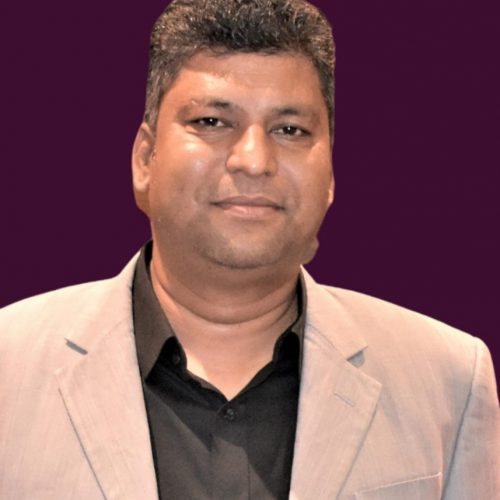
Saumitra Rajput
Saumitra Rajput is the founder of Kadamb Overseas Pvt. Ltd., India's leading Europe-focused study abroad consultancy based in Ahmedabad. With 14+ years of expertise in European education, he has personally counselled 2,500+ Indian families and helped 500+ students secure admission to top European universities including TU Munich, ETH Zurich, EPFL, KU Leuven, HEC Paris, Sapienza Rome, TU Wien, and Warsaw University of Technology. He has visited 25+ European universities, partners with 250+ EU institutions, and maintains a 500+ students placed.
Planning to Study Abroad?
Get free expert guidance from our experienced counselors

Saumitra Rajput
Saumitra Rajput is the founder and lead counsellor at Kadamb Overseas, India's trusted Europe education consultancy based in Ahmedabad. With 14+ years of hands-on experience, he has personally guided 500+ students to universities across Germany, Switzerland, France, Italy, Austria, and Spain. Saumitra has visited partner universities across Europe, holds deep expertise in European visa processes, scholarships, and student life, and has achieved a 97% visa success rate for his clients. He is the host of the YouTube channel "Europe with Saumitra", where he shares first-hand insights on studying and living in Europe. His mission: make Europe accessible to every Indian student, with zero consultancy fees.