
Table of Contents
- Table of Contents
- What KAAD Is and Who Funds It
- The Five KAAD Scholarship Programmes
- Eligibility: Who Indian Catholic Students Need to Be
- What KAAD Pays For (and What It Doesn't)
- Partner Indian Catholic Institutions
- 8-Step Application Process from India
- The Church Recommendation: How to Secure One
- Application Essay Topics and How to Approach Them
- The Interview Round in India
- KAAD Selection Criteria and Decision Timeline
- Real Indian Catholic Student Pathways
- Catholic Community Life in Berlin, Munich, Cologne, Bonn
- Stacking KAAD with Other German Scholarships
- Renewing and Reporting Requirements
- KAAD vs DAAD vs Erasmus+: Which Should Indian Catholics Apply To?
- Frequently Asked Questions
- Ready to Apply?
🕑 22 min read
Table of Contents
- What KAAD Is and Who Funds It
- The Five KAAD Scholarship Programmes
- Eligibility: Who Indian Catholic Students Need to Be
- What KAAD Pays For (and What It Doesn’t)
- Partner Indian Catholic Institutions (Christ, Loyola, St. Joseph’s, St. Xavier’s)
- 8-Step Application Process from India
- The Church Recommendation: How to Secure One
- Application Essay Topics and How to Approach Them
- The Interview Round in India
- KAAD Selection Criteria and Decision Timeline
- Real Indian Catholic Student Pathways
- Catholic Community Life in Berlin, Munich, Cologne, Bonn
- Stacking KAAD with Other German Scholarships
- Renewing and Reporting Requirements
- FAQs
- Ready to Apply?
What KAAD Is and Who Funds It
KAAD stands for Katholischer Akademischer Ausländer-Dienst — the Catholic Academic Foreigners Service. It is the scholarship arm of the German Catholic Bishops’ Conference, founded in 1958 and headquartered in Bonn. Its mission is to support international Master’s and PhD students from developing and emerging countries — including India — who are Catholic Christians, or non-Christians explicitly recommended by Catholic institutions in their home country.
The funding source is the German Catholic Church through the Bishops’ Conference, with additional federal funding via the German Federal Ministry of Economic Cooperation and Development (BMZ). This dual funding makes KAAD one of the most stable and well-resourced scholarships available to Indian Catholic students.
Approximately 1,000 KAAD scholarships are active at any given time globally. India typically receives 30–45 new scholarships per year across all KAAD programmes — among the largest country allocations alongside Brazil, Philippines, Indonesia, and Vietnam. Indian recipients are concentrated in Master’s of Theology, Master’s of Social Work, MS Public Health, MA Development Studies, and PhDs across humanities and social sciences. STEM fields are funded but less common.
Saumitra Rajput at Kadamb Overseas has guided 14 Indian Catholic students through KAAD applications over the past 12 years, with 5 successful recipients. The application is unusually relational — KAAD evaluates not just academic merit but commitment to Catholic faith life and demonstrable plan to use the degree for development of India.
The Five KAAD Scholarship Programmes
KAAD operates five distinct programmes. Indian applicants are eligible for several but most commonly apply to Programme 1.
| Programme | Target | Funding | Indian Applicability |
|---|---|---|---|
| **Programme 1: Annual Scholarship Programme** | Master’s, PhD, post-doc from developing countries | Full stipend + travel + insurance | Most relevant for Indians |
| **Programme 2: East/Central/Southeast Europe** | EU/EFTA + accession countries | Full stipend | Not for Indians |
| **Programme 3: Middle East / North Africa Special** | Christian / interfaith dialogue | Full stipend | Not for Indians |
| **Programme 4: Lebanon / Syria Special** | Region-specific | Project-based | Not for Indians |
| **Programme 5: Re-Invitation Programme** | KAAD alumni for short research stays | Travel + per diem | For past alumni only |
Focus for Indian applicants: Programme 1 — the Annual Scholarship Programme. Within Programme 1, KAAD funds:
- Master’s in Germany (1.5–2 years, full duration)
- PhDs in Germany (3–4 years, full duration)
- Post-doctoral research stays (3–12 months)
- Sandwich PhDs (PhD registered at Indian university, partial research in Germany — 6–12 months)
The Sandwich PhD pathway is particularly popular among Indian academics already in PhD programmes at Christ University Bangalore, Loyola College Chennai, JNU Delhi, and similar institutions.
Eligibility: Who Indian Catholic Students Need to Be
KAAD has eligibility criteria that are stricter than most European scholarships. You must meet ALL of the following:
1. Religious affiliation
- Catholic Christian (preferred — accounts for ~85% of awards), OR
- Non-Christian explicitly recommended by a Catholic institution in your home country (e.g., a Hindu student recommended by Christ University Bangalore based on demonstrated alignment with Catholic social teaching). This applies to roughly 15% of Indian awards.
- Indian Orthodox / Syrian Catholic / Latin Rite Catholic / Mar Thoma students are all eligible.
2. Citizenship and origin
- Indian citizenship (OCI not eligible unless they also hold Indian passport).
- Must apply from India — not from Germany. If you are already in Germany on a student or work visa, you cannot apply for KAAD. (Exception: Programme 5 for alumni re-invitations.)
3. Academic standing
- Bachelor’s degree (for Master’s applications): minimum 8.0 CGPA / 75% — KAAD does not state a minimum but successful Indian applicants almost always exceed this.
- Master’s degree (for PhD applications): first-class or distinction equivalent, with research experience and publications.
- Indian medical graduates (MBBS) are eligible for MSc Public Health / MPH applications.
4. Language
- For German-taught programmes: B1 German at time of application, with KAAD funding a B2/C1 intensive course in Germany before degree begins.
- For English-taught Master’s/PhD: IELTS 6.5 / TOEFL 90 at time of application.
- KAAD funds language course in Germany as part of the scholarship package — typically 6 months at a Goethe Institut.
5. Commitment to home country development
- This is qualitatively assessed via application essay and interview. KAAD requires that you intend to return to India and use the German degree for the development of India. The scholarship will not be awarded to students intending permanent settlement in Germany.
- Many Indian KAAD alumni go on to teach at Catholic universities in India (Christ, Loyola, St. Xavier’s) or work in Catholic-affiliated NGOs (Caritas India, Jesuit Refugee Service, Don Bosco Tech).
6. Admission to German university
- You must have admission (or applied for admission with reasonable expectation) at a German university by application time. KAAD does not facilitate admission — that is your responsibility. For Germany application logistics see our Germany country hub and German university SoP guide.
- Pre-departure costs in India (visa fee, document apostille, IELTS, GRE)
- Housing deposits (you pay 2–3 months’ rent upfront in Germany)
- Personal living above the stipend (entertainment, travel within Europe)
- Family relocation costs beyond the spouse/child allowance
What KAAD Pays For (and What It Doesn’t)
The KAAD scholarship is one of the most comprehensive packages available to Indian students in Germany. Total value over a 2-year Master’s typically exceeds €30,000 (₹27 lakh). Over a 3-year PhD it exceeds €50,000 (₹45 lakh).
| KAAD Component | Master’s | PhD |
|---|---|---|
| Monthly stipend | €861 | €1,200 |
| Annual stipend total | €10,332 | €14,400 |
| Tuition fees | Covered (paid directly to university) | Covered |
| Health insurance | Covered (public — TK or AOK) | Covered |
| Travel grant (India to Germany) | €1,200 (one-way) | €1,200 |
| Travel grant (annual home visit) | €600/year (PhDs only) | €600/year |
| Books and research budget | €500 / year | €750 / year |
| German language course | €3,500 (6-month intensive) | €3,500 |
| Family allowance (married + children) | €276/month spouse + €204/month per child | Same |
| Thesis printing grant (PhDs) | N/A | €350 one-time |
| Conference travel (PhDs) | N/A | €500/year |
What KAAD does NOT cover:
Compared to DAAD (€934/month for Master’s, €1,300 for PhD), KAAD pays slightly less for Master’s but a similar amount for PhDs. The KAAD advantage is the long timeframe (you can stay funded across language course + Master’s + bridge to PhD) and the strong community network through the German Catholic Church.
For broader scholarship benchmarking, see our SC/ST/OBC scholarships in Europe guide, which covers Indian-specific funding for marginalised communities including Christian Dalit students who may also qualify for KAAD. The European scholarship scam detection red flags guide is also worth reading — fake “KAAD coordinators” occasionally email Indian Catholic applicants asking for processing fees, which KAAD never charges.
Partner Indian Catholic Institutions
KAAD requires applications to come through a partner Catholic institution in India that provides a church recommendation. The list of trusted partner institutions:
Universities and Colleges:
- Christ University Bangalore — single largest source of Indian KAAD applicants (~25% of Indian awards)
- Loyola College Chennai — large autonomous Jesuit institution
- St. Joseph’s College Bangalore — Jesuit autonomous college
- St. Xavier’s College Mumbai — Jesuit autonomous college
- St. Xavier’s College Kolkata — Jesuit autonomous college
- St. Xavier’s College Ahmedabad — Jesuit autonomous college (Gujarat applicants frequently route through here, and Kadamb Overseas in Ahmedabad has facilitated multiple introductions)
- Madras Christian College (CSI — Church of South India)
- Stella Maris College Chennai (women’s college)
- St. Stephen’s College Delhi (Anglican but accepts KAAD pathway)
- Mar Athanasius College Kerala (Mar Thoma Syrian Church)
- Marian College Kuttikkanam Kerala (CMI Catholic)
Seminaries and Theological Institutions:
- Vidyajyoti College Delhi (Jesuit theology)
- Jnana Deepa Pune (theology)
- Sacred Heart Seminary Mangalore
- St. Peter’s Pontifical Institute Bangalore
NGOs and Social Work Bodies:
- Caritas India (Delhi-based)
- Indian Social Institute (Delhi and Bangalore)
- Don Bosco Tech Society
Diocesan Offices:
If you don’t belong to any of the above institutions, you can route through your local Catholic Diocese. The Bishop or Vicar-General’s office can issue a recommendation letter, though the institutional partnership pathway is significantly stronger statistically.
Kadamb Overseas in Ahmedabad has facilitated KAAD applicant introductions through St. Xavier’s College Ahmedabad and the Diocese of Ahmedabad for Gujarat-based candidates. For Catholic students from Mumbai, Pune, Bangalore, Chennai, our city-specific consultants can advise on the right partner institution — visit our Mumbai, Pune, Bangalore, or Chennai pages.
8-Step Application Process from India
Step 1: Confirm Eligibility and Choose Programme (March–April 2026)
Verify you meet all 6 eligibility criteria. Decide whether you’re applying for Master’s, PhD, post-doc, or Sandwich PhD. Decide programme language (German vs English). KAAD funds both, but German-taught programmes have stronger acceptance rates because they signal Germany-specific commitment.
Step 2: Identify Partner Institution and Begin Recommendation Process (April 2026)
Contact your partner Catholic institution. If you are a student or alumnus of Christ, Loyola, St. Xavier’s etc., approach the chaplain, principal, or international affairs office. If you are routing through a diocese, contact the Bishop’s office or Vicar-General.
The institution will assess your faith life, academic record, and development orientation. This is not a rubber-stamp exercise. Expect 2–4 weeks of meetings, possibly an interview, before they agree to recommend you.
Step 3: Secure German University Admission (April–November 2026)
Apply to your target German university for the academic year starting October 2027. For Master’s, most German universities have application deadlines between January and July 2027. For PhD, you need a confirmed supervisor and a research proposal accepted by their institute.
For Master’s admission strategy, see our September 2027 European Master’s intake timeline and hidden costs of European study.
Step 4: Compile KAAD Application Documents (May 2026)
Required documents:
- KAAD application form (online via kaad.de)
- Tabular CV (Europass format)
- Application essay (5 mandatory questions — see next section)
- Recommendation letter from partner Catholic institution
- Baptism certificate (or proof of Catholic affiliation)
- Two academic recommendation letters
- Bachelor’s transcripts and degree certificate (apostilled — see our apostille guide)
- Master’s transcripts (for PhD applicants)
- Research proposal (for PhD/post-doc applicants — 5 pages)
- Letter of admission or admission application confirmation from German university
- Language certificate (German B1+ or English IELTS 6.5+)
- Health declaration
Step 5: Submit Application via KAAD Online Portal (by 15 June 2026)
The KAAD application portal opens in February each year and closes 15 June. The portal is at kaad.de. You upload all documents in PDF format. The system sends an auto-acknowledgement.
Step 6: Initial Screening by KAAD Bonn Office (July–August 2026)
KAAD’s secretariat in Bonn screens applications for completeness and basic eligibility. They consult with the partner institution to verify the church recommendation. Approximately 50% of applications proceed to the next stage.
Step 7: Interview Round in India (September–October 2026)
Shortlisted candidates are interviewed in India — typically at the partner institution that recommended you, or at the German Embassy in Delhi for candidates without strong partner-institution ties. Interview panels are composed of KAAD alumni, partner institution representatives, and occasionally a visiting KAAD officer from Bonn.
Step 8: Final Selection and Award Letter (November–December 2026)
KAAD’s selection committee in Bonn meets in November. Award letters issue between mid-November and mid-December 2026. Successful candidates begin language course (if applicable) in March/April 2027, and start the academic programme in October 2027.
The Church Recommendation: How to Secure One
The church recommendation is the make-or-break document. Without it, your KAAD application is dead on arrival. Here is how to approach it.
Who can recommend you:
- The Principal or Director of a KAAD-partner Catholic institution where you studied or work
- The Bishop or Vicar-General of your local Diocese (if you don’t have institutional ties)
- The Provincial of your religious order (if you are a member of a religious order — Jesuit, Salesian, CMI, etc.)
- A KAAD alumnus currently teaching at a partner institution (with co-signature from the institution head)
What the recommender needs to attest:
1. Your active Catholic faith life — regular sacramental practice, parish involvement, or, for non-Christians, demonstrated alignment with Catholic social teaching
2. Your academic merit and discipline
3. Your commitment to returning to India and serving development needs
4. Your moral character and suitability for an extended scholarship abroad
How to approach the recommender:
- Schedule a face-to-face meeting (not email)
- Bring your CV, transcripts, and a 1-page “why KAAD” note
- Be prepared to discuss your faith journey honestly
- Discuss specifically how the German degree connects to your post-degree India plan
- Don’t approach more than 6–8 weeks before the 15 June KAAD deadline — too early signals uncertainty, too late doesn’t give the recommender time
What if you don’t have strong Catholic institutional ties?
This is the most common Indian applicant question. If you studied at a non-Catholic college (IIT, NIT, BITS, JNU, Delhi University) but are a practising Catholic, your route is through the local Diocese. Visit the Bishop’s office (in Ahmedabad, this is the Catholic Diocese of Ahmedabad office), explain your situation, and request a meeting with the Vicar-General. The diocese will assess your parish involvement (your parish priest will likely be consulted) before issuing a recommendation.
Application Essay Topics and How to Approach Them
The KAAD application essay consists of 5 mandatory questions, each requiring 250–500 words. Total essay length: 1,500–2,500 words.
Question 1: Why did you choose to study in Germany, and why this specific programme/university?
Avoid generic “Germany is good for engineering” framing. Reference specific German academic strengths in your discipline, name 1–2 professors whose work aligns, and tie this to your career trajectory. (250–400 words)
Question 2: How does your academic and professional plan contribute to the development of India?
This is the most important question — it carries the most weight in selection. Be concrete: which specific Indian problem will you work on after returning? Through which organisation? On what timeline? “I will return and help India” is fatal. “I will return to Caritas India and work on rural water sanitation in Bihar for at least 5 years post-degree” is strong. (400–500 words)
Question 3: Describe your faith life and active commitment to your religious community.
For Catholic applicants: describe parish involvement, retreats, youth groups, social action, sacramental practice. For non-Christian applicants: describe how your work and values align with Catholic social teaching (option for the poor, dignity of labour, integral human development, ecological responsibility). (300–400 words)
Question 4: What experience do you have working with marginalised or vulnerable populations?
Concrete examples: tutoring children at a slum school, work with Don Bosco for street children, healthcare camps in rural Gujarat, environmental projects with tribal communities, etc. (250–400 words)
Question 5: After your degree, what is your specific 5-year plan for impact in India?
Be granular. Year 1: which organisation, which role, which geography. Year 2: what additional skills or partnerships. Year 3–5: how impact scales. The KAAD committee values a plan that is ambitious but plausible. (300–500 words)
The Interview Round in India
Approximately 50–55% of applicants reach the interview stage. The interview is 45–60 minutes, conducted in English, with a panel of 2–4 members (typically KAAD alumni + partner institution representatives + occasionally a KAAD Bonn officer visiting India).
Common interview themes:
- Why this exact German university and supervisor (for PhD)?
- Talk about a specific challenge you faced during your Bachelor’s/Master’s and how you responded
- Describe an instance where your faith informed an academic or professional decision
- What do you think is the biggest development challenge in India today, and why?
- If KAAD funded you and you got a job offer in Germany after the degree, what would you do?
- How will you stay connected with India during your years in Germany?
- Are you open to participating in KAAD community activities in Germany (alumni meets, retreats, conferences)?
The panel is looking for: academic depth, emotional intelligence, clear development commitment, faith authenticity (not performance), and resilience to live in Germany as a Catholic Indian student.
KAAD Selection Criteria and Decision Timeline
KAAD’s selection committee in Bonn weighs five factors:
| Factor | Weight | What Strong Candidates Show |
|---|---|---|
| Academic merit | 25% | 80%+ Bachelor’s, publications, research experience |
| Development orientation | 30% | Concrete 5-year post-degree India plan, demonstrated experience with vulnerable populations |
| Catholic faith life / alignment | 20% | Active parish involvement, recommendation from KAAD partner institution |
| Programme fit and German connection | 15% | Programme directly relevant to India development needs, B1+ German |
| Interview performance | 10% | Authenticity, communication, commitment |
Decision timeline for 15 June 2026 application:
- July–Aug 2026: Application screening
- Sep–Oct 2026: Interviews in India
- Nov 2026: Bonn selection committee meets
- Mid-Nov to mid-Dec 2026: Award letters issued
- Jan–Mar 2027: Pre-departure preparation
- Apr 2027: German language course begins (if applicable)
- Oct 2027: Academic programme begins in Germany
Real Indian Catholic Student Pathways
Three composite profiles (anonymised) of Indian KAAD recipients in recent years:
Profile A: Public Health MPH, Heidelberg University
- Background: BSc Nursing, Christian Medical College Vellore; 2 years field work with Caritas India in rural Karnataka
- KAAD outcome: 2-year MPH funded, €861/month
- Post-degree: Returned to Caritas India, now Programme Manager for community health in 3 Karnataka districts
Profile B: PhD Theology, Universität Tübingen
- Background: BA + MA Philosophy at St. Xavier’s Mumbai; MTh at Vidyajyoti Delhi; lay Catholic theologian
- KAAD outcome: 4-year PhD funded, €1,200/month + €600/year travel
- Post-degree: Faculty position at Christ University Bangalore School of Theology
Profile C: MSc Sustainable Agriculture, University of Hohenheim
- Background: BSc Agriculture, GBPUAT Pantnagar; 1.5 years internship with a Jesuit-run tribal agri NGO in Jharkhand; baptised Catholic via father’s side
- KAAD outcome: 2-year MSc funded, €861/month
- Post-degree: Currently in second year, planning return to tribal agricultural research
The pattern: KAAD recipients are not necessarily from elite institutions, but they have a clear, lived development commitment AND active faith life AND solid academic record. This three-legged stool is what KAAD selects for.
Catholic Community Life in Berlin, Munich, Cologne, Bonn
Many Indian Catholic students worry about isolation in Germany. The reality is the opposite — Germany has one of Europe’s strongest Catholic infrastructures, and KAAD scholars are actively integrated into it.
Berlin: Italian-speaking Catholic community at Mater Dolorosa, Asian Catholic mass at Hl. Edith Stein (monthly Tamil mass), KAAD alumni group meets quarterly at the Catholic Akademie Berlin.
Munich: Vibrant Indian Catholic community at the Indian Christian Centre near Goetheplatz. Monthly Konkani/Malayalam Mass. Bavarian Catholic culture means religious holidays are public holidays — a comfortable cultural fit.
Cologne: Headquarters of the Archdiocese of Cologne (one of the largest in the world). Indian community at Sankt Maternus parish. KAAD’s home city Bonn is 30 minutes away.
Bonn: KAAD headquarters. Indian students frequently visit for KAAD seminars, retreats, and conferences. Bonn International Catholic Community has English Mass at St. Remigius. Bonn also hosts the annual KAAD scholars’ retreat.
For broader community guidance see our top European cities with Indian communities, Indian vegetarian survival guide for Europe — both relevant if you are vegetarian (many South Indian Catholics observe vegetarian Lent) — and the Germany vs Switzerland Indian engineers comparison if you are weighing a KAAD-funded Germany PhD against a self-funded Swiss alternative.
Stacking KAAD with Other German Scholarships
KAAD scholars are typically NOT permitted to hold a parallel full scholarship (DAAD, Friedrich-Naumann, Heinrich-Böll, etc.) — German scholarship bodies coordinate to prevent double-funding. However, you CAN stack KAAD with:
- University-specific small grants (book grants, conference travel, single-time research grants under €1,500)
- Indian scholarships — National Overseas Scholarship for SC/ST/OBC, Tata Trust scholarships, Aga Khan Foundation (for Ismaili Muslim applicants, technically not Catholic but compatible if church recommendation pathway is unusable)
- Erasmus+ short-term mobility grants for conferences within the EU
- Family income — there is no upper limit on family contribution, and KAAD does not means-test you against parental income
You CANNOT stack with: DAAD scholarship, Friedrich-Ebert Stiftung, Konrad Adenauer Stiftung, Heinrich-Böll Stiftung, Hans-Seidel Stiftung — all of these would require you to formally decline KAAD if offered. For comparison, our education loan EMI calculator helps plan top-up financing if KAAD doesn’t cover specific costs.
Renewing and Reporting Requirements
KAAD funding is awarded for the full programme duration upfront (e.g., 2 years for Master’s, 3–4 years for PhD). However, continued funding depends on:
- Academic progress reports every 6 months, signed by your German supervisor
- Annual KAAD scholars’ meeting (typically in Bonn, end of summer) — attendance is expected
- Periodic regional KAAD meetings in your German region (Bavaria, Rhineland, Berlin, etc.) — 2–3 per year
- Continued faith engagement — KAAD doesn’t track Mass attendance, but visible community participation matters for renewal and for the post-degree alumni network
- No transfer to another country — KAAD funds Germany only; transferring to a programme elsewhere requires formal scholarship termination
Failing 6-month progress reports leads to scholarship review, not automatic termination. KAAD provides academic and personal counselling support before termination is considered.
KAAD vs DAAD vs Erasmus+: Which Should Indian Catholics Apply To?
Indian Catholic Master’s and PhD applicants frequently ask whether KAAD is automatically the right choice, or whether DAAD or Erasmus+ Mundus might be a stronger fit. The answer depends on three factors: your faith profile, your eligibility breadth, and your appetite for ultra-competitive global pools. Below is a side-by-side comparison and decision matrix.
| Dimension | KAAD | DAAD | Erasmus+ Mundus (EMJM) |
|---|---|---|---|
| Monthly stipend (Master’s) | €861 | €934 | €1,400–1,600 |
| Monthly stipend (PhD) | €1,200 | €1,300 | N/A (PhD funded separately) |
| Tuition fees | Covered | Covered | Fully covered |
| Travel grant | €1,200 one-way + €600/year annual home visit (PhDs) | €450–675 lump sum + €100/month travel allowance | €1,000–3,000 travel allowance |
| Health insurance | Covered (TK / AOK) | Covered | Covered |
| Annual home visit (PhDs) | Yes (€600/year) | No | Limited mobility allowance |
| Language course funding | €3,500 (6-month intensive) | €2,000 (2–6 month course) | Usually not included |
| Application body | German Catholic Church (KAAD Bonn) | German Federal Government (DAAD) | EU Commission + consortium |
| Eligibility — religion | Catholic preferred; non-Christians with Catholic institution recommendation | Secular; any religion | Secular; any religion |
| Eligibility — recommendation | India partner Catholic institution mandatory | Standard 2 academic LORs | Standard 2 academic LORs |
| Annual Indian awards | 30–45 (across all programmes) | 200–300 (across all DAAD schemes) | 50–80 (varies by consortium) |
| Success rate (qualified Indian applicants) | 22–28% | 10–18% | 4–8% |
| Application deadline | 15 June (year before) | Varies; typically October–December | November–January (varies) |
| Geographic mobility | Germany only | Germany only | EU mobility across 2–4 universities |
| Community network | Strong KAAD scholars network in Germany; alumni in Indian Catholic NGOs/universities | DAAD alumni globally (large but loose) | EMJM cohort tight (15–30 students) |
Decision matrix for Indian Catholic applicants:
Scenario 1 — You are Catholic with St. Joseph’s / Christ University / Loyola College recommendation pathway available: Apply KAAD first. The 22–28% success rate for well-prepared Indian Catholic applicants with strong partner institution backing is the best odds in the German scholarship landscape. KAAD’s community network during the degree is also unmatched. Apply Erasmus+ EMJM as a stretch backup if you also have strong academic record.
Scenario 2 — You are Catholic but want broader scholarship pool / your college isn’t a KAAD partner: Apply DAAD as primary and KAAD as backup through diocesan recommendation pathway. DAAD has 200–300 annual Indian awards (vs KAAD’s 30–45) so the larger pool offsets the lower individual success rate. Both have similar stipend amounts; KAAD slightly less for Master’s, similar for PhD.
Scenario 3 — You want premium scholarship + EU geographic mobility + you have very strong academic record (8.5+ CGPA / first-class Master’s, publications, research): Apply Erasmus+ Mundus EMJM. The €1,400-1,600/month stipend is 60–80% higher than KAAD or DAAD, the cohort experience across 2–4 European countries is uniquely valuable, and the brand recognition for post-degree career is the strongest of the three. However, ultra-competitive (4–8% success rate) so don’t apply only to EMJM.
Recommended applicant strategy: Apply all three in parallel if eligibility allows. EMJM has the earliest deadline (Nov-Jan), then KAAD (15 June), then DAAD (October-December for following year). Many Indian Catholic students who eventually win KAAD have parallel applications to DAAD and one EMJM consortium — the parallel applications strengthen each other (admission committees recognise the discipline and the writing improves with iteration). See our letter of motivation Erasmus Mundus template for EMJM-specific guidance and our Germany country hub for DAAD pathways. Kadamb Overseas coordinates parallel application strategy — WhatsApp +91 96876 88776 to discuss your eligibility across all three.
Frequently Asked Questions
### Q1: Can I apply for KAAD if I am Hindu, Muslim, Sikh, or Jain?
Yes, but only with explicit recommendation from a Catholic institution in India that knows you well (typically a college you studied at, or an NGO you’ve worked with). About 15% of Indian KAAD awards go to non-Christian applicants. The recommendation letter must affirm your alignment with Catholic social teaching.
### Q2: Can I apply for KAAD after I have already arrived in Germany?
No. KAAD explicitly requires applications from your home country (India). If you are already on a German student visa, you cannot apply. The one exception is Programme 5 re-invitation for past KAAD alumni doing short research stays.
### Q3: What if my partner institution is not on KAAD’s official list?
You can still apply via your local Catholic Diocese. The Bishop or Vicar-General can issue a recommendation. Statistically, institutional partner recommendations have higher success rates than diocesan recommendations, but diocesan applications do get funded each year.
### Q4: Can KAAD fund my family (spouse, children) to come with me to Germany?
KAAD provides a family allowance: €276/month for a spouse and €204/month per child, on top of your stipend. This is enough to comfortably cover family living in smaller German cities (Bonn, Tübingen, Münster) but tight in Munich or Frankfurt. Visa for spouse/children is a separate Family Reunion Visa application.
### Q5: I am in my final year of Bachelor’s at Christ University Bangalore. When should I apply for KAAD?
Apply by 15 June of the year before you want to start in Germany. If you want to start October 2027 in Germany, apply by 15 June 2026 — during your final Bachelor’s year. You can apply before completing your degree; provisional certificate is acceptable.
### Q6: Does KAAD require German language proficiency at application?
For German-taught programmes: B1 at application, with KAAD funding B2/C1 intensive course in Germany before degree begins. For English-taught Master’s/PhD: IELTS 6.5 or TOEFL 90 sufficient. KAAD encourages even English-track students to learn basic German for integration.
### Q7: What is the difference between KAAD and DAAD?
DAAD (Deutscher Akademischer Austauschdienst) is the German government’s federal scholarship body, secular, with much broader eligibility. KAAD is the Catholic Church’s scholarship, faith-aligned, smaller scale (~1,000 active scholars vs DAAD’s ~100,000), with stronger community network. Stipend amounts are comparable. You can apply to both but cannot hold both simultaneously.
### Q8: Do I need to be Catholic from birth, or can converts apply?
Converts to Catholicism are fully eligible — KAAD does not distinguish between cradle Catholic and convert. However, you’ll need baptism certificate and ideally a recommendation from the parish where you were baptised, plus your current parish.
### Q9: What German universities do KAAD scholars typically attend?
There is no fixed list. Past Indian KAAD scholars have studied at Heidelberg (medicine/public health), Tübingen (theology), Bonn (development studies), Münster (Catholic theology), Hohenheim (agriculture), Göttingen (humanities), Berlin Humboldt, LMU Munich, TU Munich (engineering — rarer but does happen). KAAD accepts any accredited German university.
### Q10: Is the KAAD interview difficult?
Moderately challenging. It’s not an academic grilling like DAAD interview, but it is searching on faith life, development commitment, and emotional maturity. Prepare to discuss your faith journey honestly and your post-degree India plan in detail.
### Q11: Can I apply for KAAD for an MBA programme in Germany?
KAAD historically funds MBAs sparingly — typically only if the MBA has a clear development orientation (e.g., MBA in International Business with focus on social enterprise, MBA in Healthcare Management at universities with strong public health link). A standard corporate-focused MBA is unlikely to be funded.
### Q12: What if I want to do a PhD in STEM, not humanities/social sciences?
STEM PhDs are funded by KAAD but represent a minority of Indian awards. The key is to frame the PhD project’s relevance to India’s development. For example, a PhD in solar energy with explicit relevance to rural electrification in India is much stronger than a PhD in abstract mathematics.
### Q13: I want to specialise in Catholic Theology. Is KAAD the right scholarship?
Yes — it is arguably the best in the world for Catholic theology students. Universities like Universität Tübingen, Münster, Bonn, and LMU Munich have world-class Catholic theology faculties, and KAAD has a track record of funding theology PhDs from India through to faculty positions.
### Q14: How do I find a German university supervisor for a PhD?
Email German professors directly with your research proposal (3 pages) and CV. Indian Catholic PhD applicants frequently find supervisors via KAAD alumni network — your partner Catholic institution in India can introduce you to KAAD alumni currently in PhD or faculty positions in Germany.
### Q15: Where can Indian Catholic students get help applying from India?
Kadamb Overseas in Ahmedabad has helped 14 Indian Catholic students apply to KAAD with 5 successful recipients. We coordinate with St. Xavier’s College Ahmedabad and the local Diocese for recommendation pathways. WhatsApp +91 96876 88776 or visit our [contact page](https://kadamboverseas.com/contact/).
### Q16: Should I apply for KAAD, DAAD, and Erasmus+ Mundus in parallel, or just one?
Apply all three in parallel if eligibility allows. The deadlines stagger nicely: EMJM (November-January), KAAD (15 June), DAAD (October-December for following year). Parallel applications strengthen each other — the discipline of preparing 3 applications iteratively improves your essays, CV, and research proposal. Indian Catholic applicants who eventually win KAAD often have parallel DAAD and one EMJM consortium application running. Note you cannot hold KAAD + DAAD simultaneously; you must decline one if both succeed.
### Q17: How does KAAD compare with Catholic scholarships from Italian, Belgian, or Austrian Catholic universities?
KAAD is the most generous and structured of the European Catholic scholarship programmes. Italian Catholic universities (Sacro Cuore, LUMSA) offer partial scholarships but rarely full coverage. Belgian KU Leuven has its own scholarship programmes (mostly secular, with KU Leuven faith-aligned funding being modest). Austrian Catholic universities (Innsbruck, Salzburg) have limited international scholarship pools. KAAD’s combination of full coverage + family allowance + 6-month language course + alumni network in India is unmatched in the Catholic European scholarship landscape. For Indian Catholic students specifically targeting Belgium or Austria, see our [Belgium](https://kadamboverseas.com/belgium/) and [Austria](https://kadamboverseas.com/austria/) country hubs.
Ready to Apply?
KAAD is unusual in the German scholarship landscape — it is generous, stable, and deeply networked, but it requires authentic Catholic faith life or close institutional ties to a partner Catholic institution, plus a concrete India-development plan. For Indian Catholic students, it is arguably the single best funding pathway to Germany.
Saumitra Rajput and the Kadamb Overseas team in Ahmedabad provide end-to-end KAAD application support: partner institution introduction (St. Xavier’s Ahmedabad, Diocese of Ahmedabad), recommendation strategy, application essay refinement, interview preparation, German university admission, language preparation, and post-arrival settlement. To begin your KAAD 2026 application (deadline 15 June 2026 for October 2027 entry), WhatsApp +91 96876 88776 or visit our contact page.
For broader Germany planning see our Germany country hub, Germany SoP guide, the how to negotiate scholarship offer European university guide (relevant if KAAD competes with DAAD or university scholarships in your final selection), the Holland Scholarship Indian students application guide (a useful Dutch alternative), and our growing library of free Europe study guides.
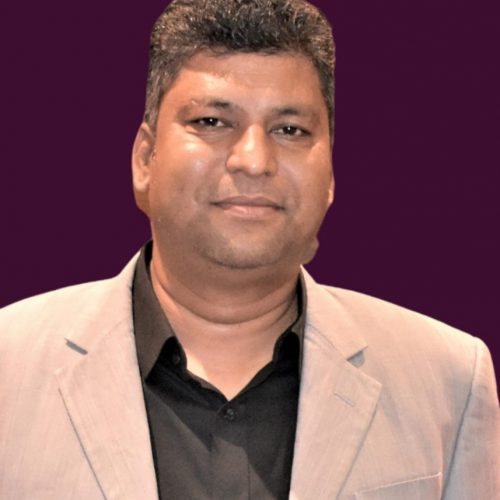
Saumitra Rajput
Saumitra Rajput is the founder of Kadamb Overseas Pvt. Ltd., India's leading Europe-focused study abroad consultancy based in Ahmedabad. With 14+ years of expertise in European education, he has personally counselled 2,500+ Indian families and helped 500+ students secure admission to top European universities including TU Munich, ETH Zurich, EPFL, KU Leuven, HEC Paris, Sapienza Rome, TU Wien, and Warsaw University of Technology. He has visited 25+ European universities, partners with 250+ EU institutions, and maintains a 500+ students placed.
Planning to Study Abroad?
Get free expert guidance from our experienced counselors

Saumitra Rajput
Saumitra Rajput is the founder and lead counsellor at Kadamb Overseas, India's trusted Europe education consultancy based in Ahmedabad. With 14+ years of hands-on experience, he has personally guided 500+ students to universities across Germany, Switzerland, France, Italy, Austria, and Spain. Saumitra has visited partner universities across Europe, holds deep expertise in European visa processes, scholarships, and student life, and has achieved a 97% visa success rate for his clients. He is the host of the YouTube channel "Europe with Saumitra", where he shares first-hand insights on studying and living in Europe. His mission: make Europe accessible to every Indian student, with zero consultancy fees.