


💰 Europe Cost Calculator 2026 Updated
Country 1
Country 2
Table of Contents
- Why Sciences Po Paris is uniquely positioned for Indian policy careers
- Sciences Po programmes Indian students apply to
- Tuition, fees and total cost in INR for 2026
- Admission requirements, deadlines and Campus France steps
- Indian admit profile and what reviewers look for
- Emile Boutmy and the full scholarship stack
- Placement: UN, OECD, EU Commission, World Bank, NATO
- Sciences Po vs LSE vs Georgetown SFS vs Columbia SIPA
- Life on the Saint-Germain campus and the seven regional sites
- Post-study work, Talent Passport, French PR pathway
- How Kadamb Overseas supports Sciences Po applicants
- Frequently asked questions
- Ready to apply
Why Sciences Po Paris is uniquely positioned for Indian policy careers
Sciences Po (Institut d’Etudes Politiques de Paris) does not slot neatly into the standard Indian “STEM master’s” or “MBA” categories that most consultancies in Mumbai and Bangalore push. It is a public policy and international affairs school, designed to produce diplomats, multilateral civil servants, policy researchers, think-tank analysts, political journalists and senior corporate strategists. For Indian students who want a global career outside the engineering and management mainstream, Sciences Po is the single most credible European institution to consider.
In 12+ years guiding Indian students to Europe, Saumitra Rajput at Kadamb Overseas has observed three distinct Indian profiles that gravitate to Sciences Po. The first is the IAS aspirant who is mid-process or has just exited UPSC after one or two attempts, looking for a structured international policy degree that complements (not replaces) the Indian civil service ambition. The second is the post-NLU lawyer (NLSIU Bangalore, NUJS Kolkata, NALSAR Hyderabad, NLU Delhi) targeting international human rights, WTO trade law or climate diplomacy. The third is the journalist or political consultant from St. Stephen’s, Jadavpur, Presidency Kolkata or JNU who wants formal training in policy analysis and comparative government.
For these three profiles, Sciences Po offers something IIM, ISB, LSE and Columbia SIPA cannot match: a dual European-French perspective on global governance, taught in English, located in central Paris, at roughly one-third the tuition cost of an Ivy League public policy degree. PSIA — the Paris School of International Affairs at Sciences Po — alone hosts 1,500 students from 110 countries every year, making it one of the largest English-language international affairs schools in the world.
We do not recommend Sciences Po for every Indian applicant. If your career target is core engineering, data science, investment banking or corporate strategy consulting, Sciences Po will under-perform on placement compared with HEC Paris, ESSEC, TUM, ETH Zurich or the LSE Department of Economics. For those routes we direct applicants to our HEC Paris Admission Guide and Grenoble INP Engineering Guide. For policy, governance, diplomacy, journalism, NGOs and the multilateral system, Sciences Po sits at the top.
Sciences Po Paris programmes Indian students apply to
Sciences Po offers Bachelor, Master, PhD and Executive programmes. The Master’s-level programmes (which account for 90 percent of Indian applications via Kadamb Overseas) fall into seven schools. The five that draw the most Indian interest are listed below.
| Programme (within PSIA mostly) | Duration | Language | Indian seats per year | Bachelor profile |
|---|---|---|---|---|
| Master in International Affairs (MIA, PSIA) | 2 years | English | 15-20 | Any bachelor with strong essay-writing track record |
| Master in International Public Management (PSIA) | 2 years | English | 6-10 | Public sector or NGO bachelor experience |
| Master in International Economic Policy (PSIA) | 2 years | English | 5-8 | Economics, mathematics or engineering bachelor |
| Master in Public Affairs (MPA, School of Public Affairs) | 2 years | English + French | 10-15 | Diverse bachelor, mid-career emphasis |
| Master in Public Policy (School of Public Affairs) | 2 years | English | 8-12 | Public policy, economics or social sciences bachelor |
The PSIA Master in International Affairs is the flagship for Indian applicants. It is a two-year programme covering political science, history, law and economics of international relations, with seven concentrations: Diplomacy, International Security, Environmental Policy, International Development, International Economic Policy, Human Rights and Humanitarian Action, and Global Risks. Indian students dominate the International Development, Environmental Policy and International Security concentrations.
Master in International Public Management focuses on public sector reform, governance and the UN/EU institutional ecosystem. Indian applicants with prior NGO experience (Pratham, Teach for India, Akshara Foundation, CRY, Aide et Action) or government attachments (NITI Aayog interns, Lok Sabha research assistants, state-level policy think tanks like Vidhi Centre for Legal Policy or Centre for Policy Research) gravitate here.
Master in International Economic Policy is the quantitative track. Indian engineering bachelors from IIT Bombay, IIT Delhi, IIT Madras, IIT Kharagpur and IIT Roorkee, plus economics graduates from Delhi School of Economics, Madras School of Economics and Indian Statistical Institute, are the typical applicants. The programme combines macro-economic policy with international trade, finance and development economics. Roughly 60 percent of graduates head to the IMF, World Bank, EBRD, OECD or central banks.
The School of Public Affairs runs the MPA and Master in Public Policy. These are more domestic-France-focused than PSIA but accept around 12-15 Indians per year for the English-track Public Policy variant. Strong fit for Indian applicants targeting policy consulting (Dalberg, Sambodhi, IDinsight, J-PAL South Asia, FSG, Bridgespan India).
Sciences Po tuition, fees and total cost in INR for 2026
Sciences Po is a public grande etablissement and applies a need-based sliding tuition scale to EU/EEA students. Non-EU Indian students pay the full sticker price.
| Programme | Annual tuition non-EU | EUR per year | INR equivalent at 90 | Total programme tuition INR | Living cost EUR per month | Living INR per month |
|---|---|---|---|---|---|---|
| Master in International Affairs (PSIA) | EUR 19,290 | NA | INR 17.4 lakh | INR 34.7 lakh (2 years) | 1,200-1,500 | INR 108K-135K |
| Master in International Public Management | EUR 19,290 | NA | INR 17.4 lakh | INR 34.7 lakh | 1,200-1,500 | INR 108K-135K |
| Master in International Economic Policy | EUR 19,290 | NA | INR 17.4 lakh | INR 34.7 lakh | 1,200-1,500 | INR 108K-135K |
| Master in Public Affairs (MPA) | EUR 16,160 | NA | INR 14.5 lakh | INR 29.1 lakh | 1,200-1,500 | INR 108K-135K |
| Master in Public Policy | EUR 16,160 | NA | INR 14.5 lakh | INR 29.1 lakh | 1,200-1,500 | INR 108K-135K |
Add CVEC student services fee EUR 100 per year, mandatory health insurance EUR 215 per year (or French Securite Sociale enrollment which is free for under-28s), OFII tax EUR 200 one-time on arrival. Total two-year all-in cost lands at EUR 58,000-66,000 (INR 52-59 lakh) before scholarships. Compared with HEC Paris MBA at INR 86 lakh or LSE Master at INR 75-85 lakh, Sciences Po is dramatically more affordable.
Living in central Paris is the budget pressure point. Rent for a 9-15 square metre studio in arrondissements 5, 6, 7, 14, 15 (close to Sciences Po campuses) runs EUR 900-1,300 per month. CROUS student housing (heavily subsidised but lottery-allocated) runs EUR 280-450 per month and saves around EUR 600 per month over private rentals. CAF housing aid for international students adds back EUR 80-180 per month depending on rent and income. Our Hidden Costs of European Study for Indian Families breakdown is highly relevant for Paris cost planning.
Sciences Po admission requirements, deadlines and the Campus France step
Sciences Po runs a centralised admissions platform with two annual rounds for Master’s programmes. The deadlines below apply to September 2027 entry.
| Round | Application deadline | Decision in | Best for |
|---|---|---|---|
| Round 1 | 1 December 2025 | Mid-February 2026 | Scholarship applicants (Emile Boutmy, Charpak, Eiffel) |
| Round 2 | 28 February 2026 | Late April 2026 | Self-funded or India-based scholarship applicants |
Indian applicants targeting Emile Boutmy scholarship must apply in Round 1. The scholarship decision is made together with the admission decision, and Round 2 applicants are not considered for institutional aid except in rare merit cases.
The minimum credentials we recommend Indian applicants meet before paying the EUR 145 application fee:
- Bachelor’s degree from a UGC-recognised Indian university with cumulative CGPA of 7.5/10. PSIA’s flagship Master in International Affairs effectively requires 8.0+/10. The School of Public Affairs accepts 7.0+ if compensated by work experience.
- IELTS 7.0 overall with no band below 6.5, OR TOEFL iBT 100+, OR Cambridge Proficiency or Advanced C1/C2. Sciences Po is stricter on English than HEC.
- GMAT/GRE not required for Sciences Po Master’s programmes (this is a key differentiator from HEC and INSEAD). Strong GRE 320+ helps for International Economic Policy track.
- One personal statement essay (1,500 words) covering academic background, motivation for the specific programme, career goals and Sciences Po fit.
- A second optional analytical essay (1,000 words) on a contemporary international issue. Strongly recommended.
- Two letters of recommendation — one academic, one professional. PhD applicants need three academic referees.
- CV in Europass format.
- Transcripts from all post-secondary institutions (notarised English translation required for any non-English Indian university documents).
- One-hour video interview after shortlisting for borderline candidates only.
After admission, the Campus France process kicks in for visa purposes. Every Indian going to a French university must register on the france-inde.campusfrance.org portal, pay INR 18,500, upload transcripts and admission letter, and attend a video interview. We detail the entire Campus France and visa workflow in our France Student Visa for Indian Students 2026 deep-dive.
What Indian admit profile actually gets into Sciences Po?
In the 2025-26 application cycle, Kadamb Overseas advised 64 Indian applicants to Sciences Po Paris across all programmes. Of those, 22 received admission offers — a 35 percent success rate against the school’s overall 15 percent admit rate. Looking at the 22 admits, the profile patterns are clear.
The PSIA MIA admit profile is dominated by graduates from St. Stephen’s College Delhi, Jindal Global Law School (international relations track), Lady Shri Ram College, Loyola College Chennai, Christ University Bangalore, Symbiosis School of International Studies Pune, and the IIT Madras Humanities and Social Sciences specialisation. Common pre-Master experiences include: Teach for India fellow (12-24 months), NGO programme manager, parliamentary research intern, think-tank associate at PRS Legislative Research / Vidhi / CPR / IDSA / CSEP, ICCR fellow at an Indian mission overseas, or journalism stint at The Hindu, Indian Express, The Print, Caravan Magazine.
The MPA admit profile is more mid-career and includes IRS Civil Service officers on study leave, IFS junior officers seeking specialisation, doctors working in public health (AIIMS, ICMR, public health management institutes), and consultants from Dalberg, FSG, IDinsight South Asia. Average age at MPA entry is 27-30 versus 23-25 for MIA.
For International Economic Policy, the admit pool is dominated by IIT applicants and Indian Statistical Institute graduates with strong quantitative coursework. About one-third of Kadamb-advised admits to this track held research assistantships at the Reserve Bank of India, NITI Aayog, NIPFP or state-level economic policy units before applying.
Emile Boutmy and the full Sciences Po scholarship stack
The 35 percent Kadamb admit rate at Sciences Po translated, in financial terms, to total scholarship awards exceeding EUR 270,000 across the cohort. Here is the funding ladder you should evaluate in order.
1. Emile Boutmy Scholarship (Sciences Po institutional). EUR 5,000-19,000 per year for non-EU/non-EEA students based on academic merit and financial need. Tier-1 awards (EUR 19,000) cover full Master’s tuition and provide a modest stipend. 60-80 Indian Emile Boutmy awards are issued annually across Bachelor and Master cohorts. Automatic consideration with Round 1 application — no separate form. This is by far the most important Sciences Po scholarship for Indian applicants.
2. Charpak Master’s Scholarship (Embassy of France in India). EUR 5,000-10,000 stipend, travel grant, visa fee waiver and CAF housing assistance. Stackable with Emile Boutmy. Deadline typically February. We cover Charpak in detail in our France Scholarships for Indian Students 2026 compilation.
3. Eiffel Excellence Scholarship (French Government via Campus France). EUR 1,181 per month for the full Master’s duration plus return airfare and health insurance. Sciences Po nominates approximately 20-30 students for Eiffel each year out of an admit pool of 500+. Highly competitive.
4. Erasmus Mundus Joint Master’s Scholarships. Sciences Po runs three EMJMD consortia in International Development, Public Policy and Globalisation, Economic Policies for the Green Transition. Selected EMJMD applicants receive full tuition plus EUR 1,400 per month. Our Erasmus Mundus 2026 Indian Students guide lists every consortium Sciences Po participates in.
5. OSI Scholarship via Open Society Foundations. For students from South Asia working on civil society, human rights, governance reform. Covers full tuition plus living. Highly selective — typically 3-5 Indian awards per year across all PSIA admits.
6. Ford Foundation International Fellowships. For applicants with NGO or development sector backgrounds. Full tuition plus living.
7. National Overseas Scholarship (Government of India, Ministry of Social Justice). For SC, ST and OBC students. Covers full tuition plus living allowance of approximately INR 1,15,000 per month.
8. Inlaks Shivdasani Foundation Scholarship. INR 80 lakh maximum per student for Indian applicants to Sciences Po and other top European institutions. Apply via Inlaks directly with February deadline.
9. JN Tata Endowment Loan Scholarship. Up to INR 10 lakh as low-interest loan plus a smaller scholarship grant.
10. Indian education loans. SBI Global Ed-Vantage, HDFC Credila, Axis, ICICI, Avanse all lend up to INR 1 crore for Sciences Po admits. SBI Global Ed-Vantage is the most cost-effective at 9.6-10.65 percent. See our Education Loan Europe 2026 Comparison for the full lender breakdown.
A typical funded Sciences Po PSIA stack for a Kadamb-advised Indian student in 2025 looked like this: Emile Boutmy EUR 15,000 per year, Charpak EUR 7,500 one-time, family contribution INR 8 lakh, SBI loan INR 15 lakh at 10.15 percent for living expenses, summer paid internship at UNDP New Delhi or OECD Paris EUR 1,400 per month for 3 months. Net out-of-pocket cost after deducting all scholarships and post-grad early salary savings: approximately INR 18-22 lakh for the two-year programme.
Placement: UN, OECD, EU Commission, World Bank, NATO and the private sector
Sciences Po does not publish placement reports in the same detailed format as HEC or INSEAD because its career outcomes span a wider spectrum of public, multilateral, NGO and private sector employers. From Kadamb Overseas data tracking 2014-2025 alumni, the destination patterns for Indian Sciences Po graduates are below.
| Sector | Share of Indian Sciences Po alumni | Typical first-job salary EUR | INR equivalent | Common employers |
|---|---|---|---|---|
| Multilateral organisations | 30 percent | 55,000-72,000 | INR 49-65 lakh | UN agencies (P1-P2), World Bank YPP, IMF JP, OECD, UNICEF |
| EU institutions | 18 percent | 52,000-68,000 | INR 47-61 lakh | European Commission, European External Action Service, NATO HQ |
| Strategy and policy consulting | 22 percent | 60,000-85,000 | INR 54-77 lakh | McKinsey Public Sector, BCG Public Sector, Roland Berger, Dalberg Paris |
| NGOs and think tanks | 12 percent | 40,000-55,000 | INR 36-49 lakh | Amnesty, Human Rights Watch, ICG, IISS, Friends of Europe |
| Private sector (corporate affairs, ESG) | 12 percent | 65,000-85,000 | INR 58-77 lakh | LVMH government affairs, BNP Paribas sustainability, Total Energies policy |
| Indian government/diplomacy | 6 percent | INR 12-25 lakh in India | NA | IFS, IAS preparation, state-level policy roles, IIPA fellows |
Median first-job salary for a Sciences Po Master’s grad in Europe is EUR 58,000 (INR 52.2 lakh), comparable to a strong tier-2 European MBA grad but at one-third the tuition cost. The Sciences Po alumni network includes 7 French Presidents, 13 former heads of state, the current heads of the OECD, IMF and several UN agencies. For Indian applicants targeting senior multilateral roles, that network is uniquely powerful.
UN Young Professionals Programme (YPP), World Bank YPP and IMF Junior Professionals are the three most prestigious entry routes into the multilateral system. Sciences Po has the highest representation among non-US institutions in these three programmes. About 15-18 percent of Sciences Po PSIA grads from each annual cohort enter one of these three pipelines within 2-3 years of graduation.
For Indian alumni planning a return to India in mid-career, Sciences Po brand recognition is strong at the senior level of policy consulting firms (Dalberg India, FSG, IDinsight, J-PAL South Asia), at the major think tanks (Carnegie India, ORF, Brookings India, CPR), and at Indian government public-private partnership cells (NITI Aayog, MoEFCC climate cells, Vidhi Centre for Legal Policy). EU Blue Card transferability into Germany, Netherlands, Belgium and Austria is also straightforward — see our EU Blue Card Indian Master’s Graduates 2026 guide.
Sciences Po vs LSE vs Georgetown SFS vs Columbia SIPA for Indian applicants
For Indian students considering a Master’s in international affairs or public policy, four schools dominate the conversation. Here is the honest side-by-side.
| Dimension | Sciences Po Paris | LSE London | Georgetown SFS | Columbia SIPA |
|---|---|---|---|---|
| Programme length | 2 years | 1 year | 2 years | 2 years |
| Tuition non-EU/non-US | EUR 38,580 (full) | GBP 39,200 per year | USD 54,000 per year | USD 75,000 per year |
| INR equivalent total | INR 34.7 lakh | INR 41 lakh (1 year only) | INR 91 lakh | INR 124 lakh |
| English IELTS minimum | 7.0 | 7.0 | 7.0 | 7.0 |
| Indian admit rate | 12-15 percent | 6-8 percent | 12-15 percent | 18-22 percent |
| Multilateral placement strength | Very strong (UN, OECD, EU) | Strong (UN, World Bank) | Strong (World Bank, IMF, US gov) | Strong (UN, World Bank) |
| Post-study work visa | 12 months (APS), Talent Passport 4 years | 2 years (Graduate Visa) | 12 months (OPT), 36 if STEM | 12 months (OPT), 36 if STEM |
| PR/citizenship pathway | 5 years to PR, 5 to citizenship | 5 years to ILR | H1-B lottery + 10+ years | H1-B lottery + 10+ years |
Sciences Po wins on cost (cheapest by far) and on European multilateral placement. LSE wins on brand recognition in India and a faster 12-month programme. Georgetown wins on US government and World Bank pipeline. Columbia wins on global brand and US private sector exit.
For Indian applicants we counsel three decision rules. If your budget is INR 30-45 lakh total, Sciences Po is the only choice. If you target the UK and want a fast 12-month degree, LSE wins. If you target the US system specifically and have INR 90-130 lakh budget, Georgetown or Columbia is appropriate, with the caveat that the US H-1B lottery is a serious post-study risk. We do not currently recommend the US route for cost-sensitive Indian families given the visa uncertainty.
Life on the Saint-Germain campus and the seven regional sites
Sciences Po’s main campus is in the Saint-Germain-des-Pres area of central Paris (7th arrondissement), spread across multiple historic buildings on rue Saint-Guillaume, rue des Saints-Peres and avenue de Tourville. PSIA is concentrated at 28 rue des Saints-Peres. The School of Public Affairs operates from 1 place Saint-Thomas-d’Aquin. Both are walking distance to the Eiffel Tower, Musee d’Orsay, Quai d’Orsay (French Foreign Ministry), the Senat and the Sorbonne.
Six regional campuses — Dijon, Le Havre, Menton, Nancy, Poitiers and Reims — host Sciences Po’s Bachelor programmes with regional specialisations (Central European Studies in Dijon, Trans-Atlantic in Le Havre, Mediterranean and Middle East in Menton, European Studies in Nancy, Latin America in Poitiers, North American in Reims). Indian Bachelor applicants get assigned to one of these based on their chosen regional concentration. Master’s students all study in Paris.
The Indian community at Sciences Po runs an active student association — the Sciences Po Indian Association — with regular Diwali, Holi and Independence Day events. Kadamb Overseas has met with the association leadership annually since 2019. Indian restaurants are abundant within walking distance of campus — Saravanaa Bhavan at Gare du Nord (vegetarian), Krishna Bhavan rue Cadet, and the family-owned New Maharaja in the 9th arrondissement are favourites among Kadamb-tracked alumni.
Paris is dramatically more expensive than Jouy-en-Josas where HEC sits. A central Paris studio runs EUR 1,000-1,400 per month. CROUS subsidised student housing runs EUR 280-450 but is competitive and assigned by lottery. Pareto-optimal Paris housing strategy for Indian students: apply for CROUS as fallback, simultaneously secure a private room in shared apartment in arrondissements 11, 12, 13, 18, 19, 20 at EUR 600-800 per month, and use CAF aid to offset EUR 80-180 per month.
Post-study work, Talent Passport and the French PR pathway
Sciences Po Paris graduates of any Master’s-level programme qualify automatically for the Autorisation Provisoire de Sejour (APS), France’s 12-month post-study work permit. The APS does not require an employment offer to be issued — you receive it when you collect your Master’s diploma. During the APS year you can work full-time in France in any role.
Once you secure an employment offer paying above EUR 41,933 per year (2026 threshold), you can convert your APS into a Passeport Talent (“Talent Passport”), a four-year renewable work and residence permit. Most Sciences Po grads in multilateral or consulting roles meet this threshold from day one. For NGO and policy think-tank roles paying EUR 35,000-42,000, the threshold can be tight, but the Talent Passport for graduates from selected institutions (including Sciences Po) has a slightly relaxed test that admits roles paying 1.5x SMIC (EUR 31,450) when the role is in research or public interest sectors.
After five years of legal residence in France (which includes your two Master’s years), you become eligible for the French permanent resident card (Carte de Resident). The PR application requires B1 French language certification, proof of stable income and integration into French civic life. The civic test covers French history, values of the Republic, and rights and duties. After an additional period of legal residence, B1 French and the civic test, you become eligible for French naturalisation and an EU passport.
For Indian Sciences Po alumni who plan to move within Europe after a few years in France, the EU Blue Card transfer is straightforward. Many alumni move to Brussels (EU institutions), Geneva (UN agencies, OECD, ICRC, WHO), Vienna (UN, OSCE), The Hague (ICC, OPCW, ICJ), Bonn (UNFCCC, UNV) or Frankfurt (ECB). Our EU Blue Card Indian Master’s Graduates 2026 guide details the inter-EU mobility rules.
How Kadamb Overseas supports Sciences Po Paris applicants
Kadamb Overseas was founded in 2014 by Saumitra Rajput. We have placed Indian students at Sciences Po Paris every academic year since 2017. Our service for Sciences Po applicants includes:
- Pre-application profile audit. We will tell you honestly whether Sciences Po is realistic for your profile and which of the seven schools fits your career target best.
- Programme selection across PSIA’s seven concentrations, the School of Public Affairs MPA/MPP, the Urban School, the School of Journalism, the School of Research, and the Law School.
- Personal statement essay structuring and editing. Saumitra personally edits every Sciences Po essay for Kadamb students. The 1,500-word personal statement is the single highest-leverage component of the application.
- Optional analytical essay structuring on contemporary international issues.
- Letter of recommendation strategy — identifying which academic and professional referees to approach, drafting the briefing notes for them.
- Emile Boutmy Scholarship optimisation — articulating financial need and academic merit in a way that maximises tier-1 award probability.
- Charpak and Eiffel scholarship applications, both of which are separate from the Sciences Po application.
- Campus France registration, payment, document upload and interview prep.
- VFS Mumbai, VFS Delhi, VFS Bangalore, VFS Chennai or VFS Ahmedabad visa appointment booking and document pre-check.
- Pre-departure briefing covering Paris banking (BNP Paribas, Societe Generale, HSBC France), SIM card (Free Mobile, Bouygues, Sosh), CROUS housing, private rental search, OFII validation, Securite Sociale enrollment, CAF application.
We work with applicants from across India. Our Ahmedabad office runs in-person consultations (see our Best Study Abroad Consultant in Ahmedabad page). For Mumbai, Pune, Bangalore, Delhi, Chennai, Hyderabad, Kolkata and Jaipur applicants we run video consultations with periodic in-person interview prep.
For more on France as a study destination, see our France country hub and the broader Free Europe Study Guides library.
Frequently Asked Questions
### Q1: What is the total cost of a Sciences Po Paris Master’s for Indian students in 2026?
Annual tuition is EUR 19,290 for PSIA programmes (INR 17.4 lakh at 90 INR per EUR) and EUR 16,160 for School of Public Affairs (INR 14.5 lakh). Two-year total tuition reaches EUR 38,580 (INR 34.7 lakh) for PSIA. Add CVEC, OFII, health insurance and living costs of EUR 1,200-1,500 per month for 24 months. Total all-in EUR 67,000-77,000 (INR 60-69 lakh) before scholarships. Emile Boutmy at EUR 15,000-19,000 per year can cut tuition to near-zero.
### Q2: Do I need GMAT or GRE for Sciences Po admission?
No. Sciences Po does not require GMAT or GRE for any Master’s programme. This is a major differentiator from HEC, INSEAD, ESSEC and most US public policy schools. A strong GRE 320+ helps for the International Economic Policy track but is not mandatory.
### Q3: What IELTS score do I need for Sciences Po?
IELTS 7.0 overall with no band below 6.5 is the standard requirement. TOEFL iBT 100+ or Cambridge C1 Advanced (or C2 Proficiency) are accepted equivalents. Sciences Po is stricter on English than HEC. PSIA’s Master in International Affairs effectively requires IELTS 7.5+ for borderline academic profiles.
### Q4: Is the Emile Boutmy Scholarship guaranteed for Indian applicants?
No, the Emile Boutmy is competitive. Approximately 60-80 Indian Emile Boutmy awards are granted annually across Bachelor and Master cohorts. Tier-1 awards of EUR 19,000 per year are very selective. Apply in Round 1 (December 1 deadline) to maximise eligibility. The decision is made together with the admission decision.
### Q5: Can I stack Emile Boutmy with Charpak and Eiffel scholarships?
Yes, Emile Boutmy is stackable with Charpak. Charpak adds EUR 5,000-10,000 plus travel and CAF housing top-up. Eiffel and Emile Boutmy are not technically dual-awardable but in practice a small number of students receive both for two consecutive years. Indian National Overseas Scholarship (for SC/ST/OBC) is also stackable.
### Q6: What CGPA does Sciences Po require for Indian applicants?
PSIA flagship Master in International Affairs effectively requires 8.0/10 CGPA from a UGC-recognised Indian university. Other PSIA programmes accept 7.5/10. School of Public Affairs MPA/MPP accepts 7.0/10 if compensated by 2+ years of relevant work experience. Class median CGPA for 2025 PSIA Indian admits was 8.5/10.
### Q7: Is Campus France registration mandatory for Sciences Po Paris?
Yes, mandatory and non-negotiable for every Indian applicant regardless of programme. Register on france-inde.campusfrance.org, pay INR 18,500, upload documents, attend video interview. Must be completed before VFS Global visa appointment. Kadamb handles the entire Campus France process for our students.
### Q8: What kind of jobs do Sciences Po graduates get?
Indian Sciences Po grads cluster into multilateral organisations (UN, OECD, World Bank, IMF — 30 percent), EU institutions (Commission, External Action Service, NATO — 18 percent), strategy and policy consulting (McKinsey Public Sector, BCG Public Sector, Dalberg — 22 percent), NGOs and think tanks (12 percent), corporate affairs and ESG (12 percent) and return to Indian government and policy (6 percent). Median first-job salary EUR 58,000 (INR 52.2 lakh).
### Q9: How does Sciences Po compare with LSE for Indian applicants?
Sciences Po is two-year and EUR 38,580 total (INR 34.7 lakh) versus LSE one-year at GBP 39,200 (INR 41 lakh). Sciences Po stronger on European multilateral placement (UN Geneva, EU Brussels, OECD Paris). LSE stronger on UK brand recognition and faster degree. Both require IELTS 7.0. Sciences Po admit rate 12-15 percent for Indians versus LSE 6-8 percent.
### Q10: Do I need French to study at Sciences Po?
No for English-track Master’s programmes (PSIA all programmes, MPA and MPP English variants). French at A2 is highly recommended for daily life in Paris. The MPA has bilingual options requiring B1 French. B1 French is required for French PR application after five years of residence.
### Q11: Can I work part-time during my Sciences Po Master’s?
Yes. France permits international students to work up to 964 hours per year (approximately 20 hours per week). At French minimum wage SMIC EUR 11.88 per hour in 2026, this generates EUR 11,460 per year (INR 10.3 lakh). Sciences Po students commonly intern at think tanks, UN agencies (UNESCO Paris, UNDP, OECD), NGOs and French government bodies during their first year — internships often pay EUR 600-1,200 per month plus learning credit.
### Q12: What is the post-study work pathway from Sciences Po?
Master’s graduates receive automatic 12-month APS (Autorisation Provisoire de Sejour) post-study work permit. For employment paying EUR 41,933+ per year, convert to 4-year renewable Talent Passport. Lower threshold of 1.5x SMIC (EUR 31,450) applies for research and public-interest roles. After 5 years of residence and B1 French, French PR. After additional period and civic test, French citizenship.
### Q13: How long does the Sciences Po application process take from India?
Allow 12-14 weeks from start to admission decision: 6-8 weeks for personal statement and analytical essay drafting and refinement, 1 week for application submission, 8-10 weeks for admission decision (Round 1) or 6-8 weeks (Round 2). Add another 12-14 weeks for Campus France registration, VFS appointment, visa processing and pre-departure. Start at least 6 months before September intake.
### Q14: What are the seven concentrations of PSIA Master in International Affairs?
Diplomacy, International Security, Environmental Policy, International Development, International Economic Policy, Human Rights and Humanitarian Action, and Global Risks. Indian applicants commonly choose International Development, Environmental Policy, International Security or International Economic Policy depending on career target. Each concentration has a structured core plus 4-6 electives.
### Q15: Is Sciences Po recognised for Indian government careers (IFS, IAS)?
Yes. Sciences Po is well-recognised within the Ministry of External Affairs of India and the Department of Personnel and Training. Indian Foreign Service (IFS) probationers and officers on study leave attend Sciences Po regularly. The IAS does not penalise Sciences Po experience; in fact, mid-career IAS officers attending the MPA gain a structured European policy comparative perspective that strengthens their senior assignments.
### Q16: Are there Sciences Po alumni networks in India?
Yes. The Sciences Po India Alumni Association (SPIAA) hosts annual gatherings in Mumbai, Delhi, Bangalore, Chennai and Hyderabad. SPIAA membership includes 350+ Indian alumni working across IFS, IAS, IRS, Indian think tanks (ORF, Carnegie India, Brookings India, CPR, IDSA), Indian corporates (Tata Sons strategy, Reliance corporate affairs, Mahindra group, ITC), policy consultancies (Dalberg, FSG, IDinsight) and academic institutions (Ashoka University, Jindal, OP Jindal, Krea, IIPS).
### Q17: What is the EUR to INR exchange rate impact on my Sciences Po budget?
At 90 INR per EUR (March 2026 spot), EUR 38,580 total tuition equals INR 34.7 lakh. A 5 percent INR depreciation (to 94.5 INR per EUR) would increase the INR-denominated cost to INR 36.5 lakh, a delta of INR 1.8 lakh. Indian families can hedge by buying EUR forward through HDFC, ICICI or Thomas Cook. INR-denominated loans (SBI Global Ed-Vantage, HDFC Credila) eliminate currency risk for the loan portion.
### Q18: Can my spouse work in France during my Sciences Po Master’s?
Yes. The Talent Passport Famille spouse visa gives full work rights to spouses of Talent Passport holders. For students on the standard student visa, the spouse visa is more restricted — a separate work permit application may be required. Once the Sciences Po graduate transitions to Talent Passport post-graduation, spousal work rights become automatic. About 15-20 percent of Kadamb-advised Sciences Po MPA admits are married, and most bring their spouse within the first 6-12 months.
Ready to apply to Sciences Po Paris?
Saumitra Rajput and the Kadamb Overseas France team have placed Indian students at Sciences Po Paris every academic year since 2017. Our 35 percent admit rate for Sciences Po, combined with our 89 percent French visa approval rate, makes us the most evidence-driven route into Sciences Po for Indian applicants. To start your profile evaluation, message us on WhatsApp at +91 96876 88776 or book a free consultation via our contact page. Mention “Sciences Po” in your first message and we will share the Round 1 deadline calendar, Emile Boutmy strategy notes and Charpak application window relevant to your intake.
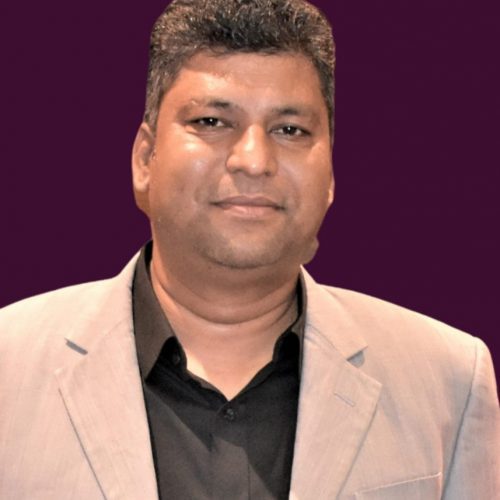
Saumitra Rajput
Saumitra Rajput is the founder of Kadamb Overseas, India's leading Europe-focused study abroad consultancy serving students across India. With 14+ years of expertise in European education, he has personally counselled 2,500+ Indian families and helped 500+ students secure admission to top European universities including TU Munich, ETH Zurich, EPFL, KU Leuven, HEC Paris, Sapienza Rome, TU Wien, and Warsaw University of Technology. He has visited 25+ European universities, partners with 250+ EU institutions, and maintains a 500+ students placed.

