

Last Updated: September 7, 2026
Table of Contents
- Why Public Transport in Germany is a Game-Changer for Indian Students
- The Deutschlandticket: Germany's Revolution in Student Transport
- Semesterticket: Your Free Transport Pass
- Types of Public Transport in Germany
- Essential Transport Apps for Indian Students
- BahnCard: Discount Cards for Long-Distance Travel
- Cycling in Germany: The Student's Best Friend
- Transport Fines & Rules: What Indian Students Must Know
- Frequently Asked Questions
🕑 8 min read
Last Updated: February 2026 | Author: Saumitra Rajput, Kadamb Overseas | Fact-Checked: Against Deutsche Bahn, VRR & city transit sources
- Deutschlandticket: €49/month (₹4,557) for unlimited travel on ALL local/regional transport nationwide
- Semesterticket: Included in your semester fee — free local transport for 6 months (many universities)
- Many universities now offer the Deutschlandticket as Semesterticket at a discounted €29/month
- Deutsche Bahn (DB): National railway — ICE trains connect all major cities at up to 300 km/h
- BahnCard 25/50: 25% or 50% discount on all DB train tickets — BahnCard 25 costs €36.90/year for students
- German cities have S-Bahn, U-Bahn, trams, and buses — all integrated in one ticket system
Why Public Transport in Germany is a Game-Changer for Indian Students
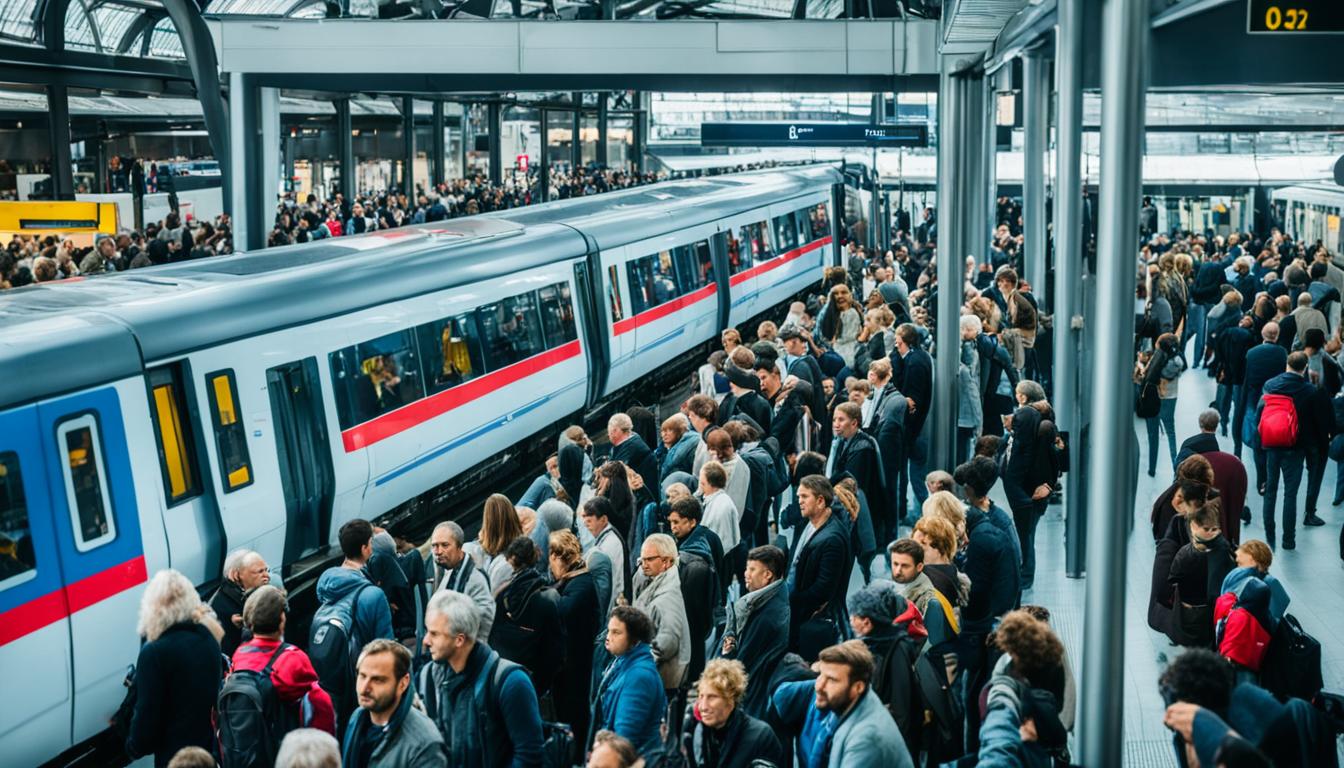
If you’re used to Indian public transport — crowded buses, unreliable schedules, and confusing routes — Germany’s transport system will feel like stepping into the future. Clean, punctual, well-connected, and affordable with a student ticket, German public transport is one of the best in the world and a major quality-of-life advantage for international students.
At Kadamb Overseas, with 14+ years of sending 500+ Indian students to Germany, we always brief students on the transport system during pre-departure orientation. Understanding how it works from day one saves money, reduces stress, and helps you navigate your new city with confidence.
The Deutschlandticket: Germany’s Revolution in Student Transport
The Deutschlandticket (D-Ticket) is a flat-rate monthly pass that provides unlimited travel on ALL local and regional public transport across Germany:
| Feature | Details | Impact for Indian Students |
|---|---|---|
| Price | €49/month (₹4,557) | Cheaper than a monthly bus pass in most Indian cities |
| Student discount | €29/month (₹2,697) at many universities | Included as part of Semesterticket at several universities |
| Coverage | ALL local buses, trams, S-Bahn, U-Bahn, regional trains (RE/RB) nationwide | Visit any German city on weekends at no extra cost |
| NOT included | ICE, IC, EC long-distance trains | Need separate tickets for high-speed intercity travel |
| Validity | Monthly subscription, cancel anytime | No long-term commitment |
| How to get | DB Navigator app, local transport apps, or ticket offices | Digital ticket on phone — no physical card needed |
Semesterticket: Your Free Transport Pass
Most German universities include a Semesterticket as part of your semester fee (Semesterbeitrag). This gives you free or heavily discounted public transport:
| University | City | Semesterticket Coverage | Cost (included in semester fee) |
|---|---|---|---|
| TU Munich | Munich | Upgraded to Deutschlandticket (€29/month student rate) | ~€174/semester |
| RWTH Aachen | Aachen | NRW-wide Semesterticket + Deutschlandticket upgrade available | ~€210/semester |
| TU Berlin | Berlin | Berlin ABC zones (covers all of Berlin + Potsdam) | ~€210/semester |
| Heidelberg University | Heidelberg | VRN network (Heidelberg + Mannheim + surrounding region) | ~€190/semester |
| University of Göttingen | Göttingen | Göttingen city zone + regional trains to nearby cities | ~€180/semester |
| University of Stuttgart | Stuttgart | VVS network (Stuttgart + surrounding region) | ~€200/semester |
| TU Dresden | Dresden | DVB network + regional trains in Saxony | ~€190/semester |
| University of Hamburg | Hamburg | HVV full network (Hamburg + surrounding) | ~€205/semester |
Key point: Your Semesterticket is automatically included in the semester fee — you pay it whether you want it or not. This means transport is effectively pre-paid. No need to buy individual tickets for daily commuting.
Types of Public Transport in Germany
| Transport Type | German Name | Speed | Use Case | Included in Deutschlandticket? |
|---|---|---|---|---|
| City Bus | Stadtbus | 15-30 km/h | Local routes within city neighborhoods | ✅ Yes |
| Tram | Straßenbahn | 20-40 km/h | Major routes through city center | ✅ Yes |
| Underground | U-Bahn | 30-60 km/h | Fast city center travel (Berlin, Munich, Hamburg, Frankfurt, Nuremberg) | ✅ Yes |
| City Rail | S-Bahn | 40-80 km/h | City + suburbs connection | ✅ Yes |
| Regional Train | Regionalbahn (RB) / Regional-Express (RE) | 80-160 km/h | City-to-city within a state | ✅ Yes |
| Intercity Express | ICE | Up to 300 km/h | Major city connections (Munich-Berlin: 4 hrs) | ❌ No — separate ticket |
| Intercity | IC / EC | Up to 200 km/h | Long-distance, fewer stops than RE | ❌ No — separate ticket |
Essential Transport Apps for Indian Students
| App | Purpose | Cost | Must-Have? |
|---|---|---|---|
| DB Navigator | Deutsche Bahn official app — train schedules, tickets, real-time delays | Free | ⭐⭐⭐⭐⭐ Essential |
| Deutschlandticket App | Buy and manage your Deutschlandticket | Free (ticket: €49/month) | ⭐⭐⭐⭐⭐ Essential |
| Google Maps | Multi-modal route planning, real-time transit info | Free | ⭐⭐⭐⭐⭐ Essential |
| City-specific apps (MVV, BVG, HVV) | Local transit — Munich (MVV), Berlin (BVG), Hamburg (HVV) | Free | ⭐⭐⭐⭐ Recommended |
| FlixBus | Long-distance bus — cheapest intercity option (€5–€25) | Free | ⭐⭐⭐⭐ For budget travel |
| Omio | Compare train, bus, flight prices for long-distance travel | Free | ⭐⭐⭐ For trip planning |
| TIER / Lime / Bolt | E-scooter rental — last-mile transport | €0.15–€0.25/min | ⭐⭐ Occasional use |
| SHARE NOW / SIXT Share | Car sharing — for trips public transport can’t cover | From €0.19/min | ⭐⭐ Occasional use |
BahnCard: Discount Cards for Long-Distance Travel
Deutsche Bahn offers discount cards that save significant money on ICE/IC tickets:
| Card | Discount | Annual Cost | Cost (₹) | Best For |
|---|---|---|---|---|
| BahnCard 25 (under 27) | 25% off all DB tickets | €36.90 | ₹3,432 | Occasional intercity travelers (3-4 trips/year) |
| BahnCard 50 (under 27) | 50% off Flexpreis tickets | €69.90 | ₹6,501 | Regular intercity travelers (monthly trips) |
| BahnCard 100 | Unlimited all DB trains | €4,144 | ₹3,85,392 | Daily long-distance commuters (rarely for students) |
Pro tip: The BahnCard 25 for under-27s at €36.90/year pays for itself with just ONE round-trip ICE ticket (e.g., Munich to Berlin saves ~€30-50 with 25% discount). If you travel home for holidays to a different city even once, it’s worth it.
Cycling in Germany: The Student’s Best Friend
Germany is one of Europe’s most bike-friendly countries. Many students use cycling as their primary transport:
- Dedicated bike lanes: Most German cities have extensive Radwege (bike paths) separated from car traffic
- Cost: A used student bike costs €50–€150 (₹4,650–₹13,950) from Kleinanzeigen or university notice boards
- Bike registration: Not required in Germany, but a good lock (€30+) is essential — bike theft is common
- Swapfiets: Monthly bike rental service (€16.90/month) — includes maintenance and theft insurance
- Rules: Lights (front white, rear red) are mandatory at night. Helmet is recommended but not legally required for adults.
- Bike + train: You can take your bike on regional trains (free with Deutschlandticket on many routes, €6/day on others)
Best Cycling Cities in Germany for Students
| City | Bike-Friendliness | Key Feature |
|---|---|---|
| Münster | ⭐⭐⭐⭐⭐ | Germany’s cycling capital — more bikes than people |
| Freiburg | ⭐⭐⭐⭐⭐ | Compact city, excellent bike infrastructure |
| Göttingen | ⭐⭐⭐⭐⭐ | Small university town — everything bikeable |
| Heidelberg | ⭐⭐⭐⭐ | Beautiful Neckar river bike paths |
| Berlin | ⭐⭐⭐⭐ | Flat terrain, expanding bike lane network |
| Munich | ⭐⭐⭐⭐ | Isar river trails, Englischer Garten bike routes |
Transport Fines & Rules: What Indian Students Must Know
| Violation | Fine | Fine (₹) | How to Avoid |
|---|---|---|---|
| Riding without valid ticket (Schwarzfahren) | €60 | ₹5,580 | ALWAYS carry your Semesterticket/Deutschlandticket. Inspectors (Kontrolleure) check regularly — no excuses accepted. |
| Repeated Schwarzfahren (3+ times) | Criminal charge possible | Court fine + criminal record | NEVER ride without a ticket — it’s taken very seriously in Germany |
| Bike without lights at night | €20–€35 | ₹1,860–₹3,255 | Always have working lights — battery-powered lights are fine |
| Cycling on sidewalk | €55–€100 | ₹5,115–₹89,300 | Use bike lanes or road — sidewalks are for pedestrians only |
| Running red light (as cyclist) | €60–€180 | ₹5,580–₹16,740 | Red means stop — for cyclists too! |
Critical warning: Schwarzfahren (riding without a ticket) is the most common fine for international students. Ticket inspectors are plain-clothes — you won’t see them coming. They have no sympathy for “I forgot my ticket” or “I’m new to Germany.” Always have your ticket visible on your phone or physical card.
🎓 Planning to Study in Germany? Get Complete Pre-Departure Guidance
Kadamb Overseas prepares Indian students for every aspect of German life — from transport to accommodation to academics. 14+ years of expertise.
💡 Expert Insight — Saumitra Rajput, Kadamb Overseas
“Indian students are always amazed by German public transport — it’s clean, reliable, and incredibly affordable with the Semesterticket. My top advice: download DB Navigator on your first day, learn to read departure boards (Abfahrt = departures, Ankunft = arrivals, Gleis = platform), and ALWAYS validate your ticket before boarding. The Deutschlandticket at €29/month for students is revolutionary — you can literally travel across entire states for free on weekends. Use it to explore Germany! Also, buy a used bike from Kleinanzeigen (Germany’s classified site) — ₹5,000-₹10,000 gets you a solid secondhand bike that saves hours in commute time.”
🎓 Student Success Story
“Coming from Mumbai where I spent 2+ hours daily in trains and autos, the transport in Aachen was a dream. My RWTH Semesterticket covered all of NRW state — I could take regional trains to Cologne, Düsseldorf, Bonn, and Dortmund for free! On weekends, I explored different cities every week. With the Deutschlandticket upgrade (€29/month extra), I could travel to Munich, Berlin, Hamburg on regional trains. I also bought a used bike for €80 from a graduating student — it became my primary transport for the 10-minute ride to campus. Between the Semesterticket and bike, I spent exactly ₹0 on daily commuting. Kadamb Overseas had explained all of this during pre-departure — I was fully prepared from day one.”
— Aditya K., MSc Mechanical Engineering, RWTH Aachen (Kadamb Overseas alumnus, 2024 batch)
Frequently Asked Questions
Is the Semesterticket compulsory for all students?
Yes, at most German universities the Semesterticket is mandatory — it’s included in your semester fee and you can’t opt out. This is actually a good thing: the collective purchasing power of all students negotiates a much lower price than individual tickets. Even if you live near campus and rarely use public transport, you’re covered for any trip within the ticket zone. Some universities offer the option to upgrade to the Deutschlandticket at a reduced student rate (€29/month instead of €49/month).
How reliable is German public transport?
German public transport is generally very reliable, though Deutsche Bahn long-distance trains have a reputation for delays. Local transport (S-Bahn, U-Bahn, trams, buses) runs on time 90-95% of the time. Regional trains are reliable 85-90% of the time. ICE long-distance trains have about 65-70% punctuality (within 6 minutes). For daily university commuting on local transport, you can rely on schedules. For important intercity trips, build in 30-60 minutes buffer time for potential delays.
Can I use my Semesterticket to travel across Germany?
Your standard Semesterticket covers local and sometimes regional transport in your university’s zone — not all of Germany. However, with the Deutschlandticket upgrade (available at many universities for €29/month), you get unlimited travel on ALL regional trains and local transport nationwide. This means you can technically travel from Munich to Hamburg using only regional trains (RE/RB) — it takes longer than ICE but costs nothing extra.
How much should I budget for transport in Germany per month?
With a Semesterticket: ₹0 for daily commuting. Your semester fee (~€150-€210/semester for transport portion) covers local travel. Budget €0-€29/month for optional Deutschlandticket upgrade. For occasional ICE long-distance trips: €20-€50 per trip with BahnCard 25 discount, or €5-€20 via FlixBus. Total monthly transport budget: ₹0-₹5,000 — remarkably cheap compared to Indian metro cities.
Should I buy a car as a student in Germany?
Generally no. A car is unnecessary and expensive for students. Costs include: insurance (€500-€1,500/year), fuel, parking (€50-€100/month in cities), maintenance, and TÜV inspection. Public transport + bike covers 95% of student needs. Exception: if you live in a rural area far from campus with poor bus connections (rare for university cities). For occasional car needs, use car-sharing apps (SHARE NOW, SIXT Share) — from €0.19/minute with no insurance or parking hassle.
How do I get from the airport to my university city?
Major German airports are well-connected by public transport. Frankfurt Airport: Direct S-Bahn and regional trains to Frankfurt Hbf (12 min), plus ICE connections to all of Germany. Munich Airport: S-Bahn S1/S8 to Munich Hbf (40 min, €13.60 or free with Semesterticket). Berlin BER: FEX or S-Bahn to Berlin Hbf (30 min). Düsseldorf Airport: S-Bahn to Düsseldorf Hbf (12 min). If your Semesterticket is already active, airport-to-city transport is usually free on local trains.
What is the Deutschlandticket and is it worth it for students?
The Deutschlandticket (D-Ticket) is a €49/month flat-rate pass for ALL local and regional transport across Germany. At many universities, students can get it for €29/month as a Semesterticket upgrade. It’s absolutely worth it if you travel to other cities even occasionally. With the D-Ticket, weekend trips to Berlin, Hamburg, Munich, or the Black Forest cost nothing in transport. It’s one of the best deals in European public transport and has been a game-changer for student mobility since its launch in 2023.
🚀 Ready for Student Life in Germany?
Kadamb Overseas — 14+ Years of Study Abroad Expertise | 500+ Students in Germany | 97% Visa Success
Complete support: university admission, visa filing, pre-departure orientation & student life guidance.
💬 Start Your Germany Journey — WhatsApp
📍 Visit: 601, MV House, Near Namaste Circle, Shahabad, Ahmedabad – 380006
Saumitra Rajput
Saumitra Rajput is the founder of Kadamb Overseas Pvt. Ltd., India's leading Europe-focused study abroad consultancy based in Ahmedabad. With 14+ years of expertise in European education, he has personally counselled 2,500+ Indian families and helped 500+ students secure admission to top European universities including TU Munich, ETH Zurich, EPFL, KU Leuven, HEC Paris, Sapienza Rome, TU Wien, and Warsaw University of Technology. He has visited 25+ European universities, partners with 250+ EU institutions, and maintains a 500+ students placed.
Planning to Study Abroad?
Get free expert guidance from our experienced counselors

Saumitra Rajput
Saumitra Rajput is the founder and lead counsellor at Kadamb Overseas, India's trusted Europe education consultancy based in Ahmedabad. With 14+ years of hands-on experience, he has personally guided 500+ students to universities across Germany, Switzerland, France, Italy, Austria, and Spain. Saumitra has visited partner universities across Europe, holds deep expertise in European visa processes, scholarships, and student life, and has achieved a 97% visa success rate for his clients. He is the host of the YouTube channel "Europe with Saumitra", where he shares first-hand insights on studying and living in Europe. His mission: make Europe accessible to every Indian student, with zero consultancy fees.