


Table of Contents
- At a Glance: Is the Netherlands a Good Choice for Data Science?
- Which Dutch Data Science Master's Fits Which Indian Student?
- Programme-by-Programme Analysis
- Admission Requirements for Indian Students
- How to Build a Credible 2027 Application
- Tuition and the Real Cost of Studying
- Scholarships: What Is Actually Available?
- Student Visa, Residence Permit and Study Progress
- Housing: Decide Before You Pay the Deposit
- Jobs After an MS in Data Science
- September 2027 Application Timeline
- Common Mistakes That Weaken Indian Applications
- A Practical Decision Framework
- Frequently Asked Questions
- Ready to Build Your 2027 Shortlist?
- Sources and Editorial Note
🕑 22 min read
If you are searching for one definitive list of “the best data science master’s programmes in the Netherlands”, pause before looking at rankings. The Dutch system offers several degrees with similar names but very different academic centres of gravity. One may expect algorithms, distributed systems and deep learning. Another may devote half its curriculum to marketing decisions. A third may admit graduates from health, economics or media and teach data science as an applied, multidisciplinary toolkit.
That distinction matters more than overall rank. A BTech CSE graduate targeting ML infrastructure should not choose the same course as a BCom graduate targeting customer analytics.
This guide is written for Indian applicants targeting September 2027. It uses the latest official information available on 1 August 2026. Where a university has not yet published its 2027–28 fee or deadline, we use its confirmed 2026–27 figure as a planning baseline and label it as such. That is deliberately more honest than presenting a future estimate as an announced fact.
Rupee comparisons use a conservative €1 = ₹105 planning rate; your transaction rate and charges will differ.
At a Glance: Is the Netherlands a Good Choice for Data Science?
Yes—if you want an English-taught European degree, can finance the full course without depending on part-time income, and choose a curriculum that fits your previous study. The Netherlands is especially attractive for students interested in data-intensive technology, logistics, fintech, consumer platforms, health, public policy and high-tech manufacturing.
There are four realities to understand before committing:
- Tuition is not low for Indians. Study in NL says non-EEA master’s fees commonly fall between €12,000 and €30,000 a year. Indian citizens normally pay the institutional, non-EEA rate, not the subsidised Dutch statutory fee. See the official Dutch tuition-fee explanation.
- Housing can be the harder problem. The official student-cost guide places average monthly spending at €1,000–€1,500 and rooms broadly at €450–€1,000, with Amsterdam generally dearer than Enschede. Read the Study in NL living-cost guidance.
- The post-study option is useful but finite. Graduates of eligible Dutch programmes can apply for a one-year orientation-year residence permit. It permits free access to the labour market, but it is neither extendable nor a promise of employment. The rules are on the Dutch Immigration and Naturalisation Service orientation-year page.
- Programme fit drives admission. Dutch admissions committees inspect the content of your bachelor’s degree—calculus, linear algebra, probability, statistics, algorithms and programming—not merely the printed degree title.
The verdict: it suits students with a coherent academic foundation and secured budget, not a “manage after arrival” plan.
Which Dutch Data Science Master’s Fits Which Indian Student?
The comparison below is not a league table. It is a fit map. Fees shown are official 2026–27 figures where the university has published them; otherwise, the student must use the university calculator and confirm the 2027–28 amount before paying a deposit.
| Programme | Duration and orientation | Best-fit Indian background | Latest confirmed non-EEA fee | Important caution |
|---|---|---|---|---|
| University of Amsterdam, MSc Information Studies: Data Science | 1 year; applied data and information problems | BTech/BE CS, IT, AI; BSc CS, Statistics or related | Check UvA fee calculator; 2027–28 not yet confirmed | Selective; strong programming and statistics expected |
| University of Amsterdam, MSc Data Science and Business Analytics | 1 year; quantitative business and analytics | Economics, econometrics, engineering, maths, CS with quantitative depth | Check UvA Economics and Business fee page | GRE/GMAT and subject prerequisites can apply |
| Utrecht University, MSc Applied Data Science | 1 year; multidisciplinary, domain-focused | Quantitative graduates from health, economics, geoscience, social science, media or computing | €25,306 for 2026–27 (about ₹26.6 lakh) | Applied rather than a pure computer-science degree |
| Maastricht University, MSc Data Science for Decision Making | 2 years; mathematics, computing and decision-making | CS, maths, OR, AI, econometrics, engineering, physics | €25,100 per year for 2026–27 (about ₹26.4 lakh/year) | Two-year tuition and living budget is substantial |
| Erasmus University Rotterdam, MSc Data Science and Marketing Analytics | 1 year; 50% data/AI, 50% marketing/business | Economics, business, engineering or quantitative graduates seeking commercial analytics | €21,000 for 2026–27 (about ₹22.1 lakh) | Not intended as a deep systems/ML-engineering degree |
| University of Twente, MSc Computer Science: Data Science & Technology | 2 years; technical CS, big data, ML, information systems | Strong BTech/BE/BSc CS or closely related technical degree | Confirm 2027–28 Computer Science rate | Admission follows MSc Computer Science prerequisites |
| Tilburg University, MSc Data Science and Society | Usually 1 year; business, governance, health or media tracks | Students wanting data methods in a social or organisational domain | Confirm programme-specific 2027–28 rate | Track choice changes the career signal |
Official programme evidence supports these distinctions. Utrecht describes its Applied Data Science MSc as multidisciplinary across health, economics, geoscience, social and behavioural science, and media. Erasmus states that its Data Science and Marketing Analytics curriculum is split evenly between computer science/ML/AI and marketing/business. Twente’s Data Science & Technology specialisation includes Machine Learning, Managing Big Data, Information Theory and Statistics, with options such as NLP, computer vision, deep learning and foundation models.
Those are not interchangeable degrees. Read the course list and assessment structure before reading rankings.
Programme-by-Programme Analysis
University of Amsterdam: Data Science (Information Studies)
UvA’s Data Science track within Information Studies is a one-year option for applicants who want to use computational and statistical methods on real information problems. Its location gives students access to Amsterdam’s broad employer base, but the programme should not be selected simply because “Amsterdam” looks attractive on LinkedIn.
The official admissions page describes a selective process. International applicants submit their academic records, degree documents, CV, English proof, information about their bachelor thesis or project where applicable, and two referee email addresses. UvA also advises applicants to complete a self-check assignment covering programming and statistical background. The latest cycle used a €100 application fee. Consult the university’s international application instructions for the Data Science track for the 2027 version.
This is a sensible target for a BTech CSE, BTech IT, BSc Computer Science or quantitatively strong engineering graduate whose transcript already shows programming and statistics. A few online certificates do not substitute for missing graded university coursework. If your probability and statistics exposure is thin, fix the gap through credit-bearing study where possible and document substantial projects honestly.
University of Amsterdam: Data Science and Business Analytics
The similarly named UvA MSc Data Science and Business Analytics belongs to a different academic context. It suits applicants interested in optimisation, econometrics, business analytics and data-informed decisions. For international-degree applicants, UvA lists detailed quantitative prerequisites and may require a GRE or GMAT, subject to exemptions and cycle-specific conditions. For the 2026 intake, the university published minimum and preferred GMAT Focus thresholds and required scores before the application deadline. Applicants should use the official international-entry page, not a coaching-site summary.
Applications for September 2027 open in October 2026. The preceding cycle used 15 January for scholarships and 1 April for non-EEA visa/housing cases; recheck the UvA application process for 2027 deadlines.
Choose this over Information Studies only if you actually enjoy mathematical business problems. It can fit an Indian economics, statistics, mathematics, engineering or computer-science graduate with the required quantitative subjects. It is not an MBA wearing a technical label.
Utrecht University: Applied Data Science
Utrecht’s one-year MSc is the clearest fit for an applicant who wants to apply data methods in a domain rather than train solely as a computer scientist. The programme explicitly spans health, economics, geoscience, social and behavioural science, and media. That creates a valuable bridge for quantitative students outside conventional CS, but it also means a student targeting low-level ML systems should compare the syllabus against Twente or a technical computer-science degree.
The confirmed 2026–27 non-EU/EEA institutional fee is €25,306, approximately ₹26.6 lakh at our planning rate. Utrecht labels the course selective and bases decisions on academic background, grades and motivation. The official tuition page is the source for the published fee.
Make the application domain-specific: disease-risk modelling for pharmacy, demand forecasting for economics, spatial analysis for geoscience or recommendation systems for media. Avoid generic “data is the new oil” claims.
Maastricht University: Data Science for Decision Making
Maastricht’s two-year MSc provides more time for mathematical and computing depth. The university says applicants may come from mathematics, computer science, technical data science, operations research, AI, econometrics, engineering or physics. Its requirements specifically look for competencies such as data structures, algorithms and programming, and it can offer a tailored one-semester pre-master where the admissions board identifies limited deficiencies.
For 2026–27, Maastricht publishes an institutional fee of €25,100 for non-EU/EEA students—about ₹26.4 lakh for one academic year at €1 = ₹105. Over two years, tuition alone is roughly €50,200 or ₹52.7 lakh before annual increases. Use the official admission requirements and official fee page.
It can suit students seeking research depth who can finance two years. Include the second year of rent, insurance, food and tuition.
Erasmus University Rotterdam: Data Science and Marketing Analytics
Erasmus is explicit about what this one-year degree is: a 50–50 blend of computer science, machine learning and AI with marketing and business. The curriculum includes R programming, data-science foundations, strategic marketing decisions, machine-learning seminars, real company cases and a thesis. For an applicant targeting customer analytics, pricing, personalisation, consulting or marketing science, that integration can be a feature rather than a compromise.
The official 2026–27 facts page lists €21,000 for non-EEA students, approximately ₹22.1 lakh, with a 1 April non-EEA deadline in the published cycle. It states the programme is one year, English-taught and 60 EC. Verify the September 2027 dates on the Erasmus facts and figures page.
A BTech student should ask: “Do I want to build models for commercial decisions, or do I want to engineer the systems on which models run?” If the second answer dominates, this is probably not the closest fit. A BBA or economics graduate, meanwhile, must prove enough quantitative readiness rather than treating the word “marketing” as an escape from mathematics.
University of Twente: Computer Science, Data Science & Technology
Twente’s Data Science & Technology route sits inside a two-year MSc Computer Science. That makes the admissions lens more technical. The 2026–27 curriculum lists core study in machine learning, big data management, data-science topics, information theory and statistics, plus advanced choices such as deep learning, NLP or information retrieval, computer vision, multimodal ML and foundation models.
For Indian BTech CSE/IT applicants who want ML engineering, data platforms or advanced technical work, this structure may align more directly than a one-year applied programme. The two-year, 120-EC format also allows more time for electives, internship possibilities and a thesis. Twente explains that one Dutch EC represents 28 hours of workload and shows how the Computer Science programme totals 120 EC on its course structure pages.
Confirm the 2027–28 non-EEA rate and add 24 months of living costs. Kadamb’s Netherlands study hub and Netherlands versus Belgium comparison add regional context.
Tilburg University: Data Science and Society
Tilburg’s Data Science and Society programme is designed around the use of data in business, governance, health and media. It can serve students who want analytical capability anchored in an application domain. That is different from training as a generalist software engineer or ML researcher.
The right question is not “Is Tilburg ranked above Utrecht?” It is “Which track, courses and thesis environment support the problems I want to solve?” A health-background applicant may value health-data applications; a public-policy applicant may value governance; a communications graduate may find media analytics coherent. Confirm the 2027–28 fee, track availability, English requirements and subject prerequisites directly with Tilburg when the intake page is updated.
Admission Requirements for Indian Students
There is no Netherlands-wide CGPA cutoff for data science master’s admissions. Each admissions board evaluates degree level, university standing, subject content, grades, language evidence and programme fit. Consultants who promise admission based on one CGPA number are simplifying a faculty-level academic decision.
What academic background is normally expected?
For technical routes, a successful transcript commonly contains:
- programming in Python, Java, C++ or a comparable language;
- data structures and algorithms;
- calculus and linear algebra;
- probability and statistics;
- databases or data management;
- discrete mathematics for computer-science-heavy courses;
- an academic project, capstone or thesis demonstrating independent work.
Applied programmes can accept a broader domain degree, but “broader” does not mean “no quantitative preparation”. A BCom, BBA, BA Economics, BPharm or social-science applicant must check the exact subject prerequisites and show credible quantitative work. University admissions pages—not agent eligibility calculators—are authoritative.
How will a three-year Indian bachelor’s be assessed?
A three-year BSc, BCA, BCom or BA is not automatically accepted or rejected across the Netherlands. The university evaluates whether the qualification is comparable to the academic level it requires and whether its content supplies the relevant prerequisites. Outcomes can differ by institution and programme. One faculty may offer a pre-master; another may decide that deficiencies are too extensive.
Submit complete semester transcripts, the degree certificate or provisional evidence, grading-scale information and clear course descriptions. If a subject title such as “Mathematical Foundations II” is vague, attach the official syllabus showing calculus, probability or linear algebra topics. Do not rewrite or inflate course content.
Is IELTS mandatory?
Most English-taught programmes require an accepted English test unless the applicant qualifies for a narrowly defined exemption. The exact test, minimum overall score, component scores, validity period and exemption policy differ. Do not assume that an Indian medium-of-instruction letter will be accepted merely because another university accepted it.
Take IELTS Academic, TOEFL or another listed test early enough to receive and transmit scores before the deadline. Aiming only at the minimum can also be strategically weak in a selective pool. Follow each programme’s current admissions page.
Are GRE or GMAT scores needed?
Not for every programme. UvA Data Science and Business Analytics is an example where international applicants may face GRE/GMAT requirements unless exempt. UvA Information Studies: Data Science uses a different application model. Never transfer one programme’s rule to another just because both are at UvA.
In 12-plus years guiding Indian students toward European universities, Saumitra Rajput and the Kadamb Overseas team repeatedly see the same avoidable error: an applicant begins test preparation before checking whether the target faculty needs that test. Build a university-specific requirement sheet first.
How to Build a Credible 2027 Application
Step 1: Define the role you want after graduation
Write down two or three realistic roles: data analyst, data scientist, ML engineer, analytics consultant, marketing scientist, decision scientist or research assistant. Then inspect 20 current vacancy descriptions in the Netherlands. Note the recurring skills, degree expectations and language requirements. This prevents the vague goal of “a job in AI”.
Step 2: Audit every target curriculum
Create a spreadsheet with compulsory modules, electives, thesis weight, internship possibility, programming languages and mathematics depth. Mark each course as technical, statistical, business or domain-applied. A curriculum audit is more informative than a global university rank.
Step 3: Map your Indian coursework to prerequisites
For every official requirement, enter the matching semester, subject title, grade and syllabus page from your bachelor’s. If “linear algebra” is embedded inside Engineering Mathematics, show that clearly. This mapping also tells you where your gaps are.
Step 4: Repair genuine gaps before applying
Prioritise graded university study, reputable credit-bearing courses or substantial assessed work. Projects should show the complete chain: question, data provenance, cleaning, baseline, modelling choices, evaluation, limitations and reproducibility. A notebook copied from Kaggle is not evidence of independent ability.
Step 5: Prepare a compact, evidence-led CV
Put education, quantitative courses, relevant projects, internships, publications and technical skills where an evaluator can find them quickly. Describe outcomes without exaggeration. “Reduced validation MAE by 12% against the documented baseline” is stronger than “used cutting-edge AI to transform predictions.”
Step 6: Write a programme-specific motivation letter
Connect your prior work to named course features and a realistic next step. Avoid childhood stories about computers unless they illuminate a decision. Explain why this curriculum—not simply the Netherlands—closes a specific knowledge gap. If you need a framework, adapt Kadamb’s evidence-based motivation-letter guidance without copying a template sentence-for-sentence.
Step 7: Register in Studielink and complete the university portal
Studielink is usually only the national registration step. Many universities require a second application in their own system, such as UvA’s Embark or DataNose. An incomplete faculty portal submission is not rescued by a Studielink registration.
Step 8: Submit early enough for scholarships, visa and housing
Scholarship deadlines often precede regular admission deadlines. Housing access may also depend on an earlier application. For September 2027, start the research and test phase in August–October 2026, not after New Year.
Step 9: Keep claims and documents verifiable
Reference letters must come through the channel the university specifies. Never alter a transcript, invent an internship or list a paper that cannot be verified. Dutch institutions can seek credential checks, and a short-term application shortcut can become a long-term immigration problem.
For document preparation across Europe, use Kadamb’s guide to apostille and transcript preparation for Indian applicants as a starting checklist, then follow the target university’s instructions.
Tuition and the Real Cost of Studying
Budget for tuition, rent, food, transport, materials, insurance, immigration, flights, housing deposit, setup and a currency buffer.
One-year planning scenarios
| Cost item | Lower-cost-city scenario | Amsterdam/expensive-city scenario |
|---|---|---|
| Tuition planning range | €21,000 (₹22.1 lakh) | €25,306 (₹26.6 lakh) |
| Living costs for 12 months | €12,000 (₹12.6 lakh) | €18,000 (₹18.9 lakh) |
| Visa, travel, setup and contingency | €2,000 (₹2.1 lakh) | €3,000 (₹3.2 lakh) |
| Approximate first-year total | €35,000 (₹36.8 lakh) | €46,306 (₹48.6 lakh) |
These are planning examples, not invoices. Your university may charge more or less. Study in NL’s current guidance says students average €1,000–€1,500 per month, and its room range of €450–€1,000 demonstrates why city choice matters.
For the 2026 calendar year, IND’s proof-of-funds amount for university students is €1,130.77 per month. That is an immigration minimum, not a guarantee that you can live comfortably in Amsterdam. IND updates these figures, so use the official required-amounts page for the value that applies when your institution begins the residence process.
Why part-time work should not fund the plan
Under the current student-residence rules, a non-EEA student may work up to 16 hours a week or full-time in June, July and August; the employer generally needs the relevant work authorisation. The IND student residence-permit page also requires satisfactory study progress—normally at least 50% of annual credits.
Treat part-time income as optional support, not as tuition finance. Work may take time to find, Dutch can matter for customer-facing jobs, and demanding master’s courses leave limited capacity. A funding plan that fails without immediate employment is not robust.
For financing comparisons, see Kadamb’s education-loan guide for European study and Europe education-loan EMI calculator guide.
Scholarships: What Is Actually Available?
The best-known award is the NL Scholarship, formerly called the Holland Scholarship. The official award is €5,000 in the first year and is not full tuition. It is for non-EEA students applying to participating institutions and programmes. Eligibility and deadlines are controlled by the institution. Check the current NL Scholarship page rather than articles that still promise a universal “Holland Scholarship”.
University-specific funding differs:
- UvA faculties offer limited Amsterdam Merit Scholarships, but amounts, eligible degrees and deadlines vary by faculty and year. UvA’s Data Science and Business Analytics page says scholarship applications generally open in October and lists a 15 January deadline; amounts are determined annually. See the programme scholarship page.
- The University of Twente Scholarship is open to excellent non-EU/EEA applicants admitted to qualifying master’s programmes. For September 2027, Twente lists €3,000–€22,000 for one year and a 1 April 2027 deadline. Two-year continuation has academic-progress conditions. Read the official UTS terms.
- Other universities have faculty or excellence awards, but not every data-science course participates every year.
Build two budgets: one with zero scholarship and one showing how a confirmed award changes borrowing. Never sign a large loan on the assumption that a competitive scholarship “should come through”.
Student Visa, Residence Permit and Study Progress
Indian students normally require an entry visa where applicable and a Dutch study residence permit. The crucial feature of the Dutch system is that the recognised educational institution applies to IND on the student’s behalf. The programme must be appropriately accredited, the student must be registered, and financial requirements must be met.
The process normally follows this sequence:
1. receive and accept an admission offer;
2. satisfy academic conditions and the institution’s payment deadlines;
3. submit passport and immigration documents to the university;
4. demonstrate the required funds using the university’s instructed method;
5. let the recognised sponsor submit the immigration application;
6. complete biometrics and collect the entry visa or residence document as directed;
7. register locally and maintain insurance and study-progress obligations after arrival.
Only your university and IND can confirm the documents for your case. The IND study-permit guidance says the permit is tied to the recognised sponsor and generally covers the study period plus three months, up to a maximum of five years. Students are expected to obtain at least 50% of their credits each study year unless a recognised personal circumstance applies.
This is an area where precision beats speed. A blog checklist cannot replace the document list issued in your university portal.
Housing: Decide Before You Pay the Deposit
Housing is not an afterthought. Ask each university four questions before accepting:
1. Is university-arranged housing guaranteed, limited or unavailable?
2. What is the earliest date I can join the housing process?
3. What are the booking fee, deposit, contract length and cancellation terms?
4. What is a realistic private-market fallback within commuting distance?
Before transferring money, verify the landlord or agency, address, viewing process, contract and payment account. A passport image sent on WhatsApp proves little.
A €200 monthly rent difference becomes €2,400, about ₹2.5 lakh, over one year.
Kadamb’s European student-housing application guide gives a broader fraud and document checklist. Use it alongside the housing office’s current instructions.
Jobs After an MS in Data Science
A Dutch degree can support analyst, data scientist, analytics engineer, ML engineer, BI, risk, marketing analytics or research roles. Access depends on curriculum, experience, portfolio, Dutch and sponsorship.
Relevant sectors include high-tech manufacturing and semiconductors around Eindhoven; fintech, consumer platforms and professional services around Amsterdam; logistics and commerce around Rotterdam; and health, public-sector or research applications across university regions. English is common in international technical teams, but Dutch expands the market, particularly for smaller employers, government-linked work and roles requiring local stakeholder contact.
What does the orientation year permit provide?
Eligible graduates can apply within the applicable period for a one-year orientation-year permit. The permit allows free work access without a separate employer work permit and can also support job search or entrepreneurship. It cannot be extended. If you find qualifying work, a recognised sponsor can apply for a different permit, such as highly skilled migrant status.
For 2026, IND lists a reduced highly skilled migrant salary criterion of €3,122 gross per month, excluding holiday allowance, for qualifying recent graduates in the relevant circumstances. Ordinary under-30 and over-30 thresholds are higher. These amounts change; the 2027 figure must be checked on IND’s income-requirements page.
What do the national outcomes actually show?
Nuffic reports that about 25% of international graduates still live in the Netherlands five years after graduation and that 80% of those remaining are employed. It also reports substantial regional variation: in its latest study, Eindhoven had a 49% five-year stay rate, Delft 39% and Utrecht 37%, while the figure for Maastricht institutions was lower—partly complicated by cross-border mobility. Read the Nuffic stay-rate research.
These population outcomes are neither a personal forecast nor data-science placement rates. They show that outcomes are conditional, not guaranteed or impossible.
Start career preparation in semester one. Learn basic Dutch, attend employer events, build relationships through projects, and keep your portfolio readable by a hiring manager. Kadamb’s European master’s to tech-career guide provides a useful wider strategy, but no brand-name outcome should be treated as guaranteed.
September 2027 Application Timeline
| Period | What to complete |
|---|---|
| August–September 2026 | Define role targets; shortlist by curriculum; audit mathematics and programming gaps |
| September–November 2026 | Prepare English test; gather transcripts, syllabi and grading scale; improve one serious project |
| October–December 2026 | Monitor 2027 portals; contact programmes only with questions not answered online; brief referees |
| By early January 2027 | Submit applications needed for mid-January scholarship deadlines |
| January–March 2027 | Complete remaining priority applications; respond quickly to document requests |
| By programme deadline, often before April/May | Finish non-EEA applications early enough for visa and any housing route |
| April–June 2027 | Compare offers by total cost and curriculum; arrange funding; accept one place responsibly |
| May–July 2027 | Complete university-led immigration, tuition and proof-of-funds steps; secure housing |
| August 2027 | Final documents, insurance, travel, academic refresh and arrival plan |
Dates vary. UvA has already stated that its September 2027 Data Science and Business Analytics application opens in October 2026, while Twente has published a 1 April 2027 scholarship deadline. Other faculty pages will update on their own schedules. Track the official page for every programme and Kadamb’s 2027 European application-deadline calendar.
Common Mistakes That Weaken Indian Applications
Choosing a university before choosing a curriculum
Writing “UvA is my dream” without choosing between its distinct data programmes signals poor research. Begin with the academic problem.
Treating certificates as replacements for prerequisites
Coursera, edX and vendor certificates can show initiative. They do not automatically replace a missing semester of calculus, probability or algorithms when the faculty requires formal academic preparation.
Publishing an inflated project portfolio
One documented project beats five clones. Show data origin, leakage controls, baseline, evaluation, errors, limitations and reproducible instructions.
Using the same SOP everywhere
Amsterdam’s tech ecosystem does not prove fit with Maastricht’s mathematical course or Utrecht’s multidisciplinary model. Rewrite the academic core for each application.
Comparing annual instead of total cost
Add every year of tuition and living expenses; annual-fee comparisons hide the cost of two-year programmes.
Assuming an internship is guaranteed
Some curricula include project or internship opportunities; others focus on coursework and thesis. Confirm whether an internship is compulsory, optional, competitive or absent. Erasmus, for example, lists no internship for its Data Science and Marketing Analytics MSc.
Depending on part-time work or a future scholarship
Build the admission and visa plan with secured funds. Part-time earnings and competitive scholarships are upside, not foundations.
Ignoring Dutch until graduation
You can study in English, but even A2–B1 Dutch can expand networking and show commitment. Begin before arrival or in the first term rather than waiting for the orientation year.
A Practical Decision Framework
Use these five filters in order:
1. Eligibility: Do your graded courses genuinely meet the prerequisites?
2. Curriculum: Is the degree technical, statistical, business-oriented or domain-applied in the way your target role needs?
3. Total affordability: Can you fund every year plus a 10–15% buffer without optimistic income assumptions?
4. Career access: Does the city, thesis model and employer network help your preferred sector, and are you willing to learn Dutch?
5. Fallback value: If the Dutch job search takes longer or you return to India, does the curriculum still improve your skills and employability?
For a BTech CSE applicant targeting ML engineering, Twente’s technical route or another computer-science-heavy degree may score highest. For a statistics graduate wanting applied cross-domain work, Utrecht may fit better. For an economics or engineering graduate drawn to customer analytics, Erasmus or UvA Business Analytics may be coherent. For a mathematically strong applicant wanting two years of depth, Maastricht deserves attention.
That is what a good shortlist looks like: different answers for different students, supported by course evidence.
Frequently Asked Questions
### Is the Netherlands good for an MS in Data Science in 2027?
Yes, especially for English-taught study and access to technology, logistics, finance and analytics employers. The trade-offs are high non-EEA tuition and difficult housing.
### How long is a Dutch data science master’s?
It depends. UvA, Utrecht and Erasmus offer relevant one-year degrees, while Maastricht Data Science for Decision Making and Twente Computer Science are two-year programmes.
### What is the total cost for an Indian student?
A realistic one-year plan is roughly €35,000–€46,000 (₹36.8–₹48.3 lakh), depending on tuition and city. Two-year programmes require tuition and living costs for both years.
### Is a BTech CSE degree eligible?
Often, yes. Eligibility still depends on graded coursework in programming, algorithms, mathematics and statistics. Each programme’s admissions board makes the final assessment.
### Can a BCA graduate apply?
Possibly, but acceptance is not automatic. Universities assess degree level, mathematics, computer-science content and research preparation; a pre-master may be offered in limited cases.
### Can a BCom or BBA graduate study data science in the Netherlands?
Some applied or business-oriented programmes may fit, provided you meet quantitative prerequisites. A technical MSc Computer Science route will usually require much deeper computing and mathematics.
### Is IELTS compulsory for Indian students?
Usually an approved English test is required unless you meet the programme’s explicit exemption. Do not assume an Indian medium-of-instruction letter will be accepted.
### Is GRE required?
Not universally. UvA Data Science and Business Analytics may require GRE or GMAT for international applicants, while other programmes use different selection methods.
### Can I study in the Netherlands with a low CGPA?
There is no universal cutoff. Strong prerequisites and fit help, but certificates cannot erase weak academic evidence in subjects a selective programme considers essential.
### Can part-time work cover living costs?
Do not base your budget on it. Student work is restricted, employers may need authorisation, jobs are not immediate, and a full-time master’s has a heavy workload.
### What is the NL Scholarship amount?
The official NL Scholarship is €5,000 for the first year. It is competitive, limited to participating institutions and programmes, and is not a full-tuition award.
### Do Dutch universities provide accommodation?
Some offer limited housing assistance or reserved rooms; this is not the same as a guarantee. Check eligibility, booking dates, fees and private-market alternatives before accepting.
### Can I stay after graduation?
Eligible graduates can apply for a one-year orientation-year permit. It allows free labour-market access but cannot be extended and does not guarantee employment.
### Do I need Dutch for data science jobs?
Not for every international technical team, but Dutch materially widens access to smaller employers, public-sector work and stakeholder-facing roles. Starting early is sensible.
### Which programme is best for ML engineering?
A technical computer-science route such as Twente Data Science & Technology is usually closer than a marketing-analytics degree. Compare modules, thesis and systems depth before deciding.
### When should I apply for September 2027?
Prepare in August–October 2026. Submit scholarship-dependent applications by their early deadlines and finish non-EEA applications well before visa and housing cutoffs.
Ready to Build Your 2027 Shortlist?
Kadamb Overseas can review your transcript course-by-course, separate realistic options from title-only matches, and build a deadline and funding plan for the Netherlands. Speak with the Ahmedabad team on WhatsApp at +91 96876 88776 or use the Kadamb Overseas consultation page. Admission, scholarships, visas and jobs remain decisions of universities, authorities and employers; no ethical adviser can guarantee them.
Sources and Editorial Note
This guide was fact-checked on 1 August 2026 against official pages from the University of Amsterdam, Utrecht University, Maastricht University, Erasmus University Rotterdam, University of Twente, Study in NL, Nuffic and IND. Links appear beside the claims they support. Because September 2027 information is still being released, applicants should recheck 2027–28 fees, deadlines and immigration amounts before acting. Kadamb Overseas should review this page whenever a cited authority updates a rule or figure.
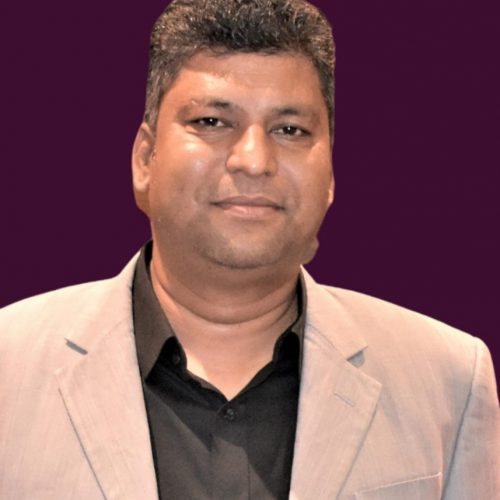
Saumitra Rajput
Saumitra Rajput is the founder of Kadamb Overseas Pvt. Ltd., India's leading Europe-focused study abroad consultancy based in Ahmedabad. With 14+ years of expertise in European education, he has personally counselled 2,500+ Indian families and helped 500+ students secure admission to top European universities including TU Munich, ETH Zurich, EPFL, KU Leuven, HEC Paris, Sapienza Rome, TU Wien, and Warsaw University of Technology. He has visited 25+ European universities, partners with 250+ EU institutions, and maintains a 500+ students placed.
Planning to Study Abroad?
Get free expert guidance from our experienced counselors

Saumitra Rajput
Saumitra Rajput is the founder and lead counsellor at Kadamb Overseas, India's trusted Europe education consultancy based in Ahmedabad. With 14+ years of hands-on experience, he has personally guided 500+ students to universities across Germany, Switzerland, France, Italy, Austria, and Spain. Saumitra has visited partner universities across Europe, holds deep expertise in European visa processes, scholarships, and student life, and has achieved a 97% visa success rate for his clients. He is the host of the YouTube channel "Europe with Saumitra", where he shares first-hand insights on studying and living in Europe. His mission: make Europe accessible to every Indian student, with zero consultancy fees.

