



Last Updated: April 20, 2026
💰 Europe Cost Calculator 2026 Updated
Country 1
Country 2
Table of Contents
- Overview of University of Fribourg Switzerland
- Why Choose University of Fribourg for Higher Education
- University of Fribourg Tuition Fees, Scholarships Eligibility, Admission
- Academic Programs and Course Structure
- Scholarship Opportunities at University of Fribourg
- Admission Requirements and Application Process
- Document Checklist for International Students
- Student Life and Campus Facilities
- Accommodation Options and Housing Support
- Research Opportunities and Academic Resources
- Career Services and Employment Prospects
- International Student Support Services
- FAQ
- FAQ
🕑 15 min read
The University of Fribourg is in the heart of Switzerland. It’s a top choice for international students, especially from India. Located in Fribourg, it offers great learning, culture, and a unique student life. It’s perfect for both undergraduate and postgraduate studies.
If you’re an Indian student looking at studying in Switzerland, the University of Fribourg is a great option. It has affordable tuition, scholarships, and strict admission rules. This makes it a place where you can grow and succeed.
Key Takeaways
- The University of Fribourg is a prestigious institution located in Switzerland that attracts international students, including those from India.
- The university offers a range of undergraduate and postgraduate programs, catering to diverse academic interests.
- Tuition fees and scholarship opportunities are key considerations for Indian students when choosing to study at the University of Fribourg.
- The admission process at the University of Fribourg is competitive and requires a thorough understanding of the eligibility criteria and application requirements.
- The university’s location in Fribourg, Switzerland, provides a unique cultural and educational experience for international students.
Overview of University of Fribourg Switzerland
The University of Fribourg is in the heart of Switzerland. It has a long history and is known for its academic excellence. Founded in 1889, it’s among the top universities globally, including its QS World ranking.
History and Heritage
The University of Fribourg has a rich history, starting in the late 19th century. It began small but grew into a center of learning. Its campus in the Swiss countryside shows its heritage and dedication to learning.
Academic Excellence and Recognition
The University of Fribourg is known for its University of Fribourg Switzerland courses. It offers a wide range of programs. The faculty is made up of experts who make important discoveries.
Global Standing and Rankings
The University of Fribourg is highly regarded worldwide. It’s ranked among the top universities globally. Its QS World ranking shows its academic strength and quality education.
“The University of Fribourg is a true gem in the heart of Switzerland, offering a unique and enriching educational experience that prepares students for success on a global scale.”
Why Choose University of Fribourg for Higher Education
The University of Fribourg in Switzerland is a top choice for higher education. It offers excellent academic programs, research chances, and a lively multilingual setting. This makes for a truly enriching educational journey.
The University of Fribourg is known for its high-quality academic programs. It has a wide range of academic programs for different interests and career goals. The courses are designed to challenge and prepare students well for their future careers.
Also, the University of Fribourg is famous for its research opportunities. Students get to work with top professors on important research projects. This experience boosts their academic growth and prepares them for research careers.
Studying at the University of Fribourg also means being in a multilingual environment. As a bilingual university in Europe, it offers students a chance to learn French and German. These skills are highly valued in the global job market.
“The University of Fribourg has been an incredible platform for me to explore my academic passions and develop essential skills for my future career. The diverse course offerings, world-class research facilities, and vibrant campus life have truly enriched my educational journey.”
In summary, the University of Fribourg is a great choice for students looking for a top-notch education. It offers strong academic programs, research chances, and a multilingual setting. This prepares students with the knowledge, skills, and global views needed for success today.
University of Fribourg Tuition Fees, Scholarships Eligibility, Admission
The University of Fribourg is in the heart of Switzerland. It offers many academic programs for undergraduates and graduates. Students interested in studying here should know about the costs and fees.
Undergraduate Program Fees
Tuition fees for undergrad programs at the University of Fribourg change based on the field. Swiss and EU students pay about 800-1,200 CHF per semester. International students from outside the EU might pay 1,200-1,800 CHF per semester.
Graduate Program Fees
Master’s and doctoral programs at the University of Fribourg cost more. Swiss and EU students pay 1,000-1,500 CHF per semester. International students from outside the EU might pay 1,500-2,200 CHF per semester.
Additional Costs and Living Expenses
Students at the University of Fribourg also need to think about living costs. These costs can change based on lifestyle and location. Students should budget about 1,500-2,000 CHF per month for housing, food, and other needs.
| Program | Swiss/EU Students | International Students |
|---|---|---|
| Undergraduate | 800-1,200 CHF/semester | 1,200-1,800 CHF/semester |
| Graduate | 1,000-1,500 CHF/semester | 1,500-2,200 CHF/semester |
Keep in mind that these costs are estimates and can change. Prospective students should check the University of Fribourg’s website or contact the admissions office. They can find the latest info on tuition, scholarships, and financial aid.
Academic Programs and Course Structure
The University of Fribourg in Switzerland has many academic programs. Students can pick from a wide range of courses. These are designed to meet their educational goals and career dreams.
Popular programs include Business, Economics, Law, Computer Science, Engineering, and the Humanities. These programs are either three-year bachelor’s degrees or one- to two-year master’s degrees. This flexibility lets students shape their education to fit their needs.
The academic year is split into two semesters. The fall semester is from September to December, and the spring semester is from February to May. The university has a detailed course catalog. It gives students all the info they need about program duration and intake periods for each University of Fribourg Switzerland course.
Studying at the University of Fribourg is a unique experience. The curriculum focuses on interdisciplinary learning, research, and practical application. Students get a stimulating and enriching environment. It encourages critical thinking, problem-solving, and teamwork.
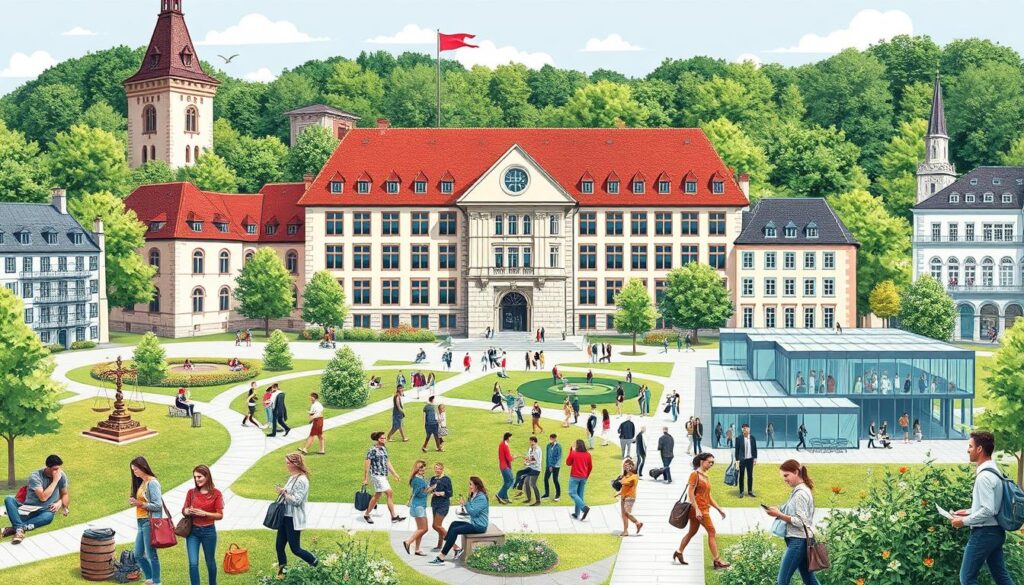
“The University of Fribourg is dedicated to providing a world-class education that prepares students for success in a dynamic, global marketplace.”
Whether you’re looking for a bachelor’s, master’s, or specialized program, the University of Fribourg is ready. It aims to give students the knowledge, skills, and practical experience to excel in their fields.
Scholarship Opportunities at University of Fribourg
The University of Fribourg in Switzerland has many scholarship options for international students. These scholarships help with the cost of studying and honor the talents and achievements of students.
Merit-based Scholarships
The University of Fribourg gives out merit-based scholarships to students who excel academically and show leadership. These scholarships are competitive. They are based on the student’s grades, activities outside of class, and personal statement.
Need-based Financial Aid
The university also offers financial aid to students who need it. This aid helps with tuition, living costs, and other educational expenses. It ensures that all students can get a top-notch education at the University of Fribourg.
Research Grants and Fellowships
For those interested in research, the University of Fribourg has many research grants and fellowships. These opportunities let students work with top professors, join important research projects, and grow their skills.
“The scholarship opportunities at the University of Fribourg have been a game-changer for me. The financial support has allowed me to focus on my studies and pursue my passion for research without worrying about the financial burden.”
To find out more about the University of Fribourg scholarship Switzerland and financial aid for international students, check the university’s website or talk to an admissions counselor.
Admission Requirements and Application Process
Students from India wanting to study at the University of Fribourg in Switzerland need to follow a specific process. The university has different intakes and welcomes students from all over the world, including India.
The admission process at the University of Fribourg is thorough. It checks each candidate’s academic background and potential. Students must meet the eligibility criteria and submit their application on time.
Key Admission Requirements
- Successful completion of a recognized secondary education program, such as the Indian Standard 12th or equivalent
- Submission of official academic transcripts and mark sheets
- Demonstration of English language proficiency, typically through exams like IELTS or TOEFL
- Submission of a Statement of Purpose (SOP) outlining the applicant’s academic and professional goals
- Recommendation letters from former teachers or academic supervisors
- Fulfillment of any additional program-specific requirements, such as submission of a portfolio or performance audition
Application Process Overview
- Review the available programs and their specific admission requirements on the University of Fribourg website
- Gather all necessary documents and materials for the application
- Complete the online application form within the stipulated deadlines
- Pay the required application fee
- Wait for the admission decision from the university
- Upon acceptance, complete the enrollment process and secure necessary visas or permits
The University of Fribourg values a complete look at each applicant. They consider academic achievements, extracurricular activities, and personal statements. By knowing the intakes and eligibility, Indian students can prepare well for a great educational experience at this Swiss university.
| Intake | Deadline | Notification |
|---|---|---|
| Fall Semester | April 30th | June 30th |
| Spring Semester | October 31st | December 31st |
Document Checklist for International Students
Applying to the University of Fribourg in Switzerland is easier for international students with the right documents. This checklist covers the essential documents for a smooth application.
Academic Documents
- Certified copies of academic transcripts or mark sheets from previous schools
- Diploma or degree certificates
- Official translations of academic documents, if not in English or French
- Proof of English or French proficiency, such as IELTS, TOEFL, or approved language test scores
Financial Documents
- Bank statements or financial statements showing enough money for tuition and living costs
- Scholarship or sponsorship letters, if applicable
- Proof of financial solvency, such as income tax returns or bank statements
Language Requirements
The University of Fribourg needs international students to show they can speak English or French. This depends on the program. Accepted tests include IELTS, TOEFL, or French language exams.
By getting all documents ready and submitted, international students can make their application smoother. This increases their chances of getting into the prestigious University of Fribourg in Switzerland.
Student Life and Campus Facilities
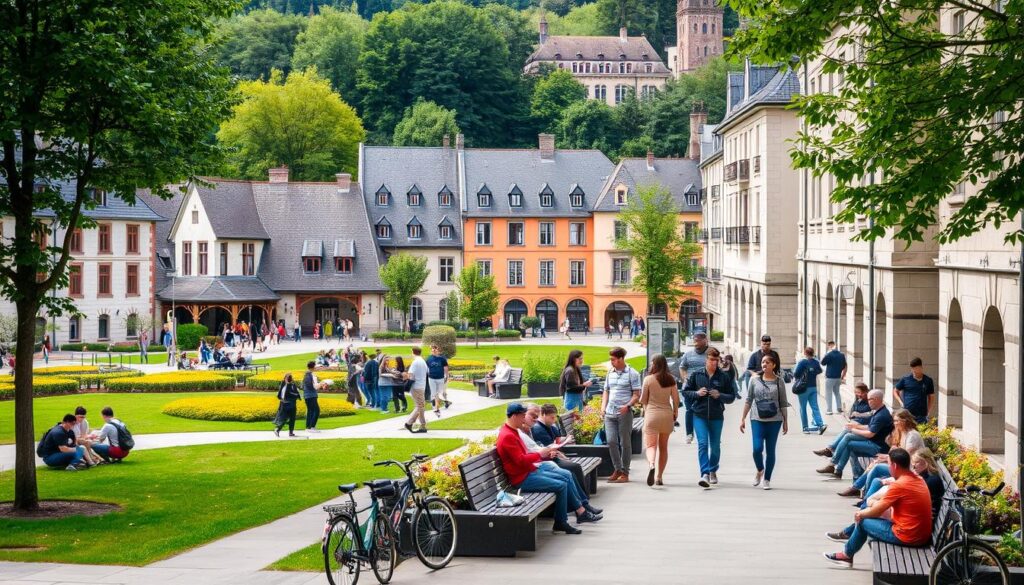
The University of Fribourg Switzerland has a lively campus life. It caters to the varied interests and needs of its students. There are many student organizations, sports facilities, and cultural activities. The university aims to create a dynamic and inclusive community.
When students arrive at the University of Fribourg, they find a welcoming atmosphere. The university’s efforts in student service and campus life aim to improve the student experience. They provide many chances for personal growth and development.
Diverse Student Organizations
The University of Fribourg has a diverse student community. There are over 50 registered student organizations. These groups cover a wide range of interests, from academic clubs to cultural associations and recreational groups. They offer students a chance to meet others, explore their passions, and gain leadership skills.
- Academic and Professional Clubs: Students can dive deeper into their studies and meet industry experts.
- Cultural and Diversity Associations: These groups celebrate the university’s multicultural heritage and promote cultural exchange.
- Sports and Fitness Clubs: Students can stay active and healthy through these clubs.
- Social and Volunteer Groups: These groups encourage community service and volunteer work.
Vibrant Campus Life
The University of Fribourg campus is always buzzing with activity. It has many facilities and amenities to enhance the student experience. From sports complexes and research labs to cozy study areas and social spots, the university meets the diverse needs of its students.
| Facility | Description |
|---|---|
| Sports and Recreation Center | This modern facility offers a variety of sports and fitness activities, including indoor courts, swimming pools, and fitness studios. |
| Cultural Arts Center | This vibrant hub hosts art exhibitions, music performances, and theater productions throughout the year. |
| Student Activity Hub | This dedicated space is for student organizations to host events, meetings, and social gatherings, fostering community and engagement. |
The University of Fribourg Switzerland is committed to student service and campus life. It ensures students have many chances to explore their interests, develop their skills, and make lasting memories on campus.
“The vibrant campus life at the University of Fribourg has been a transformative experience, allowing me to connect with diverse individuals, pursue my passions, and grow as a well-rounded global citizen.”
Accommodation Options and Housing Support
Finding a place to live at the University of Fribourg can seem tough. But, the university offers lots of help and resources. Students can choose from on-campus housing or private options, depending on what they need and like.
On-campus Housing
The University of Fribourg has many on-campus housing choices. You can live in dorms, apartments, or shared spaces. These places are designed to be comfy and close to campus, helping students feel part of a community.
Private Accommodation
Students wanting more freedom can find private places to live with the university’s help. Whether it’s a studio or a shared flat, the team can guide you through finding the right place. They help match your budget and preferences with local rentals.
Cost Comparison
| Accommodation Type | Average Monthly Cost (CHF) |
|---|---|
| On-campus Housing | 500 – 800 |
| Private Apartment | 800 – 1,200 |
| Shared Flat | 400 – 600 |
The cost of living varies based on location, size, and what’s included. The housing support team can give you a better idea of costs. They help you find the best and most affordable place for you.
“The on-campus housing options at the University of Fribourg have been a game-changer for me. The convenience and sense of community have been invaluable throughout my studies.”
Research Opportunities and Academic Resources
At the University of Fribourg, researchers and students find many academic resources and research chances. The university is known for its top-notch labs, research centers, and partnerships with big names and global institutions.
Students at the University of Fribourg can dive into research grants and fellowships on campus. These programs offer money, guidance, and resources for new projects. They help make the university a center of learning.
The University of Fribourg also has a lot of academic resources for students. They have libraries, online databases, learning centers, and writing workshops. This ensures students have what they need to do well in their studies.
| Research Centers | Specialized Laboratories | Collaborative Opportunities |
|---|---|---|
| Center for Computational Biology | Biotechnology and Biomedical Engineering Lab | Joint Research Projects with Industry Partners |
| Institute of Materials Science | Sustainable Energy Systems Research Lab | International Research Exchanges and Internships |
| Cognitive Science Research Center | Advanced Imaging and Visualization Lab | Interdisciplinary Research Initiatives |
“The University of Fribourg has given me amazing research chances. The support and resources here have helped a lot in my growth as a researcher.”
Career Services and Employment Prospects
The University of Fribourg offers top-notch career services. These services aim to empower students and open doors to many opportunities. The university helps graduates find their way in the job market in Switzerland and worldwide.
A dedicated team at the university works closely with students. They help students find their strengths and explore different career paths. Students get one-on-one advice, attend workshops, and go to career fairs. This helps them understand the job market, improve their job search skills, and meet potential employers.
- Personalized career counseling and guidance
- Resume and cover letter review
- Mock interviews and feedback
- Networking opportunities with industry leaders
- Internship and job placement assistance
The University of Fribourg also has strong ties with the industry and a big alumni network. This means graduates have many employment opportunities in Switzerland. These jobs are in fields like finance, technology, healthcare, and international organizations.
“The career services at the University of Fribourg were instrumental in my success. They helped me identify my strengths, prepare for interviews, and ultimately land my dream job in the financial sector.”
Thanks to the university’s career services, students can start their careers with confidence. They have the knowledge, skills, and connections needed to succeed globally.
International Student Support Services
At the University of Fribourg, we know the special challenges international students face. This includes students from India. We’ve created a wide range of support services to help you succeed academically and personally.
Our team will help you with the visa process from the start. They offer expert advice and support every step of the way. When you arrive, our cultural programs will help you get used to the Swiss way of life. You’ll also meet students from all over the world.
If you need help with languages, we’ve got you covered. Our language courses and tutoring will help you speak English and German well. And if you’re feeling unwell, our medical facilities and counseling services are here for you.
FAQ
What is the University of Fribourg and why is it a popular choice for international students?
The University of Fribourg is a top school in Fribourg, Switzerland. It’s known for its great education and welcoming vibe for students from around the world. It’s especially popular with students from India.
What are the tuition fees and other costs for studying at the University of Fribourg?
Tuition at the University of Fribourg changes based on the program and level. Undergrads pay between
FAQ
What is the University of Fribourg and why is it a popular choice for international students?
The University of Fribourg is a top school in Fribourg, Switzerland. It’s known for its great education and welcoming vibe for students from around the world. It’s especially popular with students from India.
What are the tuition fees and other costs for studying at the University of Fribourg?
Tuition at the University of Fribourg changes based on the program and level. Undergrads pay between $1,500 and $3,000 yearly. Grad students pay $2,000 to $5,000 yearly. Students also need to think about living costs, health insurance, and other expenses.
What scholarship opportunities are available for international students at the University of Fribourg?
The University of Fribourg has many scholarships for international students. These include scholarships based on merit, financial aid, and research grants. It’s key to check the details and application process for each scholarship.
What are the admission requirements and application process for international students at the University of Fribourg?
To get into the University of Fribourg, international students need a high school diploma or similar. They also must show they can speak French, German, or English. The application requires transcripts, language test scores, and other documents.
What kind of campus life and student services can I expect at the University of Fribourg?
The University of Fribourg has a lively campus with many clubs, sports, and cultural events. It also offers help for international students, like visa support, language help, and career advice. This ensures a great study experience.
What are the housing options available for international students at the University of Fribourg?
The University of Fribourg has on-campus housing and helps find private places. On-campus spots are rare, but private housing is more affordable. The university’s housing team can guide students through the options.
What are the research opportunities and academic resources available at the University of Fribourg?
The University of Fribourg focuses on research with many centers and labs. Students get access to libraries, online resources, and support for research. This helps them in their studies and future careers.
What are the career prospects and employment opportunities for graduates of the University of Fribourg?
The University of Fribourg graduates are highly sought after. The university’s career services help with job placement, internships, and career advice. This support helps students find jobs in Switzerland and globally.
,500 and ,000 yearly. Grad students pay ,000 to ,000 yearly. Students also need to think about living costs, health insurance, and other expenses.
What scholarship opportunities are available for international students at the University of Fribourg?
The University of Fribourg has many scholarships for international students. These include scholarships based on merit, financial aid, and research grants. It’s key to check the details and application process for each scholarship.
What are the admission requirements and application process for international students at the University of Fribourg?
To get into the University of Fribourg, international students need a high school diploma or similar. They also must show they can speak French, German, or English. The application requires transcripts, language test scores, and other documents.
What kind of campus life and student services can I expect at the University of Fribourg?
The University of Fribourg has a lively campus with many clubs, sports, and cultural events. It also offers help for international students, like visa support, language help, and career advice. This ensures a great study experience.
What are the housing options available for international students at the University of Fribourg?
The University of Fribourg has on-campus housing and helps find private places. On-campus spots are rare, but private housing is more affordable. The university’s housing team can guide students through the options.
What are the research opportunities and academic resources available at the University of Fribourg?
The University of Fribourg focuses on research with many centers and labs. Students get access to libraries, online resources, and support for research. This helps them in their studies and future careers.
What are the career prospects and employment opportunities for graduates of the University of Fribourg?
The University of Fribourg graduates are highly sought after. The university’s career services help with job placement, internships, and career advice. This support helps students find jobs in Switzerland and globally.
Saumitra Rajput
Saumitra Rajput is the founder of Kadamb Overseas Pvt. Ltd., India's leading Europe-focused study abroad consultancy based in Ahmedabad. With 14+ years of expertise in European education, he has personally counselled 2,500+ Indian families and helped 500+ students secure admission to top European universities including TU Munich, ETH Zurich, EPFL, KU Leuven, HEC Paris, Sapienza Rome, TU Wien, and Warsaw University of Technology. He has visited 25+ European universities, partners with 250+ EU institutions, and maintains a 97% visa success rate.
Planning to Study Abroad?
Get free expert guidance from our experienced counselors

Saumitra Rajput
Saumitra Rajput is the founder and lead counsellor at Kadamb Overseas, India's trusted Europe education consultancy based in Ahmedabad. With 14+ years of hands-on experience, he has personally guided 500+ students to universities across Germany, Switzerland, France, Italy, Austria, and Spain. Saumitra has visited partner universities across Europe, holds deep expertise in European visa processes, scholarships, and student life, and has achieved a 97% visa success rate for his clients. He is the host of the YouTube channel "Europe with Saumitra", where he shares first-hand insights on studying and living in Europe. His mission: make Europe accessible to every Indian student, with zero consultancy fees.
Related Articles
- Dr. B.R. Ambedkar Award for Top SC/ST/OBC/Minority Students
- PTE Listening Practice Test 2026: 8 Question Types + Tips for 79+ Score | Kadamb
- Master in Wealth Management at university of luxembourg
- EDC Paris Business School France: Tuition Fees, Scholarships, Admission
- TU Dresden Admission, Fees & Scholarships for Indian Students 2026