

Last Updated: September 7, 2026
Table of Contents
- 📊 Understanding IELTS Speaking Scoring Criteria
- 🎤 The 3 Parts of IELTS Speaking Test
- 🎯 Technique #1: The 3-Second Rule for Confidence
- 🗣️ Technique #2: The STAR Method for Part 2
- 🔥 Technique #3: Filler Phrases That Sound Natural
- 📝 Technique #4: Extend Your Answers (But Not Too Much)
- 🎭 Technique #5: Show Range with Conditional & Complex Sentences
- 🎵 Technique #6: Master Pronunciation Patterns (Not Accent)
- 💪 Technique #7: Handle Difficult Questions Gracefully
- 🧠 Technique #8: Topic Vocabulary Banks
- ⚡ Technique #9: The Power of Examples
- 🔄 Technique #10: Self-Correction Shows Awareness
- 😰 Technique #11: Overcome Anxiety Before & During Test
- 📅 Technique #12: The 30-Day Speaking Preparation Plan
- ❌ Common Mistakes That Kill Your Score
- ❓ Frequently Asked Questions
🕑 11 min read
The IELTS Speaking test is just 11-14 minutes long, but those minutes can determine your entire future—university admission, visa approval, career opportunities. Unlike Reading or Writing where you can revise answers, Speaking happens in real-time with an examiner watching your every word, pause, and expression.
Here’s the brutal truth: most Indian students score lower in Speaking than any other IELTS module. Why? It’s not vocabulary or grammar—it’s confidence and fluency. The fear of making mistakes, the anxiety of being judged, and the habit of translating from Hindi to English creates hesitation that examiners notice immediately.
At Kadamb Overseas, we’ve coached 500+ students through their IELTS journey, and we’ve seen students jump from Band 5.5 to Band 7+ in Speaking alone. The secret? It’s not about being perfect—it’s about being confident, fluent, and strategic.
In this comprehensive guide, we’ll share 12 battle-tested techniques that will transform your IELTS Speaking performance. Whether you’re targeting universities in Germany, Switzerland, or Ireland, these strategies will help you speak with the confidence of a native speaker.
⚡ IELTS Speaking at a Glance
- ⏱️ Total Duration: 11-14 minutes
- 📝 Format: Face-to-face interview with examiner
- 📊 Parts: 3 parts (Introduction, Cue Card, Discussion)
- 🎯 Band 7 Criteria: Fluency, Lexical Resource, Grammar, Pronunciation
- 📅 Scored Separately: Speaking score can differ from other modules
- 🔴 Recorded: All tests are audio recorded
📊 Understanding IELTS Speaking Scoring Criteria
Before diving into techniques, let’s understand exactly what examiners are looking for. Your Speaking score is based on 4 criteria, each worth 25%:
Key insight: You don’t need perfect grammar or native pronunciation. Band 7 allows for occasional errors. Focus on communication effectiveness over perfection.
🎤 The 3 Parts of IELTS Speaking Test
Understanding each part helps you prepare strategically:
🎯 Technique #1: The 3-Second Rule for Confidence
When the examiner asks a question, don’t answer immediately. Take a 3-second pause before responding.
Why This Works:
- Shows thoughtfulness — You appear to be formulating a quality answer
- Reduces “umm” and “ahh” — Pausing is better than filler sounds
- Calms nerves — Brief pause helps regulate anxiety
- Organizes thoughts — Gives time to structure your response
How to Use It:
Examiner: “Do you prefer living in a city or countryside?”
❌ Bad: “Umm… I think… like… city is good because… umm…”
✅ Good: [3-second pause] “Honestly, I’d choose city life. The convenience of having everything nearby—shops, hospitals, entertainment—makes daily life much more efficient.”
🗣️ Technique #2: The STAR Method for Part 2
Part 2 (Cue Card) terrifies most students. The STAR method provides a foolproof structure:
- Situation — Set the scene (When? Where? Who?)
- Task — What was the goal or challenge?
- Action — What did you do?
- Result — What happened? How did you feel?
Example – “Describe a challenging experience”:
Situation: “Last year, during my final semester exams, I faced an unexpected challenge…”
Task: “I had to prepare for five subjects in just two weeks while also recovering from dengue fever…”
Action: “I created a strict timetable, prioritized topics based on weightage, and studied in short focused bursts…”
Result: “Against all odds, I scored above 80% in all subjects. This experience taught me that resilience and smart planning can overcome any obstacle.”
💡 EXPERT TIP
“The biggest mistake in Part 2? Running out of things to say after 45 seconds. Always prepare 3-4 sub-points for any topic. If asked about ‘a person you admire,’ don’t just describe them—talk about how you met, a specific incident, what you learned, and how they influenced you.”
— Saumitra Rajput, Founder, Kadamb Overseas (15+ years experience)
🔥 Technique #3: Filler Phrases That Sound Natural
Completely eliminating pauses is impossible (and unnatural). Instead, use intelligent filler phrases that buy time while sounding fluent:
Instead of “Umm…” or “Ahh…” use:
- “That’s an interesting question…” (buys 2 seconds)
- “Well, to be honest…” (sounds thoughtful)
- “Actually, now that I think about it…” (shows reflection)
- “I suppose the main thing is…” (structures answer)
- “What I mean to say is…” (allows self-correction)
- “Let me put it this way…” (redirects answer)
For Part 3 Abstract Questions:
- “That’s quite a complex issue. I believe…”
- “There are different perspectives on this…”
- “From my understanding…”
- “If I had to choose, I’d say…”
Struggling with IELTS Speaking Confidence?
Our expert coaches conduct mock speaking tests with personalized feedback. Identify your weaknesses and get a custom improvement plan.
✓ Personalized feedback. Band 7+ guarantee.
📝 Technique #4: Extend Your Answers (But Not Too Much)
One-word answers kill your score. Extended rambling also hurts. Find the sweet spot:
Part 1 Answer Length:
Question: “Do you like cooking?”
❌ Too Short (Band 5): “Yes, I do.”
❌ Too Long (Loses Focus): “Yes, I absolutely love cooking. I started when I was 10 years old. My grandmother taught me. She used to make amazing biryani. The spices were so fragrant. I remember the kitchen always smelled wonderful. We had a big kitchen in our old house. The house was in Ahmedabad. We moved in 2015…” (rambling)
✅ Perfect (Band 7): “Yes, I really enjoy cooking, especially on weekends. It’s become a way for me to unwind after a hectic week. I particularly love experimenting with Italian cuisine—there’s something satisfying about making fresh pasta from scratch.”
The 3-Sentence Formula for Part 1:
- Direct answer — Answer the question clearly
- Reason/Example — Why or give a specific example
- Extension — Add a related detail or opinion
🎭 Technique #5: Show Range with Conditional & Complex Sentences
Using only simple sentences caps your Grammar score at Band 6. Demonstrate range with:
Conditional Sentences:
- “If I had more time, I would definitely travel more.”
- “If the government were to invest more in education, the results would be significant.”
- “Had I known about this opportunity earlier, I would have applied immediately.”
Complex Structures:
- “Although city life is convenient, what I really miss is the tranquility of my hometown.”
- “Not only does technology make life easier, but it also creates new challenges.”
- “The reason why I chose this career is that I’ve always been passionate about helping others.”
📚 Related Reading
IELTS Reading Techniques: 10 Strategies for Band 8+
Master skimming, scanning, and time management for the Reading module.
🎵 Technique #6: Master Pronunciation Patterns (Not Accent)
Important: Examiners don’t expect a British or American accent. They assess clarity and intelligibility.
Focus On These 4 Elements:
1. Word Stress
- phoTOgraphy (not PHOtography)
- develOPment (not DEvelopment)
- econOMic (not ECOnomic)
2. Sentence Stress
Emphasize content words (nouns, verbs, adjectives), not function words (the, is, at):
“I LOVE traveling to NEW places and EXPERIENCING different CULTURES.”
3. Intonation
- Rising tone for yes/no questions
- Falling tone for statements and Wh- questions
- Rise-fall for expressing surprise or enthusiasm
4. Connected Speech
Native speakers link words naturally:
- “kind of” → “kinda”
- “want to” → “wanna” (informal, use sparingly)
- “going to” → “gonna” (informal)
💪 Technique #7: Handle Difficult Questions Gracefully
Sometimes you’ll get questions you don’t understand or can’t answer. Here’s how to handle them:
If You Don’t Understand:
- “I’m sorry, could you rephrase that question?”
- “Do you mean… [your interpretation]?”
- “I’m not quite sure I follow. Are you asking about…?”
If You Don’t Have Experience:
Question: “Describe a time you met a celebrity.”
Response: “I haven’t actually met any celebrities in person, but if I were to imagine such an experience, I’d love to meet [person] because…”
If You Need to Think:
- “That’s something I haven’t really considered before. Let me think…”
- “That’s a thought-provoking question. I’d say…”
🎓 STUDENT SUCCESS STORY
Priya Sharma from Vadodara struggled with Speaking anxiety—her first attempt scored Band 5.5. After 8 weeks of coaching at Kadamb Overseas focusing on confidence techniques and mock tests, she scored Band 7.5 in Speaking. “The mock tests with real-time feedback changed everything. I learned that small hesitations are okay—what matters is recovering smoothly.”
Now pursuing MBA at TU Munich, Germany 🇩🇪
🧠 Technique #8: Topic Vocabulary Banks
Build vocabulary banks for common IELTS topics. Here are essential words for frequent themes:
⚡ Technique #9: The Power of Examples
Abstract answers bore examiners. Concrete examples make your responses memorable:
Question: “Do you think advertising influences people?”
❌ Generic: “Yes, advertising definitely influences people. Companies spend a lot on ads because they work.”
✅ With Example: “Absolutely. I’ve experienced this myself—I recently bought a fitness watch after seeing Instagram ads repeatedly. The brand created this sense of urgency with limited-time offers, and before I knew it, I’d clicked ‘buy.’ It made me realize how subtly advertising shapes our purchasing decisions.”
🔄 Technique #10: Self-Correction Shows Awareness
Making mistakes isn’t the problem—not correcting them is. Examiners appreciate self-correction:
How to Correct Naturally:
- “I went there last week… actually, I mean last month.”
- “She were—sorry, she was—very helpful.”
- “It’s a big… or rather, a significant issue in society.”
Note: Don’t over-correct every tiny mistake. Fix noticeable errors smoothly and move on.
😰 Technique #11: Overcome Anxiety Before & During Test
Anxiety is the #1 confidence killer. Here’s how to manage it:
Before the Test:
- Sleep well — 7-8 hours minimum the night before
- Arrive early — Rushing increases anxiety
- Power pose — Stand tall for 2 minutes before entering (proven to boost confidence)
- Controlled breathing — 4 seconds in, 4 seconds hold, 4 seconds out
During the Test:
- Treat it as a conversation — The examiner is not your enemy
- Make eye contact — Shows confidence (but don’t stare)
- Smile naturally — Releases endorphins, reduces stress
- Slow down if nervous — Speaking too fast is a common anxiety response
Mindset Shift:
Instead of thinking “I must not make mistakes,” think “I’m here to have an interesting conversation in English.” This reframe dramatically reduces pressure.
📅 Technique #12: The 30-Day Speaking Preparation Plan
Follow this structured plan for significant improvement:
Week 1: Foundation
- Record yourself answering 5 Part 1 questions daily
- Listen back and identify 3 areas to improve
- Practice the 3-second pause technique
- Build vocabulary bank (10 new words daily)
Week 2: Structure
- Practice 3 Part 2 cue cards using STAR method
- Focus on extending answers to 2 full minutes
- Record and time yourself
- Practice filler phrases until they feel natural
Week 3: Complexity
- Practice Part 3 abstract questions
- Focus on using complex sentences and conditionals
- Work on pronunciation patterns
- Take 2 full mock tests
Week 4: Polish
- Daily mock tests under exam conditions
- Get feedback from a teacher or speaking partner
- Focus on weak areas identified
- Light practice only on test-eve (avoid burnout)
❌ Common Mistakes That Kill Your Score
- Memorizing scripted answers — Examiners detect this instantly
- Speaking too fast when nervous — Clarity beats speed
- Using “big words” incorrectly — Simple words used correctly beat complex words used wrongly
- Not answering the actual question — Listen carefully before responding
- Saying “I don’t know” without elaborating — Always add “but I think…”
- Flat intonation — Show enthusiasm through voice modulation
- Looking down constantly — Eye contact shows confidence
❓ Frequently Asked Questions
Focus on three key areas: (1) Fluency — Reduce hesitation by practicing daily and using filler phrases instead of “umm.” (2) Vocabulary — Replace basic words with Band 7 vocabulary (e.g., “good” → “remarkable,” “bad” → “detrimental”). (3) Grammar range — Use conditional sentences and complex structures. With 4-6 weeks of focused practice, Band 6 to 7 improvement is very achievable.
Absolutely! Asking for clarification is perfectly acceptable and shows good communication skills. Use phrases like “Could you please repeat that?” or “Do you mean…?” However, avoid asking for repetition too frequently (more than 2-3 times) as it may suggest comprehension issues. In Part 3, the examiner can rephrase abstract questions if needed.
Part 1: Keep answers to 2-4 sentences (15-30 seconds). Don’t give one-word answers, but don’t ramble either. Part 2: Speak for the full 2 minutes—stopping early hurts your score. Part 3: Give more developed answers of 30-60 seconds with reasons, examples, and different perspectives. Part 3 is your chance to showcase complex language.
Yes! IELTS Speaking assesses natural conversation, not formal writing. Using contractions (I’m, don’t, can’t) and informal expressions (“kind of,” “pretty much,” “you know”) is actually encouraged—it shows you speak English naturally. However, avoid slang that might be unclear and maintain appropriate register for the topic being discussed.
You can use imagination! If asked to “describe a famous person you’ve met” but you haven’t met any, say: “I haven’t actually met any celebrities, but if I could imagine meeting someone famous, I’d love to meet [person]…” Then describe the hypothetical experience. The examiner assesses your language ability, not whether your story is true. Just ensure your language remains natural and descriptive.
No! You do NOT need a British or American accent. Examiners assess intelligibility—how clearly you communicate. Indian, Chinese, or any other accent is perfectly acceptable as long as your pronunciation is clear and doesn’t cause misunderstanding. Focus on word stress, sentence stress, and intonation rather than trying to imitate native accents. Many Band 9 speakers have non-native accents.
Requirements vary by country and program: Germany: Overall 6.0-6.5 (some programs accept 5.5). Switzerland: 6.5-7.0 (ETH Zurich requires 7.0). Ireland: 6.5 overall with minimum 6.0 in each component. France: 6.0-6.5. Speaking scores are sometimes considered separately, especially for programs requiring presentations. Check specific university requirements at our Germany guide or Switzerland guide.
Ready to Score Band 7+ in IELTS Speaking?
Join our IELTS coaching program with real mock speaking tests, expert feedback, and proven confidence-building techniques.
📋 What You’ll Get:
- Weekly mock speaking tests with recordings
- Personalized feedback on all 4 criteria
- Part 2 cue card practice bank (100+ topics)
- Pronunciation & fluency drills
- Anxiety management techniques
📞 +91-9913333239 |
💬 WhatsApp Us
📍 Kadamb Overseas, Ahmedabad, Gujarat | ⏰ Mon-Sat: 10AM – 7PM IST
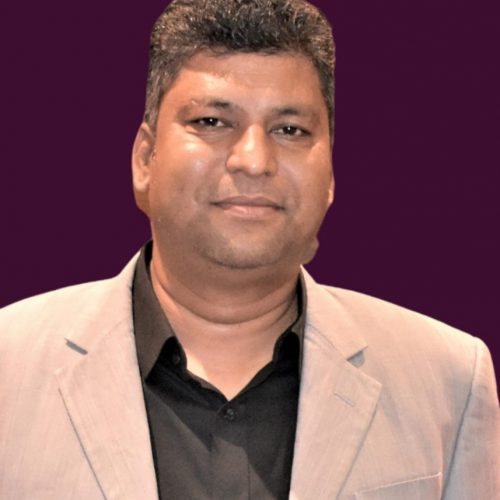
Saumitra Rajput
Founder & IELTS Expert
With 15+ years of experience in overseas education consulting, Saumitra has helped 500+ Indian students achieve their target IELTS scores and secure admissions at top European universities. His confidence-building approach to IELTS Speaking has contributed to a 97% visa success rate at Kadamb Overseas.
📚 Related IELTS Articles
Saumitra Rajput
Saumitra Rajput is the founder of Kadamb Overseas Pvt. Ltd., India's leading Europe-focused study abroad consultancy based in Ahmedabad. With 14+ years of expertise in European education, he has personally counselled 2,500+ Indian families and helped 500+ students secure admission to top European universities including TU Munich, ETH Zurich, EPFL, KU Leuven, HEC Paris, Sapienza Rome, TU Wien, and Warsaw University of Technology. He has visited 25+ European universities, partners with 250+ EU institutions, and maintains a 500+ students placed.
Planning to Study Abroad?
Get free expert guidance from our experienced counselors

Saumitra Rajput
Saumitra Rajput is the founder and lead counsellor at Kadamb Overseas, India's trusted Europe education consultancy based in Ahmedabad. With 14+ years of hands-on experience, he has personally guided 500+ students to universities across Germany, Switzerland, France, Italy, Austria, and Spain. Saumitra has visited partner universities across Europe, holds deep expertise in European visa processes, scholarships, and student life, and has achieved a 97% visa success rate for his clients. He is the host of the YouTube channel "Europe with Saumitra", where he shares first-hand insights on studying and living in Europe. His mission: make Europe accessible to every Indian student, with zero consultancy fees.