

Last Updated: September 7, 2026
Table of Contents
- 1. What Is the Eiffel Excellence Scholarship?
- 2. Why the Eiffel Scholarship Is Different — The Nomination Model Explained
- 3. Eligibility Criteria for Indian Students
- 4. Complete Financial Benefits Breakdown — What Eiffel Scholars Actually Receive
- 5. Eligible Fields of Study — What Can Indian Students Study on Eiffel?
- 6. Top French Universities That Actively Nominate for Eiffel
- 7. Step-by-Step Application Strategy for Indian Students
- 8. Application Timeline 2026-27 — Month-by-Month Calendar
- 9. Documents Required for Eiffel Nomination
- 10. Eiffel vs Charpak vs Erasmus Mundus — Which Scholarship Should Indian Students Target?
- 11. Selection Criteria — What the Eiffel Committee Actually Looks For
- 12. Common Mistakes Indian Students Make — And How to Avoid Them
🕑 21 min read
The Eiffel Excellence Scholarship Program (Programme de bourses d’excellence Eiffel) is the most prestigious scholarship offered by the French Ministry for Europe and Foreign Affairs (MEAE) for international students — including Indian students — pursuing Master’s or PhD programs at French higher education institutions. Unlike most scholarships where you apply directly, the Eiffel Scholarship requires nomination by a French institution, making the application strategy fundamentally different from scholarships like Erasmus Mundus or DAAD. For the 2026-27 cycle, selected Master’s students receive a monthly stipend of €1,181/month (approximately ₹1,06,290/month) and PhD students receive €1,700/month (approximately ₹1,53,000/month), along with international travel, housing assistance, health insurance coverage, and cultural activity allowances. The scholarship covers the full duration of your Master’s (12-36 months) or PhD (up to 36 months) program. This comprehensive guide covers everything an Indian student needs to know: eligibility criteria, the nomination-based application process, financial benefits breakdown, top French universities that actively nominate candidates, document preparation, the Campus France connection, comparison with other France scholarships, common mistakes to avoid, application timeline, and a step-by-step strategy to maximize your chances of getting selected.
🇫🇷 Eiffel Excellence Scholarship 2026 — Quick Answer for Indian Students
| Scholarship Detail | Master’s Level | PhD Level |
|---|---|---|
| Monthly Stipend | €1,181/month (₹1,06,290) | €1,700/month (₹1,53,000) |
| Duration | 12 to 36 months | Up to 36 months |
| Tuition Fee Coverage | No — but public unis charge only €243/year | No — but public unis charge only €380/year |
| International Travel | Round-trip airfare covered (India ↔ France) | |
| Housing Allowance | €700 installation allowance + housing search assistance | |
| Health Insurance | Campus France health insurance fully covered | |
| Application Type | Nomination by French institution (NOT direct application) | |
| Eligible Fields | Sciences, Engineering, Economics, Management, Law, Political Science | |
| Age Limit | Max 30 years old | Max 35 years old |
| Number of Awards (approx.) | ~400 Master’s + ~70 PhD per year (worldwide) | |
| Selection Results | March 2026 (for September 2026 start) | |
Source: French Ministry for Europe and Foreign Affairs (MEAE) Official Eiffel Guidelines 2026 | Campus France India | Kadamb Overseas student nomination records | EUR 1 = ₹90 (approx.) | Updated: March 2026
Last Updated: March 2026 | Data verified against MEAE (French Ministry for Europe and Foreign Affairs) Eiffel Excellence Scholarship 2026-27 official guidelines, Campus France India official announcements, French Embassy in India scholarship bulletins, and Kadamb Overseas student nomination and placement records (students assisted since 2010)
📋 What This Guide Covers
- What Is the Eiffel Excellence Scholarship?
- Why the Eiffel Scholarship Is Different — The Nomination Model
- Eligibility Criteria for Indian Students
- Complete Financial Benefits Breakdown (Master’s & PhD)
- Eligible Fields of Study
- Top French Universities That Actively Nominate for Eiffel
- Step-by-Step Application Strategy for Indian Students
- Application Timeline 2026-27
- Documents Required for Eiffel Nomination
- Eiffel vs Charpak vs Erasmus Mundus — Comparison
- Selection Criteria — What the Committee Looks For
- Common Mistakes Indian Students Make
- Life in France as an Eiffel Scholar
- Post-Scholarship Career Opportunities
- Key Takeaways
- 10 Frequently Asked Questions (FAQs)
- Next Steps — Contact Kadamb Overseas
1. What Is the Eiffel Excellence Scholarship?
The Eiffel Excellence Scholarship Program (Programme de bourses d’excellence Eiffel) was established by the French Ministry for Europe and Foreign Affairs (Ministère de l’Europe et des Affaires étrangères — MEAE) to attract the best international students to French higher education institutions for Master’s and PhD level programs. Named after Gustave Eiffel — the engineer behind France’s most iconic structure — the scholarship aims to build a global network of future leaders, decision-makers, and researchers who have been trained in France and maintain strong ties with the country throughout their careers.
The Eiffel program is not a need-based financial aid scheme. It is a merit-based excellence scholarship that specifically targets students who demonstrate exceptional academic achievement, leadership potential, and the ability to become influential figures in their home countries. The French government views this as a strategic soft-power investment: by training the brightest minds from countries like India, they create lifelong ambassadors for French education, culture, and bilateral relations.
Each year, approximately 400 Master’s level scholarships and 70 PhD level scholarships are awarded worldwide. Competition is intense — thousands of nominations are submitted by French institutions, and the selection committee at Campus France (which administers the program on behalf of MEAE) selects only the very best. For Indian students, this means you are competing not just against other Indian applicants, but against nominees from over 100 countries globally.
“The Eiffel Scholarship is, in my professional opinion, the single most valuable scholarship opportunity available to Indian students targeting France. The monthly stipend alone — ₹1,06,290 for Master’s and ₹1,53,000 for PhD — is higher than what many fresh graduates earn as a starting salary in India. But the real value goes far beyond money. Eiffel scholars become part of an exclusive alumni network that includes ministers, CEOs, and ambassadors. When I counsel students at Kadamb Overseas, I always say: if you have a strong academic profile and want France, the Eiffel should be your number one target.”
— Saumitra Rajput, Founder, Kadamb Overseas (Ahmedabad)
Key Facts About the Eiffel Excellence Scholarship
- Established: 1999 by the French Ministry for Europe and Foreign Affairs (MEAE)
- Administered by: Campus France (French national agency for the promotion of French higher education abroad)
- Target: International students from non-EU countries (India is a priority country)
- Levels: Master’s (M1 or M2) and PhD
- Application method: Nomination by a French higher education institution — students cannot apply directly
- Annual awards: Approximately 400 Master’s + 70 PhD (worldwide total)
- Priority fields: Sciences & Engineering, Economics & Management, Law & Political Science
- Official website: campusfrance.org/en/eiffel-scholarship-program-of-excellence
2. Why the Eiffel Scholarship Is Different — The Nomination Model Explained
This is the single most important thing Indian students need to understand about the Eiffel Scholarship, and it is where most applicants go wrong: You cannot apply directly for the Eiffel Scholarship. There is no online portal where you fill out a form and submit your documents to the French Ministry. That is not how this works.
Instead, the Eiffel Scholarship operates on a nomination model. Here is how it works:
- You apply for admission to a French university/Grande École — just like any regular applicant. You submit your academic transcripts, CV, motivation letter, language certificates, and any other required documents directly to the institution.
- The French institution evaluates your profile — if they find you to be an exceptional candidate who meets the Eiffel criteria, they may decide to nominate you for the Eiffel Scholarship. This is the institution’s decision, not yours.
- The institution prepares and submits the Eiffel nomination dossier — this includes your academic records, a justification letter from the institution explaining why you deserve the scholarship, your research or study project, and supporting documents.
- Campus France receives all nominations from all French institutions — they compile all dossiers and forward them to the selection committee appointed by MEAE.
- The MEAE selection committee evaluates all nominations — they select approximately 400 Master’s and 70 PhD winners based on academic excellence, the quality of the study/research project, the institution’s reputation, and the candidate’s leadership potential.
- Results are announced — typically in March, for programs starting in September of the same year.
This nomination model has a critical strategic implication: your relationship with the French institution is everything. You need to not just get admitted, but impress the admissions committee or program director enough that they consider you worthy of one of their limited Eiffel nomination slots. Most institutions have an internal quota — they can only nominate a limited number of candidates — so the competition starts at the institutional level itself.
“The biggest misconception I encounter among Indian students is that they think they can ‘apply for Eiffel’ like they apply for Erasmus or DAAD. That is simply not how this scholarship works. At Kadamb Overseas, the first thing we tell students is: your Eiffel strategy is really your university application strategy. You need to apply to the right French institutions, in the right programs, with an application so strong that the institution wants to fight for your Eiffel nomination. We have had students nominated by Sciences Po, ESSEC, and Polytechnique — and in every case, the admission application was prepared with Eiffel nomination in mind from day one.”
— Saumitra Rajput, Founder, Kadamb Overseas (Ahmedabad)
How to Signal to a French Institution That You Want Eiffel Nomination
While you cannot apply directly, there are strategic steps you can take to increase your chances of being nominated:
- Mention the Eiffel Scholarship in your motivation letter: Explicitly state that you are interested in the Eiffel Excellence Scholarship and believe your profile aligns with its criteria. This puts it on the admissions committee’s radar.
- Contact the program coordinator directly: Send a polite email to the program director or international office asking whether the program participates in Eiffel nominations and what the internal selection process looks like.
- Apply to programs that have a strong Eiffel nomination track record: Some programs at Sciences Po, ESSEC, HEC Paris, Polytechnique, and ENS nominate candidates every year. Targeting these programs dramatically increases your chances.
- Submit a research/study project aligned with Eiffel priorities: The Eiffel committee values projects that demonstrate bilateral relevance (India-France), innovation, and real-world impact. Frame your motivation accordingly.
- Apply early: Institutions prepare Eiffel nominations well before the MEAE deadline (typically January). If you apply late, the institution may have already finalized their nomination list.
3. Eligibility Criteria for Indian Students
The Eiffel Scholarship has specific eligibility requirements that Indian students must meet. Here is a detailed breakdown:
| Eligibility Criterion | Master’s Level | PhD Level |
|---|---|---|
| Nationality | Non-French (Indian = Eligible) | Non-French (Indian = Eligible) |
| Age Limit | Must not be over 30 at time of nomination | Must not be over 35 at time of nomination |
| Prior French Education | Must NOT have already completed a degree in France | Candidates with French Master’s may apply (cotutelle) |
| Current Enrollment | Must NOT be already enrolled in a French institution at the same level | Cotutelle (joint supervision) with a French institution is allowed |
| Academic Level | Applying for M1 (Year 1 of Master’s) or M2 (Year 2) | Applying for PhD registration at a French institution |
| Field of Study | Sciences & Engineering, Economics & Management, Law & Political Science | |
| Previous Eiffel Award | Cannot have received Eiffel scholarship previously | |
| Other French Govt. Scholarship | Cannot hold another French government scholarship simultaneously | |
| Language Requirement | Depends on program — English-taught programs accept IELTS/TOEFL; French-taught require DELF/DALF/TCF | |
Important Eligibility Notes for Indian Students
Age limit is strictly enforced: If you are 31 years old at the time of nomination (typically January), you are ineligible for the Master’s track. This catches many Indian students who have taken gap years or worked for several years before applying. Plan accordingly.
The “no prior French education” rule for Master’s: If you have already completed a Bachelor’s or Master’s in France, you are NOT eligible for the Eiffel Master’s scholarship. This is specifically designed for students coming to France for the first time at the Master’s level. However, for PhD, candidates with a French Master’s can apply under the cotutelle (joint supervision) arrangement.
Indian academic equivalences: A 4-year B.Tech/B.E. from an Indian university is generally accepted as equivalent to the French Licence (Bachelor’s) for M1 entry, or as equivalent to M1 for direct M2 entry at some institutions. A 3-year B.Sc/B.Com/B.A. typically qualifies for M1 entry. Your specific eligibility depends on the institution and program.
4. Complete Financial Benefits Breakdown — What Eiffel Scholars Actually Receive
The Eiffel Scholarship is one of the most generous scholarships available to Indian students studying in Europe. Here is a complete breakdown of every financial benefit you receive:
4.1 Monthly Stipend
| Stipend Component | Master’s Level (EUR) | Master’s Level (INR) | PhD Level (EUR) | PhD Level (INR) |
|---|---|---|---|---|
| Monthly Allowance | €1,181 | ₹1,06,290 | €1,700 | ₹1,53,000 |
| Per Semester (6 months) | €7,086 | ₹6,37,740 | €10,200 | ₹89,18,000 |
| Per Year (12 months) | €14,172 | ₹12,75,480 | €20,400 | ₹18,36,000 |
| Full Duration (24 months Master’s) | €28,344 | ₹25,50,960 | — | — |
| Full Duration (36 months PhD) | — | — | €61,200 | ₹55,08,000 |
4.2 Additional Benefits Beyond the Monthly Stipend
| Benefit | Details | Estimated Value (EUR) | Estimated Value (INR) |
|---|---|---|---|
| International Travel | Round-trip economy class airfare (India ↔ France) at start and end of scholarship | €600-900 | ₹54,000-81,000 |
| Housing Assistance | Installation allowance of €700 + priority access to CROUS university residences + help finding private housing | €700 | ₹63,000 |
| Health Insurance | Campus France comprehensive health/accident/repatriation insurance for entire scholarship duration | €500-700/year | ₹45,000-63,000/year |
| Cultural Activities | Access to Eiffel-exclusive cultural events, networking sessions, and activities organized by Campus France | Included | Included |
| Eiffel Alumni Network | Lifetime membership in the exclusive Eiffel Excellence Network — access to global alumni events, career support, mentorship | Priceless | Priceless |
| CAF Housing Aid (APL/ALS) | Eiffel scholars are eligible for French housing aid (CAF) — €100-250/month depending on rent and city | €100-250/month | ₹89,000-22,500/month |
| Visa Fee Exemption | Eiffel scholars receive facilitated visa processing through Campus France | €99 saved | ₹8,910 saved |
4.3 Total Scholarship Value — What an Indian Eiffel Scholar Actually Receives
| Total Value Calculation | Master’s (24 months) | PhD (36 months) |
|---|---|---|
| Monthly Stipend (total) | €28,344 (₹25,50,960) | €61,200 (₹55,08,000) |
| International Travel | €800 (₹72,000) | €800 (₹72,000) |
| Installation Allowance | €700 (₹63,000) | €700 (₹63,000) |
| Health Insurance | €1,200 (₹1,08,000) | €1,800 (₹1,62,000) |
| CAF Housing Aid (estimated) | €3,600 (₹3,24,000) | €5,400 (₹4,86,000) |
| TOTAL ESTIMATED VALUE | €34,644 (₹31,17,960) | €69,900 (₹62,91,000) |
💡 Important Note on Tuition Fees: The Eiffel Scholarship does NOT cover tuition fees. However, this is less of an issue than it sounds. Public French universities charge regulated fees: approximately €243/year for Master’s and €380/year for PhD for non-EU students (at most public universities). Grandes Écoles (like HEC, ESSEC, Sciences Po) charge significantly higher fees (€10,000-30,000/year), but many offer institutional fee waivers for Eiffel scholars or have separate financial aid. Always confirm the tuition situation with your target institution.
“When I explain the Eiffel financial package to Indian parents, they are genuinely shocked. Over ₹31 lakh for a 2-year Master’s program — plus you are studying at France’s top institutions. Compare this to spending ₹25-40 lakh for a Master’s in the UK or Canada where you also have to work part-time to survive. The Eiffel Scholarship literally pays you to study at one of the best education systems in the world. And at the PhD level, ₹63 lakh over 3 years is a serious research salary. Our students at Kadamb Overseas who have been Eiffel scholars have gone on to work at L’Oréal, BNP Paribas, Total, and the French public sector.”
— Saumitra Rajput, Founder, Kadamb Overseas (Ahmedabad)
5. Eligible Fields of Study — What Can Indian Students Study on Eiffel?
The Eiffel Scholarship covers three broad disciplinary areas. Unlike some scholarships that are open to all fields, Eiffel is specifically targeted at fields considered strategically important by the French government:
| Discipline Area | Specific Fields Covered | Popular Among Indian Students |
|---|---|---|
| Sciences & Engineering | Mathematics, Physics, Chemistry, Biology, Computer Science, AI/Machine Learning, Data Science, Civil Engineering, Mechanical Engineering, Electrical Engineering, Aerospace, Environmental Science, Energy, Materials Science | Very High — especially CS, AI, Data Science, and Engineering |
| Economics & Management | Economics, Finance, Management, Business Administration, International Business, Marketing, Supply Chain, Entrepreneurship, Quantitative Finance, Development Economics | High — especially Finance, MBA, and International Management |
| Law & Political Science | International Law, European Law, Public Law, Political Science, International Relations, Public Policy, Human Rights, Environmental Law, Business Law, Comparative Law | Moderate — growing interest in International Relations and Public Policy |
⚠️ Fields NOT Covered by Eiffel: The Eiffel Scholarship does NOT cover the following fields: Medicine, Dentistry, Pharmacy, Veterinary Science, Architecture, Arts, Music, Literature, Linguistics, History, Philosophy, Sociology (unless combined with Political Science), Education, and other Humanities. If your field falls outside the three priority areas listed above, you will need to look at other scholarship options such as Charpak, Erasmus Mundus, or university-specific scholarships.
6. Top French Universities That Actively Nominate for Eiffel
Not all French institutions participate equally in the Eiffel program. Some universities and Grandes Écoles have established internal processes for Eiffel nominations and regularly produce successful candidates. Here are the top institutions Indian students should target:
| Institution | Type | Eiffel-Relevant Programs | Eiffel Nomination Track Record |
|---|---|---|---|
| Sciences Po Paris | Grande École | International Affairs, Public Policy, Economics, European Studies, Human Rights | Excellent — Regularly nominates 15-25 candidates |
| ESSEC Business School | Grande École | Management, Finance, Marketing, Luxury Brand Management, Data Analytics | Excellent — Active Eiffel nominator |
| HEC Paris | Grande École | MBA, MiM, MSc Finance, MSc Strategic Management, MSc Data Science | Excellent — Top business school, strong Eiffel record |
| École Polytechnique | Grande École | Engineering, Applied Mathematics, Computer Science, Physics, Economics | Excellent — France’s top engineering school |
| ENS (École Normale Supérieure) | Grande École | Mathematics, Physics, Computer Science, Economics, Cognitive Science | Excellent — Highly selective, strong research |
| Université Paris-Saclay | Public University | Sciences, Engineering, Computer Science, Mathematics, Physics, Economics | Very Good — Large university with many programs |
| Sorbonne Université | Public University | Sciences, Computer Science, Mathematics, Law, Economics | Very Good — Historic institution |
| Université PSL (Paris Sciences & Lettres) | University Cluster | Sciences, Engineering, Economics (includes ENS, Dauphine, Mines) | Very Good — Includes multiple top schools |
| CentraleSupélec | Grande École | Engineering, Computer Science, Applied Mathematics, AI, Cybersecurity | Good — Strong engineering programs |
| EMLYON Business School | Grande École | Management, Entrepreneurship, Digital Transformation, Finance | Good — Active international recruiter |
| Toulouse School of Economics (TSE) | University/Research | Economics, Econometrics, Public Policy, Finance, Data Science | Good — World-class economics department |
| Université Grenoble Alpes | Public University | Computer Science, AI, Physics, Environmental Science, Engineering | Good — Strong in STEM fields |
7. Step-by-Step Application Strategy for Indian Students
Since you cannot apply directly for the Eiffel Scholarship, your application strategy must focus on two parallel tracks: (1) getting admitted to a top French institution, and (2) positioning yourself for Eiffel nomination. Here is a detailed month-by-month strategy:
Phase 1: Research & Preparation (8-12 Months Before Intake)
Step 1 — Identify Target Programs (April-June of the year before): Research programs at the institutions listed above. Focus on programs in your field that are taught in English (unless you have strong French). Check each program’s webpage for mentions of “Eiffel,” “scholarships for international students,” or “excellence scholarships.” Make a shortlist of 5-8 programs.
Step 2 — Contact Program Coordinators (May-July): Send professional emails to the international admissions offices or program directors of your shortlisted programs. Ask: “Does your program participate in Eiffel Excellence Scholarship nominations? If so, what is the internal selection process and timeline?” This gives you invaluable insider information.
Step 3 — Prepare Language Certifications (June-August): Take IELTS or TOEFL (for English-taught programs) or DELF B2/C1 or TCF (for French-taught programs). Aim for IELTS 7.0+ or TOEFL 100+ to be competitive. Book your test early as slots fill up.
Step 4 — Get Transcripts and Documents Ready (July-August): Order official transcripts, get degree certificates attested, prepare your CV in French/European format (Europass), and start drafting your motivation letter and study project.
Phase 2: Application Submission (6-10 Months Before Intake)
Step 5 — Submit University Applications (September-November): Apply to your shortlisted programs. Most French Master’s programs have deadlines between November and March, but applying early (September-November) is crucial because institutions need time to evaluate your profile and decide on Eiffel nominations, which typically have a January deadline.
Step 6 — Explicitly Mention Eiffel in Your Application: In your motivation letter, include a paragraph stating: “I am aware of the Eiffel Excellence Scholarship Program and believe my academic profile and study project align with its selection criteria. I would be honored to be considered for nomination by [Institution Name].” This signals your interest clearly.
Step 7 — Prepare the Study/Research Project: The Eiffel application requires a detailed study project or research proposal. This should explain: what you plan to study, why this specific program in France, how it connects to your previous education, how it will impact your future career, and how it benefits India-France relations. This is a critical document — the selection committee reads it carefully.
Step 8 — Register on Campus France (Études en France): All Indian students applying to French institutions must register on the Études en France platform (operated by Campus France India). Complete your profile, upload documents, and follow the Campus France procedure. This is mandatory regardless of the Eiffel scholarship.
Phase 3: Nomination Period (January-March)
Step 9 — Institution Submits Eiffel Nomination (January): French institutions have until approximately mid-January to submit their Eiffel nomination dossiers to Campus France. You will typically be informed by the institution if you have been selected for nomination. If you have not heard by late January, it is reasonable to send a polite follow-up email.
Step 10 — MEAE Selection Committee Evaluation (February-March): The selection committee at MEAE reviews all nominations received from all French institutions. They evaluate academic excellence, the quality of the study project, the strategic importance of the candidate’s profile, and institutional diversity.
Step 11 — Results Announcement (March): Results are typically announced in March. If selected, you will receive confirmation from both Campus France and your nominating institution. You then proceed with visa application and pre-departure preparations.
“The number one mistake I see Indian students make is applying to French universities in February or March, right before the Eiffel deadline. By then, the institution has already finalized their nomination list. You are literally too late. At Kadamb Overseas, we start the Eiffel preparation process 10-12 months in advance. Our students apply to French institutions in September-October, giving the institution ample time to evaluate their profile and include them in the Eiffel nomination. This early-bird approach has been the single biggest factor in our students’ Eiffel success rate.”
— Saumitra Rajput, Founder, Kadamb Overseas (Ahmedabad)
8. Application Timeline 2026-27 — Month-by-Month Calendar
| Timeline | Action Item | Who Does It |
|---|---|---|
| April-June 2025 | Research target programs, contact program coordinators, check Eiffel eligibility | Student |
| June-August 2025 | Take IELTS/TOEFL/DELF, prepare transcripts, draft CV and motivation letter | Student |
| September-October 2025 | Submit applications to target French institutions (early round), register on Campus France | Student |
| October-November 2025 | French institutions begin evaluating applications and shortlisting for Eiffel nomination | French Institution |
| November-December 2025 | Institution contacts shortlisted candidates, may request additional documents for Eiffel dossier | French Institution + Student |
| January 2026 | French institutions submit Eiffel nomination dossiers to Campus France (deadline ~mid-January) | French Institution |
| February-March 2026 | MEAE selection committee reviews all nominations, makes final selections | MEAE/Campus France |
| March 2026 | Results announced — Eiffel scholars notified | Campus France |
| April-May 2026 | Accept scholarship, complete Campus France procedure, begin visa application | Student |
| May-July 2026 | French student visa interview at VFS/French Consulate, visa issuance | Student |
| August-September 2026 | Pre-departure orientation, travel to France, university registration, classes begin | Student |
9. Documents Required for Eiffel Nomination
While the French institution prepares the formal Eiffel nomination dossier, you will need to provide the following documents. Having these ready in advance is critical:
Documents You Must Prepare
| # | Document | Details & Tips |
|---|---|---|
| 1 | Valid Passport | Must be valid for at least 6 months beyond the expected scholarship end date. Renew early if needed. |
| 2 | Academic Transcripts | Official transcripts of all university-level education (Bachelor’s and Master’s if applicable). Must be in English or French. Indian transcripts in Hindi/regional languages need official translation. |
| 3 | Degree Certificates/Provisional Certificates | If you have completed your degree, provide the final certificate. If still studying, provide a provisional certificate or letter from your university confirming expected graduation date. |
| 4 | CV/Resume | Use the Europass format or a clean academic CV. Include: education, research experience, internships, publications, projects, extracurricular activities, languages, and skills. 2 pages maximum. |
| 5 | Motivation Letter | 1-2 pages explaining: why this specific program, why France, your career goals, how this program fits your academic trajectory, and your interest in the Eiffel Scholarship. Personalize for each program. |
| 6 | Study/Research Project | A detailed document (2-3 pages) describing your academic/research project for the scholarship period. This is the most important document for the Eiffel selection. Frame it around bilateral India-France relevance. |
| 7 | Language Certificate | IELTS (6.5-7.0+) or TOEFL (90-100+) for English-taught programs. DELF B2/C1 or TCF for French-taught programs. Some programs accept both. |
| 8 | Letters of Recommendation | 2-3 academic or professional recommendation letters. At least one should be from a professor who can speak to your academic abilities. Request these well in advance (2-3 months). |
| 9 | Birth Certificate | Required for the official Eiffel dossier to verify nationality and age eligibility. |
| 10 | Passport-size Photographs | French visa specification photos (35mm x 45mm, white background). Get professional photos taken. |
| 11 | GRE/GMAT (if required) | Some programs (especially at Grandes Écoles like HEC, ESSEC) require GRE or GMAT. Check individual program requirements. Not required by the Eiffel scholarship itself. |
10. Eiffel vs Charpak vs Erasmus Mundus — Which Scholarship Should Indian Students Target?
Indian students targeting France often get confused between the Eiffel Excellence Scholarship, the Charpak Scholarship (India-specific), and the Erasmus Mundus Joint Master Degrees (EU-wide). Here is a detailed head-to-head comparison to help you decide:
| Parameter | Eiffel Excellence | Charpak (India-Specific) | Erasmus Mundus |
|---|---|---|---|
| Funded By | French Ministry (MEAE) | French Embassy in India | European Union (EU) |
| Eligibility | All non-French nationals (global) | Indian nationals only | All non-EU nationals (global) |
| Monthly Stipend | €1,181 (Master’s) / €1,700 (PhD) | €700-860/month | €1,400/month (approx.) |
| Monthly in INR | ₹1,06,290 / ₹1,53,000 | ₹63,000-77,400 | ₹1,26,000 |
| Tuition Coverage | No (but public uni fees are minimal) | Partial (tuition exemption at some unis) | Yes — full tuition covered |
| Travel Coverage | Yes — round-trip airfare | Yes — one-way airfare (some variants) | Yes — travel + installation costs |
| Health Insurance | Yes — fully covered | Yes — covered | Yes — fully covered |
| Application Method | Nomination by French institution | Direct application via Campus France India | Direct application to consortium |
| Number of Awards | ~470 worldwide | ~50-100 (India only) | Varies by program (3-30 per program) |
| Study in Multiple Countries | No — France only | No — France only | Yes — 2-4 European countries |
| Eligible Fields | Sciences, Engineering, Economics, Management, Law, Political Science | All fields (broader eligibility) | Depends on specific program |
| Prestige Level | Highest — flagship French scholarship | High — India-specific recognition | Very High — EU flagship program |
| Competition Level | Very High — global competition | High — India-only pool | Extremely High — global competition |
| Best For | Top academic profiles targeting France’s best institutions | Good profiles, broader field range, India-specific support | Students wanting multi-country European experience |
💡 Strategy Tip: You can (and should) apply for multiple scholarships simultaneously. Apply to French institutions for Eiffel nomination, apply directly for the Charpak Scholarship through Campus France India, and apply to Erasmus Mundus programs that include French universities. There is no rule against holding applications for all three. If you are selected for multiple scholarships, you choose the best one. This multi-track approach maximizes your chances of getting funded.
11. Selection Criteria — What the Eiffel Committee Actually Looks For
Understanding the selection criteria is essential for positioning your application. The MEAE selection committee evaluates nominations based on the following weighted factors:
| Selection Criterion | Weight | What They Look For |
|---|---|---|
| Academic Excellence | High | Outstanding grades, class rank, academic awards, research publications, quality of undergraduate/graduate institution. For Indian students: aim for 7.5+ CGPA (on 10-point scale) or 75%+ marks from a recognized university. |
| Quality of Study/Research Project | Very High | Clarity of the proposed project, its academic rigor, feasibility, innovation, and bilateral relevance (India-France). The project must demonstrate that the candidate has a clear vision for their studies and future career. |
| Institutional Justification | High | The nominating institution must provide a strong justification for why this candidate deserves the Eiffel. A compelling institutional recommendation significantly boosts your chances. |
| Leadership & Future Potential | Medium-High | Evidence of leadership (student body roles, startup experience, community service), ability to become an influential figure in India or internationally. Eiffel seeks future decision-makers, not just good students. |
| Geographic & Institutional Diversity | Medium | The committee aims for geographic diversity among scholars (not too many from one country) and institutional diversity (not all from one French school). India is a priority country but slots are limited. |
| Strategic Alignment | Medium | Alignment with France’s strategic priorities: AI, climate change, energy transition, digital transformation, public health, defense cooperation, space technology. Projects in these areas get extra attention. |
12. Common Mistakes Indian Students Make — And How to Avoid Them
Based on years of counseling Indian students, here are the most common mistakes that derail Eiffel scholarship chances:
Mistake #1: Thinking You Can Apply Directly
As discussed above, this is the most fundamental misunderstanding. There is no Eiffel application portal for students. You cannot submit documents to MEAE or Campus France for the Eiffel Scholarship. Only French institutions can nominate you. If you have not applied to and been admitted by a French institution, you cannot be considered for Eiffel. Period.
Mistake #2: Applying to French Universities Too Late
The Eiffel nomination deadline for institutions is typically mid-January. If you apply to French universities in December or January, the institution has virtually no time to evaluate your profile and prepare the nomination dossier. Apply by September-October to give institutions maximum time.
Mistake #3: Writing a Generic Motivation Letter
Eiffel-nominated candidates need to stand out from hundreds of other applicants at the institutional level. A generic motivation letter that says “France has good education” or “I want to experience European culture” will not get you nominated. Be specific about why this program, why this institution, and why France is essential for your academic and career goals.
Mistake #4: Weak Study/Research Project
The study project is arguably the most important document in the Eiffel dossier. Many Indian students submit vague, unfocused projects that do not demonstrate clear academic thinking. Your project should be specific, well-researched, and clearly articulate: what you will study, the methodology, expected outcomes, and how it contributes to India-France knowledge exchange.
Mistake #5: Not Targeting Eiffel-Active Institutions
Applying to a small, unknown French university that has never participated in Eiffel nominations is a waste of effort for this particular scholarship. Focus on institutions with a proven Eiffel track record: Sciences Po, ESSEC, HEC, Polytechnique, ENS, Paris-Saclay, Sorbonne, and other top-tier schools.
Mistake #6: Ignoring the Age Limit
The age limits (30 for Master’s, 35 for PhD) are strict. Some Indian students who have worked for 5-6 years after graduation realize too late that they have exceeded the Master’s age limit. Check your eligibility early and plan accordingly. If you are near the age limit, the PhD track may be a better option.
Mistake #7: Applying to Ineligible Fields
Students applying for programs in Humanities, Arts, Architecture, Medicine, or Literature will not be eligible for Eiffel. If your field is not covered, consider the Charpak Scholarship instead, which has broader field eligibility.
Mistake #8: Not Following Up with the Institution
After submitting your university application, do not just sit and wait. Send a polite follow-up email to the program coordinator or international office in November, reiterating your interest in the Eiffel Scholarship and asking about the timeline. This keeps your name on their radar and shows genuine motivation.
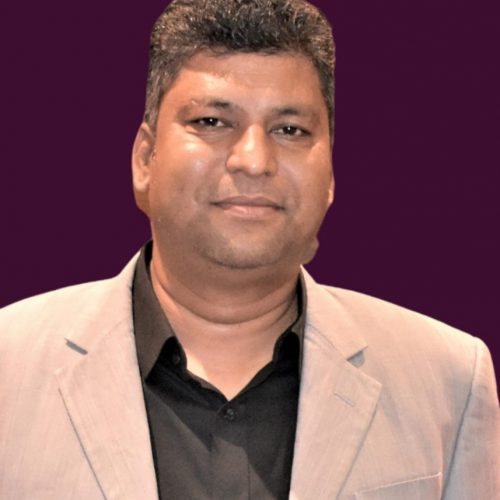
Saumitra Rajput
Saumitra Rajput is the founder of Kadamb Overseas Pvt. Ltd., India's leading Europe-focused study abroad consultancy based in Ahmedabad. With 14+ years of expertise in European education, he has personally counselled 2,500+ Indian families and helped 500+ students secure admission to top European universities including TU Munich, ETH Zurich, EPFL, KU Leuven, HEC Paris, Sapienza Rome, TU Wien, and Warsaw University of Technology. He has visited 25+ European universities, partners with 250+ EU institutions, and maintains a 500+ students placed.
Planning to Study Abroad?
Get free expert guidance from our experienced counselors

Saumitra Rajput
Saumitra Rajput is the founder and lead counsellor at Kadamb Overseas, India's trusted Europe education consultancy based in Ahmedabad. With 14+ years of hands-on experience, he has personally guided 500+ students to universities across Germany, Switzerland, France, Italy, Austria, and Spain. Saumitra has visited partner universities across Europe, holds deep expertise in European visa processes, scholarships, and student life, and has achieved a 97% visa success rate for his clients. He is the host of the YouTube channel "Europe with Saumitra", where he shares first-hand insights on studying and living in Europe. His mission: make Europe accessible to every Indian student, with zero consultancy fees.