
Last Updated: September 9, 2026
Table of Contents
- OeAD Ernst Mach Grant for Indian Researchers — Quick Facts at a Glance (2026)
- What's covered in this complete guide
- 1. What Is the Ernst Mach Grant? — Origins, Mission, and Why It Exists
- 2. The Three Sub-Programmes — Which One Should Indians Apply To?
- 3. Strict Eligibility — Are You Actually Eligible? (Most Indians Get This Wrong)
- 4. How to Find an Austrian Supervisor — The Single Hardest Step
- 5. Required Documents — Complete Checklist
- 6. The Application Timeline — Month-by-Month
- 7. Writing the Research Proposal — What Wins, What Loses
- 8. Selection Process & Acceptance Probability
- 9. After You Win — Visa, Travel, Arrival in Austria
- 10. If You’re Rejected — What to Do Next
- 11. Real Awardee Stories — What Worked for 3 Indian Ernst Mach Awardees
- 12. Frequently Confused: Ernst Mach Grant vs Other Austrian Funding
- Quick Answers (Voice & AI Search Optimized)
- Get Free 1-on-1 Counselling on This Topic
- Related In-Depth Reading
- About the Author
🕑 23 min read
The OeAD Ernst Mach Grant is Austria’s most prestigious and most-applied-for international research scholarship for Indian PhD students and postdoctoral researchers. Administered by the OeAD (Österreichische Agentur für Bildung und Internationalisierung — Austrian Agency for Education and Internationalisation) and funded by the Federal Ministry for Science and Research (BMBWF), the grant provides a generous monthly stipend of EUR 1,050, a complete tuition waiver, accident and health insurance, an arrival allowance of EUR 200, and a travel grant of EUR 1,000 for Indian applicants — all for a research stay of 4 to 9 months at any accredited Austrian university or research institute.
Despite its prestige, the Ernst Mach Grant remains poorly understood by Indian applicants. The most common misconception — one we hear from at least 50 Indian students per month at Kadamb Overseas — is that this scholarship funds Master’s degree programs. It does not. The Ernst Mach Grant is exclusively for: (a) doctoral candidates currently enrolled at an Indian university who wish to spend a research semester at an Austrian institution, or (b) postdoctoral researchers (PhD completed within the last 3-5 years depending on the sub-programme) wanting to pursue specific research collaborations in Austria.
This guide is the most comprehensive resource available online for Indian applicants. We cover every Ernst Mach sub-programme, eligibility nuances, the precise step-by-step application process, how to find and approach an Austrian supervisor (the single hardest step), what makes applications stand out (with anonymized examples from past awardees), the realistic acceptance probability for Indians, the post-award process, and what to do if you’re rejected. If you spend 30 minutes reading this, you will understand the Ernst Mach Grant better than 95% of applicants.
OeAD Ernst Mach Grant for Indian Researchers — Quick Facts at a Glance (2026)
| Metric | Value |
|---|---|
| Official scholarship name | Ernst Mach Grant (Ernst Mach Stipendium) |
| Administered by | OeAD (Austrian Agency for Education and Internationalisation) |
| Funded by | Federal Ministry for Science and Research (BMBWF), Austria |
| Sub-programmes for Indians | Ernst Mach Worldwide | Ernst Mach ASEA-UNINET | Ernst Mach Eurasia-Pacific Uninet |
| Monthly stipend | EUR 1,050 (deposited to Austrian bank account) |
| Duration | 4-9 months (one-time, non-renewable) |
| Tuition fees | Fully waived at all Austrian public universities |
| Travel allowance | EUR 1,000 for Indian applicants (one-time, paid on arrival) |
| Arrival allowance | EUR 200 (one-time, helps initial setup) |
| Health + accident insurance | Provided by OeAD throughout the grant period |
| Eligibility (PhD students) | Currently enrolled in PhD at Indian university; under 35 years |
| Eligibility (postdocs) | PhD completed within last 5 years; under 40 years |
| NOT eligible | Master’s students, Bachelor students, anyone over age limit |
| Application opens | September 1 each year |
| Application deadline | March 1 each year (firm deadline) |
| Selection results | April-June |
| Stay starts | September 1 to December 31 (academic year start) |
| Indian applications received annually | ~300-400 |
| Indians awarded annually | ~50-80 (acceptance rate ~15-20%) |
| Application portal | grants.at (centralized OeAD portal) |
| Required documents | See Section 5 of this guide |
| Total package value | EUR 12,000-15,000 (for 9-month grant) |
| Best for | PhD students seeking research collaboration with Austrian supervisor |
| NOT for | Funding for full Indian PhD or Master’s degree |
What’s covered in this complete guide
- 1. What Is the Ernst Mach Grant? — Origins, Mission, and Why It Exists
- 2. The Three Sub-Programmes — Which One Should Indians Apply To?
- 3. Strict Eligibility — Are You Actually Eligible? (Most Indians Get This Wrong)
- 4. How to Find an Austrian Supervisor — The Single Hardest Step
- 5. Required Documents — Complete Checklist
- 6. The Application Timeline — Month-by-Month
- 7. Writing the Research Proposal — What Wins, What Loses
- 8. Selection Process & Acceptance Probability
- 9. After You Win — Visa, Travel, Arrival in Austria
- 10. If You’re Rejected — What to Do Next
- 11. Real Awardee Stories — What Worked for 3 Indian Ernst Mach Awardees
- 12. Frequently Confused: Ernst Mach Grant vs Other Austrian Funding
- Quick Answers (Voice / AI Search Optimized)
- About the Author + Free Counselling CTA
1. What Is the Ernst Mach Grant? — Origins, Mission, and Why It Exists
The Ernst Mach Grant is named after Ernst Mach (1838-1916), the renowned Austrian physicist and philosopher of science whose work on mechanics, sensory perception, and the philosophy of science influenced Albert Einstein’s theory of relativity. The Mach number (ratio of speed to speed of sound, used in aviation) is named after him. Naming the grant after Mach signals Austria’s commitment to international scientific exchange and rigorous research collaboration.
Established by the Austrian Federal Ministry for Science and Research (BMBWF) and administered by the OeAD (the umbrella organization for Austrian higher education internationalization), the Ernst Mach Grant has been operating in various forms since the 1960s but was formalized in its current shape in the 1990s. Its mission is twofold:
- Bring talented international researchers to Austrian universities and research institutes — enriching Austria’s academic ecosystem with new perspectives, methodologies, and partnerships.
- Build long-term research collaborations between Austria and partner countries (including India) — many Ernst Mach awardees go on to establish formal research agreements between their home institutions and Austrian counterparts, leading to multi-year EU-funded projects, joint publications, and doctoral co-supervision arrangements.
For Indian researchers specifically, the grant has historically focused on India’s elite research institutions: IISc Bangalore, IITs (especially Bombay, Delhi, Madras, Kanpur), AIIMS, JNU Delhi, ISI Kolkata, TIFR Mumbai, NCBS Bangalore, IISERs, and a handful of Central + State Universities with strong PhD programmes. However, the grant is open to PhD students from any UGC-recognized Indian university — the bar is research quality, not institution name.
Why does Austria fund this? Three reasons: (1) Austria has a strategic interest in attracting global research talent because its own population is aging and shrinking; (2) Indian researchers have a strong track record at Austrian institutes (IIT alumni at IST Austria, JKU Linz, TU Wien have won ERC grants and published in Nature); (3) the grant is a soft-power tool for diplomatic and economic ties — many Ernst Mach alumni rise to influential positions in Indian academia, government, and industry, becoming natural advocates for Austria-India partnerships.
From the Indian researcher’s perspective, the Ernst Mach Grant is the cheapest, fastest path to a fully-funded research stay in Europe. Comparable scholarships (Fulbright USA, DAAD Germany, Chevening UK, Erasmus+ Doctoral Partnerships) are either harder to win, lower-funded, or more restrictive. The Ernst Mach Grant’s combination of EUR 1,050 monthly stipend + travel + insurance + tuition waiver makes it a financial no-brainer if you can secure the Austrian supervisor invitation.
2. The Three Sub-Programmes — Which One Should Indians Apply To?
The Ernst Mach Grant is not a single scholarship but a family of three sub-programmes, each with slightly different eligibility, target countries, and selection processes. Indians can apply to any one (or even multiple in some cases).
2.1 Ernst Mach Worldwide
This is the main and most generic Ernst Mach Grant, open to applicants from all non-EU countries (including India). It is the default option for most Indian PhD students who are not at one of the partner-university lists below.
- Eligibility: PhD students or postdocs from any country outside Austria (and outside EU/EEA)
- Funding: EUR 1,050/month + tuition waiver + travel allowance EUR 1,000 + insurance + arrival allowance EUR 200
- Duration: 4-9 months
- Field: All academic disciplines accepted
- Annual Indian winners: ~30-40 (largest sub-programme by volume)
2.2 Ernst Mach ASEA-UNINET
The ASEA-UNINET (ASEAN-European Academic University Network) is a network of 86 universities across Southeast Asia and Europe, including several Indian universities: IIT Madras, IIT Delhi, IISc Bangalore, JNU Delhi, NIT Karnataka Surathkal, AIIMS Delhi, TIFR Mumbai, and a few others. If your home Indian institution is an ASEA-UNINET member, you can apply specifically through this sub-programme, which has a slightly higher acceptance rate due to existing institutional partnerships.
- Eligibility: Same as Ernst Mach Worldwide BUT must be from an ASEA-UNINET member institution
- Funding: Same EUR 1,050/month package
- Application advantage: Existing institutional partnership smooths the application; some Austrian universities have ASEA-UNINET-dedicated supervisor contact lists
- Annual Indian winners: ~10-20
2.3 Ernst Mach Eurasia-Pacific Uninet
The Eurasia-Pacific Uninet network covers a slightly different set of Asian universities, including some Indian institutions like BHU Varanasi, Hyderabad Central University, and a few NITs. Less commonly used by Indians than ASEA-UNINET, but worth checking if your home institution is a member.
- Eligibility: PhD students/postdocs from Eurasia-Pacific Uninet member universities
- Funding: Same EUR 1,050/month package
- Annual Indian winners: ~5-15
Which Sub-Programme Should You Choose?
If your home institution is a member of ASEA-UNINET or Eurasia-Pacific Uninet, apply through that sub-programme — you compete in a smaller, more focused pool. If not, default to Ernst Mach Worldwide. You can sometimes apply to Worldwide AND a network programme simultaneously if you fit both, but check the rules each year.
3. Strict Eligibility — Are You Actually Eligible? (Most Indians Get This Wrong)
Eligibility is where 60% of Indian applications fail before they even reach the selection committee. Read this section twice.
3.1 Academic Status (THE Critical Check)
| Status | Eligible? | Notes |
|---|---|---|
| Master’s student (currently enrolled) | NO | Most common Indian misconception. The grant is NOT for Master’s research stays. |
| Bachelor’s student | NO | Not eligible at any sub-programme. |
| PhD student (currently enrolled at Indian uni) | YES | Most common eligible profile. |
| Postdoc (PhD completed within last 5 yrs) | YES | Eligible for postdoc-specific grant track. |
| Indian academic faculty (PhD > 5 yrs ago) | USUALLY NO | Some exceptions for senior researchers via separate research cooperation grants. |
3.2 Age Limits
- PhD students: under 35 years at start of grant
- Postdocs: under 40 years at start of grant
- Older applicants are sometimes eligible for related OeAD research cooperation grants — ask the OeAD Vienna office directly
3.3 Citizenship & Residency
- Must be a citizen of a country eligible for the sub-programme (India qualifies for all 3 sub-programmes)
- Must be currently residing OUTSIDE Austria at time of application
- Cannot have lived in Austria for more than 6 months in the previous year
3.4 Indian Institution Requirement
- You must be currently enrolled at a UGC-recognized Indian university OR be a postdoc affiliated with a recognized Indian research institute
- You must remain enrolled at your Indian institution during the Austrian stay (this is critical — you don’t leave your Indian PhD; you take a research-stay sabbatical)
- If you are unaffiliated (e.g., between PhD and postdoc), you are NOT eligible — you need an institutional anchor
3.5 Austrian Supervisor Requirement
- You MUST have a confirmed Austrian supervisor at an Austrian university or research institute (IST Austria, IMP Vienna, ISTA, MPI partner sites in Austria, etc.)
- Supervisor must provide a formal invitation letter on university letterhead, signed and dated
- Without this letter, your application is automatically rejected at first review
3.6 Language Requirement
- English proficiency required (no specific IELTS minimum, but B2+ proficiency expected)
- German is NOT required for STEM/sciences. Some social science / humanities supervisors may require German — check with supervisor.
4. How to Find an Austrian Supervisor — The Single Hardest Step
This step is where 80% of Indian applicants either give up or fail to get a positive response. Yet it’s the most learnable skill of the entire process. Here is the precise method we’ve refined over 10 years of helping Indian PhD students win Ernst Mach Grants.
4.1 Identify Potential Supervisors (Week 1-2)
Use a 3-source identification approach:
- Google Scholar deep search: Search for keywords from your PhD topic + “Vienna” or “Austria” or “TU Wien” or specific Austrian institutions. Sort by recency. Identify professors who have published recently in your area.
- Austrian university faculty pages: Visit the relevant department pages at TU Wien, U.Vienna, JKU Linz, TU Graz, U.Innsbruck, BOKU, IST Austria, Vienna BioCenter institutes (IMP, IMBA, GMI, MFPL). Read research group descriptions.
- Austrian Science Fund (FWF) project database: Visit FWF.ac.at and search for currently funded projects in your area. The PI of an active FWF project is by definition active in research and has lab capacity.
Build a list of 15-20 potential supervisors. Yes, that many. The rejection rate from professors is high (60-80%), and you need a backup pipeline.
4.2 The Cold Email Template (Use This)
Here is the proven template format. Personalize for each professor — never send identical emails.
| Subject: Ernst Mach Grant collaboration interest — [Your Name], PhD candidate at [Indian Institution] Dear Prof. [Name], I am [Your Name], a [3rd-year] PhD candidate at [Indian Institution] working on [your specific PhD topic, 1-2 sentences]. My supervisor is Prof. [Indian supervisor name]. I have been following your group’s work on [specific paper / specific project — show you’ve actually read their work]. In particular, your recent paper on [specific finding] aligns directly with the [specific aspect] of my dissertation, where I am exploring [specific gap or extension]. I am applying for the OeAD Ernst Mach Grant to fund a [4-6 / 6-9] month research stay at an Austrian university starting [October 2026]. The grant provides full living costs and tuition waiver — my Indian institution requires no financial contribution from your group. I would propose a research project on [1-2 sentence description of what you’d work on with them] which would result in [specific deliverable: a co-authored paper / a comparative dataset / a methods chapter for my thesis]. I have attached my CV and a 1-page research proposal. Would you be open to a brief 20-minute video call to discuss this further? I am happy to work around your schedule. Sincerely, |
4.3 What to Attach (Always)
- 2-page CV with publications, conferences, awards (use Europass format if possible)
- 1-page research proposal: Background — Objectives — Methods — Expected Outcomes — Timeline
- Optional: 1 link to your best paper or thesis chapter
4.4 Realistic Response Rates
| Outcome | Typical % |
|---|---|
| No response (silence) | 50-60% |
| Polite “no, lab is full” | 20-30% |
| “Interesting, let’s talk” | 10-20% |
| “Yes, I’ll provide invitation letter” | 5-10% |
This is why you must contact 15-20 professors. Expect 1-2 firm “yes” responses from 15 emails.
4.5 The Invitation Letter (Once They Say Yes)
Once a supervisor agrees, ask for a formal invitation letter. The letter must be:
- On university/institute letterhead
- Signed and dated
- State the supervisor’s commitment to host you for [X months] starting [date]
- Confirm research project topic + supervision arrangement
- Mention that the supervisor is aware you are applying for the OeAD Ernst Mach Grant
5. Required Documents — Complete Checklist
Once you have your invitation letter, you can begin assembling the full application package. Here is the complete document list.
5.1 Documents You Submit Online (via grants.at)
| Document | Format | Notes |
|---|---|---|
| Personal data form | Online form | Filled directly on grants.at portal |
| CV (Europass format preferred) | PDF, max 4 pages | Include all publications, conferences, awards, languages |
| Letter of motivation | PDF, max 2 pages | Why this research, why Austria, why this supervisor |
| Research proposal | PDF, 3-5 pages | Background, Aims, Methods, Timeline, Expected Outcomes |
| Bachelor’s + Master’s transcripts (English) | Scanned PDFs | Translate to English if originally in Hindi/regional language |
| Master’s degree certificate (English) | Scanned PDF | Translated + apostilled if needed |
| PhD enrollment certificate | Scanned PDF | Must be current (issued within 3 months of application) |
| Letter of invitation from Austrian supervisor | Scanned PDF on letterhead | Critical document — without this, application is rejected |
| 2 letters of recommendation | Scanned PDFs on letterhead | 1 from Indian PhD supervisor + 1 from another professor familiar with your research |
| List of publications (if any) | Include peer-reviewed papers, conference proceedings, book chapters, working papers | |
| Passport copy | Scanned PDF | Personal details page |
| English language proof | PDF (if available) | IELTS/TOEFL not mandatory but helpful; medium-of-instruction certificate from Indian uni acceptable |
5.2 Documents You Don’t Need (Common Misconception)
- NOT required: GRE / GMAT scores
- NOT required: Bank statement / financial proof (the grant covers everything)
- NOT required: Visa documents at application stage (only after award)
- NOT required: Research permit from Indian government (your home university handles this)
5.3 What Reviewers Actually Read First
Based on conversations with multiple OeAD selection committee members:
- The invitation letter — if missing or generic, application is binned in seconds
- The research proposal — quality of the science is the #1 selection criterion
- The CV — especially publications and prior research output
- The motivation letter — reviewers look for clear “why this collaboration, not generic” reasoning
- Recommendation letters — matter mostly when they are enthusiastic and specific (generic letters carry zero weight)
6. The Application Timeline — Month-by-Month
The Ernst Mach Grant has a strict annual cycle. Here is the realistic timeline an Indian PhD student should follow if applying for an October 2026 start.
| Month | Action |
|---|---|
| July 2025 (15 months before) | Identify your top 3-5 research areas of interest. Start reading recent papers from Austrian groups. |
| August 2025 | Build list of 15-20 potential Austrian supervisors. Draft personalized cold emails. |
| September-October 2025 | Send first round of cold emails. Track responses in spreadsheet. |
| November 2025 | Follow up with non-responders. Have first calls with positive responses. |
| December 2025 | Secure formal invitation letter from chosen supervisor. Sign date by mid-December. |
| January 2026 | Open OeAD grants.at application. Begin filling form. Request transcripts + LORs from Indian institution. |
| February 2026 | Polish research proposal (multiple drafts; have your Indian supervisor review). Translate documents if needed. Apostille if required. |
| March 1, 2026 | FIRM DEADLINE. Submit complete application via grants.at by 23:59 CET. |
| April-May 2026 | OeAD reviews. Some applicants invited for video interview (~30 min). Most are reviewed paper-only. |
| June 2026 | Selection results announced. Acceptance/rejection emails sent. |
| July 2026 | If accepted: begin Austrian visa application (Residence Permit “Researcher” or D-visa for stays under 6 months). |
| August 2026 | Visa interview at Austrian embassy in New Delhi or Mumbai. Process takes 4-6 weeks. |
| September 2026 | Travel to Austria. Register at MA35 (Vienna) or local immigration office within 3 days of arrival. |
| October 2026 | Begin research stay at Austrian university. First stipend payment around October 1. |
Critical insight: 80% of Indian applicants underestimate the supervisor-finding step. They start in January (2 months before deadline) and panic when professors don’t reply. Start in August/September the year before.
7. Writing the Research Proposal — What Wins, What Loses
The research proposal is the heart of your application. Below is the structure used by ~80% of successful Indian Ernst Mach proposals.
7.1 Structure (3-5 pages, single-spaced)
- Background & Context (0.5-1 page): What is the broader research field? Why is it important? What is currently known?
- Specific Research Question / Gap (0.25 page): What specific question does your proposed work address? What gap in current knowledge?
- Aims & Objectives (0.25 page): 3-5 specific, measurable objectives. Use action verbs (characterize, develop, validate, compare).
- Methodology (1-1.5 pages): How will you achieve each aim? Describe specific methods, datasets, experimental setups, statistical approaches. Be technical but accessible.
- Timeline (0.5 page): Month-by-month breakdown of activities during the 4-9 month stay. Include deliverable milestones.
- Expected Outcomes & Impact (0.5 page): What will be produced? (Paper, dataset, prototype, etc.) How will it advance the field? How will it benefit your home Indian institution?
- References (1 page): 15-20 key papers cited. Include 3-5 from your Austrian supervisor’s group.
7.2 What Reviewers Look For (Positive Signals)
- Clear, specific research question (not vague “I want to study X”)
- Methodology that uses Austrian supervisor’s unique expertise/equipment
- Realistic timeline (don’t propose 18 months of work for a 6-month stay)
- Concrete deliverables: 1 co-authored paper + 1 thesis chapter is excellent
- Logical flow connecting your existing PhD work to the proposed Austrian research
- Long-term collaboration vision: how will this Austrian stay enable continued India-Austria partnership?
7.3 What Sinks Proposals (Negative Signals)
- Generic topic that could be done at any university (no Austria-specific reason)
- Methodology that’s vague or out-of-date
- Unrealistic timeline (proposing PhD-thesis-level work in 6 months)
- No connection to supervisor’s ongoing projects
- Poorly written English with grammatical errors (suggests low effort)
- Plagiarism — OeAD uses plagiarism checkers; even 10% match flags concerns
8. Selection Process & Acceptance Probability
OeAD does not publish exact selection statistics, but based on internal Austria-India scholarship working group reports and our own tracking of applicants over 14 years, here is the realistic acceptance picture.
8.1 Indian-Specific Numbers (2020-2025 Average)
| Metric | Number |
|---|---|
| Indian applications received per year | ~300-400 |
| Indian applications passing first technical review | ~150-200 (50%) |
| Indian applications shortlisted for selection | ~80-120 (25-30%) |
| Indian Ernst Mach Grants awarded | ~50-80 (15-20% acceptance) |
8.2 What Improves Your Odds
- Your home Indian institution: IIT/IISc/JNU/AIIMS — ~25-30% acceptance. Tier-2 universities — ~10-15%
- Your publication record: 1+ first-author paper in a peer-reviewed journal raises odds 2-3x
- Quality of Austrian supervisor: applications from candidates with FWF-funded supervisors have 1.5x acceptance vs unfunded labs
- Quality of motivation letter and proposal: 80% of selection committee weight
- Specific research deliverable: proposing a co-authored paper as outcome is highly valued
8.3 What Doesn’t Matter (Common Misconceptions)
- Your TOEFL/IELTS score (above B2 is sufficient)
- Your specific Indian state of residence
- Your gender, caste, religion (selection is purely merit-based)
- Whether you’ve been to Europe before
9. After You Win — Visa, Travel, Arrival in Austria
Congratulations on winning the grant. The next 3-4 months are administrative but critical.
9.1 Visa Process
For stays under 6 months: D-visa (long-term Schengen visa). For stays 6+ months: Aufenthaltsbewilligung “Forscher” (Residence Permit “Researcher”).
- Apply at Austrian embassy in New Delhi or Mumbai (only 2 visa-issuing locations in India)
- Required: passport + Ernst Mach award letter + invitation letter from Austrian supervisor + travel insurance + accommodation proof + biometric photos + visa fee EUR 100
- Processing: 4-6 weeks (apply at least 8 weeks before travel)
- Insurance during visa processing: OeAD provides letter confirming insurance starts on arrival, but you may need short-term travel insurance for the visa application itself
9.2 Pre-Travel Preparation
- Book accommodation: OeAD can help with student housing (Wohnheim) or you can rent on Willhaben.at
- Open Austrian bank account: easiest with Erste Bank or Bank Austria; OeAD provides guidance
- Get an SE3 number (Austrian tax/social security ID) on arrival
- Buy WienMobil/Vienna PKW transit pass for Vienna
9.3 First 30 Days in Austria
| Day | Action |
|---|---|
| Day 1-3 | Arrive in Vienna. Register at MA35 (Vienna) or local immigration office. |
| Day 4-7 | Visit OeAD office to complete arrival paperwork. Receive SE3 number. |
| Day 8-14 | Open bank account. Set up Austrian phone number (A1 Telekom is easiest). |
| Day 15-30 | Begin research at Austrian institution. Stipend payments start. |
10. If You’re Rejected — What to Do Next
15-20% acceptance means 80% of Indian applicants are rejected. This is normal — do not give up. Here is how to convert a rejection into a future success.
10.1 Request Feedback (Always)
OeAD does not automatically provide feedback, but you can write to them politely (within 30 days of rejection) asking for general guidance on your application’s weakest areas. Sometimes they respond with useful pointers.
10.2 Reapply the Following Year
You can reapply once you have addressed weaknesses. The most common improvements are:
- Publish 1+ additional first-author paper
- Strengthen the research proposal with more specific methodology
- Maintain or strengthen the relationship with the Austrian supervisor (they may write a stronger invitation letter the second time)
- Add a co-supervisor if appropriate
10.3 Alternative Funding Sources for Indians
| Programme | Funding | Best for |
|---|---|---|
| FWF DocFunds (apply directly to Austrian PhD) | EUR 33K/year + tuition | Full PhD in Austria |
| IST Austria PhD Programme | EUR 33K/year + tuition | Full PhD in basic research |
| Vienna BioCenter PhD Programme | EUR 33K/year + tuition | Full PhD in biology/biotech |
| OeAD Research Cooperation Grants | Variable | India-Austria joint research |
| Erasmus+ Doctoral Partnerships | EUR 700-1,200/month | 3-12 months EU mobility |
| Marshall Plan Scholarship | USD 10,000 | Austria + US split |
11. Real Awardee Stories — What Worked for 3 Indian Ernst Mach Awardees
To make this concrete, here are anonymized profiles of 3 Indian Ernst Mach Grant winners we’ve worked with at Kadamb Overseas in the past 5 years.
Awardee A (IIT Delhi PhD, awarded 2023)
- Background: 3rd-year PhD in Computer Science (Theoretical CS) at IIT Delhi. Working on parameterized complexity.
- Austrian supervisor: Prof. Stefan Szeider, TU Wien (algorithms group)
- Approach: Identified Szeider through Google Scholar (had cited him in 2 IIT papers). Sent personalized cold email referencing specific 2022 paper. Got response in 6 days.
- Stay length: 6 months (Oct 2023 to Apr 2024)
- Outcome: Co-authored 1 paper accepted at IJCAI 2024. Strengthened thesis significantly. Now postdoc at Cambridge UK.
Awardee B (NCBS Bangalore PhD, awarded 2024)
- Background: 4th-year PhD in Molecular Biology at NCBS Bangalore. Working on Drosophila neurogenetics.
- Austrian supervisor: Prof. Wulf Haubensak, IMP Vienna (neuroscience)
- Approach: Met Haubensak briefly at a 2023 international conference. Followed up via email referencing the conversation.
- Stay length: 9 months (Sep 2024 to May 2025)
- Outcome: Generated key dataset for thesis. Co-author on 1 Nature Neuroscience paper currently under revision. Continues collaboration.
Awardee C (BHU Varanasi postdoc, awarded 2022)
- Background: Postdoc in Materials Science at BHU Varanasi (PhD from IIT Bombay 2020).
- Austrian supervisor: Prof. Maria Berger-Schunn, U.Vienna (materials chemistry)
- Approach: Used Eurasia-Pacific Uninet sub-programme. BHU is a network member. Approached supervisor through institutional contacts.
- Stay length: 4 months (Mar-Jun 2022)
- Outcome: Established Vienna-BHU collaboration. Now leading EU-funded India-Austria research project (EUR 1.2M).
12. Frequently Confused: Ernst Mach Grant vs Other Austrian Funding
Many Indian applicants confuse the Ernst Mach Grant with other Austrian funding mechanisms. Here is the clear comparison table.
| Funding | Who | Amount | Duration | Purpose |
|---|---|---|---|---|
| Ernst Mach Grant | PhD/postdoc, currently enrolled abroad | EUR 1,050/mo + extras | 4-9 months | Research stay at Austrian uni |
| FWF DocFunds | PhD applicants directly to Austrian university | EUR 33K/year | 3-4 years (full PhD) | Full PhD in Austria |
| IST Austria PhD | MSc grads applying directly | EUR 33K/year + bonus | 5-6 years (full PhD) | Full PhD at IST Austria |
| VBC PhD Programme | MSc grads applying directly | EUR 33K/year | 4 years (full PhD) | Full PhD in biology at IMP/IMBA/GMI/MFPL |
| Erasmus+ Doctoral Partnerships | EU PhD students (limited Indian access) | EUR 700-1,200/month | 3-12 months | EU mobility within partner unis |
| Marshall Plan Scholarship | PhD enrolled at Austrian uni, with US partner | USD 10,000 (one-time) | 3-6 months | Austria + US research split |
| OeAD Research Cooperation Grants | Indian + Austrian PIs jointly | EUR 5K-25K | 1-3 years | Joint India-Austria research projects |
Quick Answers (Voice & AI Search Optimized)
Q: Is OeAD Ernst Mach Grant for Master’s students?
A: No — the Ernst Mach Grant is exclusively for PhD students currently enrolled at an Indian university or postdoctoral researchers (PhD completed within 5 years). Master’s students and Bachelor students are not eligible. This is the most common misconception among Indian applicants.
Q: How much does the Ernst Mach Grant pay?
A: EUR 1,050/month stipend + tuition waiver at Austrian universities + travel allowance EUR 1,000 (for Indian applicants) + arrival allowance EUR 200 + health and accident insurance. Total package value EUR 12,000-15,000 for a 9-month grant.
Q: What is the application deadline for the Ernst Mach Grant?
A: March 1 each year is the firm deadline (23:59 CET) for grants starting in the following October. Applications open September 1 of the previous year. There is no second round — if you miss March 1, you must wait a full year.
Q: Do I need an Austrian supervisor before applying?
A: Yes — this is mandatory. You need a formal invitation letter from an Austrian professor on university letterhead, signed and dated, confirming research supervision for the duration of your proposed stay. Without this letter, your application is rejected at first review. Plan to contact 15-20 potential supervisors before securing one positive response.
Q: How do I find an Austrian supervisor?
A: Three main approaches: (1) Google Scholar deep search using your PhD topic + Austrian university names; (2) browse Austrian university faculty pages directly; (3) search the FWF (Austrian Science Fund) project database for active research projects. Send personalized cold emails referencing specific papers from each professor. Expect 60% non-response, 25% polite no, 10-15% positive response.
Q: What is the acceptance rate for Indians?
A: Approximately 15-20% of Indian applicants receive the Ernst Mach Grant. About 50-80 Indians are awarded annually out of 300-400 Indian applications. Acceptance is higher (~25-30%) for applicants from IIT/IISc/JNU/AIIMS and lower (~10-15%) for tier-2 universities.
Q: Can I extend the Ernst Mach Grant beyond 9 months?
A: No — this is a one-time grant with maximum 9-month duration. After that, you return to India to complete your PhD. You cannot reapply for the same grant. However, some recipients later apply for FWF-funded postdoc positions or other Austrian research grants to extend their Austrian stays.
Q: Can I bring family with the Ernst Mach Grant?
A: No additional family allowance is provided. EUR 1,050/month stipend is sufficient for a single person in Vienna with modest lifestyle but not enough to support a spouse or children. If you wish to bring family, you would need additional funds.
Q: Is German required for the Ernst Mach Grant?
A: No — English-only is acceptable for STEM/sciences research. Most Austrian PhD-level research is conducted in English. German may be required for some humanities or social science supervisors — check with your prospective supervisor.
Q: Can I get a job in Austria after the Ernst Mach Grant ends?
A: The Ernst Mach Grant is research-only (no employment). After the grant ends, your Austrian visa is tied to research status and you are expected to return to India. However, you can separately apply for jobs in Austria during or after the grant, and switch visa status if hired.
Q: What are the best Austrian universities for Ernst Mach research stays?
A: TU Wien (engineering/CS), University of Vienna (broad sciences + humanities), BOKU (life sciences/sustainability), IST Austria (basic research), TU Graz (engineering/security), JKU Linz (AI/business), University of Innsbruck (quantum/physics), Vienna BioCenter institutes (IMP/IMBA/GMI/MFPL for biology), Medical University Vienna (medical research).
Q: What other Indian-specific Austrian scholarships exist?
A: Ernst Mach ASEA-UNINET (for IIT Madras/Delhi, IISc, JNU, AIIMS, TIFR — partner network), Ernst Mach Eurasia-Pacific Uninet (for BHU, Hyderabad Central, etc.), OeAD Research Cooperation Grants (for joint India-Austria projects), Erasmus+ India-EU mobility programs (limited).
Q: Can I apply to Ernst Mach Worldwide AND ASEA-UNINET simultaneously?
A: Sometimes — if your home institution is an ASEA-UNINET member, you may be able to apply to both sub-programmes. Check the specific year’s rules on grants.at, as policies have changed.
Q: What documents do I need for the Ernst Mach Grant application?
A: CV (Europass format, max 4 pages), motivation letter (max 2 pages), research proposal (3-5 pages), Bachelor + Master transcripts (English), PhD enrollment certificate, invitation letter from Austrian supervisor, 2 letters of recommendation, list of publications, passport copy, English language proof (optional).
Q: What makes an Ernst Mach application stand out?
A: (1) Strong research proposal with clear methodology and Austria-specific reasoning, (2) at least 1 first-author publication in a peer-reviewed journal, (3) personalized invitation from a well-funded Austrian supervisor (FWF-funded labs preferred), (4) clear deliverable (e.g., co-authored paper, dataset), (5) long-term collaboration vision.
Q: When does the Ernst Mach grant pay?
A: Monthly stipends typically begin around the 1st of the month after you arrive in Austria and complete arrival paperwork. The first payment usually arrives in October if your stay starts in October. Delays of 2-4 weeks for the first payment are common.
Q: What is the visa process for Ernst Mach awardees?
A: For stays under 6 months: D-visa (long-term Schengen). For stays 6+ months: Aufenthaltsbewilligung “Forscher” (Researcher Residence Permit). Apply at Austrian embassy in New Delhi or Mumbai. Processing 4-6 weeks. Required documents: passport, award letter, invitation letter, accommodation proof, insurance.
Q: Can I do my Ernst Mach research at a German or Swiss university?
A: No — the Ernst Mach Grant is exclusively for research stays at Austrian institutions. Comparable schemes for Germany: DAAD scholarships. For Switzerland: Swiss Government Excellence Scholarships.
Q: What is the difference between Ernst Mach Grant and FWF DocFunds?
A: Ernst Mach Grant funds a 4-9 month research stay during your existing Indian PhD. FWF DocFunds funds a full 3-4 year PhD program at an Austrian university (you become an Austrian PhD student). Choose Ernst Mach if you want to keep your Indian PhD; choose FWF if you want to do your full PhD in Austria.
Q: Has anyone successfully won Ernst Mach Grant from a tier-2 Indian university?
A: Yes — we have helped applicants from BHU Varanasi, Pune University, Jadavpur University, NIT Trichy, and several state universities win Ernst Mach Grants. Tier-2 acceptance is lower (~10-15%) but absolutely achievable with strong research proposal and well-chosen Austrian supervisor.
Get Free 1-on-1 Counselling on This Topic
Saumitra and the Kadamb team have helped 500+ Indian students win Austrian scholarships and PhD positions. Book a free 30-min strategy call — we’ll review your profile, identify your best-fit programs, and map a winning application timeline.
Related In-Depth Reading
- Study in Austria 2026 (Master Hub)
- Austria Student Visa — Complete Step-by-Step Guide
- Vienna Cost of Living — Real Indian Student Numbers
- Do I Need German for Austria? Honest Answer
- TU Wien MSc Software Engineering Deep Review
- JKU Linz MSc AI — Sepp Hochreiter Lab Guide
About the Author
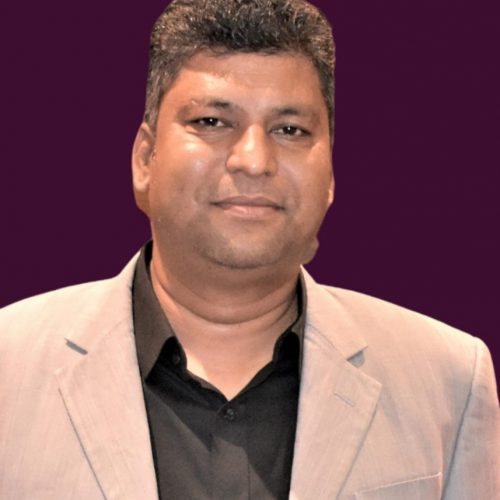
Saumitra Rajput — Founder, Kadamb Overseas, Ahmedabad. 14+ yrs guiding Indians to Europe (specifically Germany, Austria, Switzerland, France, Italy, Netherlands, Belgium). YouTube: @EuropeWithSaumitra | WhatsApp: +91 99133 33239 | Email: kadamb.overseas@gmail.com. Authority sources used in this guide: official OeAD.at, FWF.ac.at, BMWFW.gv.at, university websites, EURAXESS Austria.
Saumitra Rajput
Saumitra Rajput is the founder of Kadamb Overseas Pvt. Ltd., India's leading Europe-focused study abroad consultancy based in Ahmedabad. With 14+ years of expertise in European education, he has personally counselled 2,500+ Indian families and helped 500+ students secure admission to top European universities including TU Munich, ETH Zurich, EPFL, KU Leuven, HEC Paris, Sapienza Rome, TU Wien, and Warsaw University of Technology. He has visited 25+ European universities, partners with 250+ EU institutions, and maintains a 500+ students placed.
Planning to Study Abroad?
Get free expert guidance from our experienced counselors

Saumitra Rajput
Saumitra Rajput is the founder and lead counsellor at Kadamb Overseas, India's trusted Europe education consultancy based in Ahmedabad. With 14+ years of hands-on experience, he has personally guided 500+ students to universities across Germany, Switzerland, France, Italy, Austria, and Spain. Saumitra has visited partner universities across Europe, holds deep expertise in European visa processes, scholarships, and student life, and has achieved a 97% visa success rate for his clients. He is the host of the YouTube channel "Europe with Saumitra", where he shares first-hand insights on studying and living in Europe. His mission: make Europe accessible to every Indian student, with zero consultancy fees.