

Table of Contents
- Pune, Symbiosis, and a Slow Realisation
- Learning Spanish at the Cervantes Institute
- How I Found MAEC-AECID and Kadamb
- Universidad Complutense Madrid M.A. International Relations
- The 6-Week Application Sprint
- The Rejection (My One Hedge)
- The Family Disagreement (and Why It Was Real)
- Madrid — The Reality
- The Adjustment Difficulty Spain Doesn't Mention
- UN Spain Internship and the Geneva-Paris Question
- Cost Breakdown (Actual INR)
- Kadamb Services I Used
- Honest Advice for Aspiring MAEC-AECID Applicants
- Where I Am Today, April 2026
- Planning Your MAEC-AECID Application?
🕑 12 min read
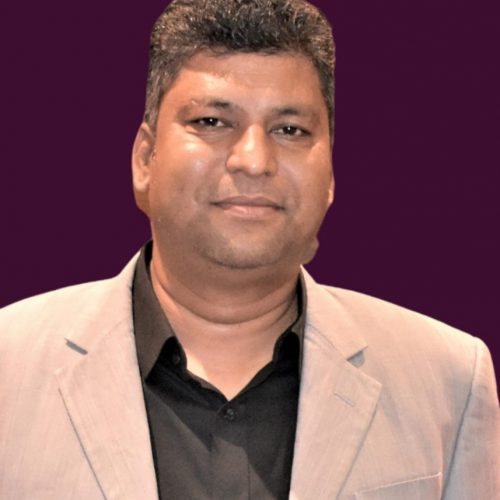
I’m writing this from a small cafe near Plaza Mayor in Madrid, on a Saturday afternoon, between Spanish classes I no longer technically need but still attend because I like the conversation. Saumitra sir asked me for the unfiltered version, so this is it.
Pune, Symbiosis, and a Slow Realisation
I’m Rohit M., 26, born and raised in Pune in a Marathi-speaking middle-class family. My father is a retired LIC officer, mother teaches Marathi literature at a city college. One younger sister doing her CA. Standard Pune Brahmin household — emphasis on education, no money for foreign degrees, and a polite assumption I’d do something “proper” like UPSC or law.
I did neither. I graduated from Symbiosis School of Liberal Arts (Pune) in 2022 with a B.A. in International Relations and Political Science (CGPA 8.4). The Symbiosis liberal arts program is unusual in India — small batches, intensive seminar discussions, study-abroad semesters. I’d done a 12-week semester at Universidad de Salamanca in Spain in autumn 2021 as part of the program, and that’s where the Spain obsession started.
After graduation I joined a Mumbai-based political consulting firm (think election strategy, public opinion research) at ₹4.8 LPA. The work was interesting in election years and tedious otherwise. By mid-2024 I knew I wanted to do an M.A. in International Relations at a serious European program — preferably Spain because of the language head start, the lower cost, and a genuine interest in EU-Latin America affairs (Spain is the bridge).
The budget reality: my parents could put together ₹12-14 lakh maximum, no more. A two-year M.A. at a Spanish public university plus living costs in Madrid runs roughly ₹35-45 lakh fully loaded. The math didn’t work without scholarship.
Learning Spanish at the Cervantes Institute
One thing I did right early: between January 2023 and December 2024, I took Spanish classes at the Instituto Cervantes (the Indian branches operate as the “Indian Embassy Cultural Center” in Delhi and Mumbai). I went through A1, A2, B1 over about 18 months — three classes a week in Mumbai’s Bandra branch. Cost was around ₹85,000 total for all three levels. By December 2024 I had a B1 DELE certificate and could hold a basic conversation in Spanish.
This turned out to be the most strategically important thing I did for my MAEC-AECID application. The MAEC-AECID program has multiple tracks; the one I targeted (Track 1: Master’s Studies at Spanish Public Universities) requires intermediate Spanish for many programs. My DELE B1 made me eligible for programs that filtered out 80% of Indian applicants who could only apply for English-medium tracks.
How I Found MAEC-AECID and Kadamb
MAEC-AECID is the Spanish Ministry of Foreign Affairs’ flagship scholarship program for international students, administered by the Agencia Española de Cooperación Internacional para el Desarrollo (AECID). For the Master’s track at Spanish public universities, they fund roughly 350-400 scholarships globally per year. India’s share is small — typically 30-40 winners per cycle, across all programs and study levels.
Funding (as of my 2025 cohort):
- Tuition fees: 100% covered at participating Spanish public universities
- Monthly stipend: EUR 1,000/month for Master’s students
- Health insurance: covered
- One-time installation allowance: EUR 200
- NO travel allowance (you pay your own flight)
The acceptance rate is hovering around 8% globally. For India, the realistic competition pool is around 400-500 serious applicants for those 30-40 spots — so you’re looking at roughly 7-9% selection chance even among well-prepared Indian candidates.
I found Kadamb through a 2024 LinkedIn post by an Indian alumna of Universidad Complutense Madrid who’d won MAEC-AECID. She tagged Kadamb in her gratitude post. I noted the name. In November 2024, when I was preparing my application for the December 2024 deadline (for Sept 2025 intake), I messaged Kadamb on WhatsApp.
Saumitra sir’s first response: “MAEC-AECID for Spain at Complutense, with B1 Spanish? You’re the first Indian student in two years to come to me with this combination. Send your transcripts and DELE certificate.” First call was November 12, 2024 — 95 minutes. He admitted upfront that Spain isn’t Kadamb’s largest country (Germany dominates their book), but said he had handled 4 MAEC-AECID applications previously, 2 won. He told me the win rate honestly.
Universidad Complutense Madrid M.A. International Relations
I targeted Universidad Complutense de Madrid (UCM)’s Máster en Relaciones Internacionales — a Spanish-medium two-year M.A. with a strong EU-Latin America cluster. UCM is Spain’s largest public university, founded 1499, in the heart of Madrid’s Moncloa district. The MA program admits roughly 60 students per year, of whom perhaps 8-10 are international.
The MAEC-AECID timeline was tight:
- MAEC-AECID portal opens: late October 2024
- UCM Master’s application deadline: January 31, 2025
- MAEC-AECID scholarship deadline: December 19, 2024
- UCM provisional admission: April 2025
- MAEC-AECID provisional awards: May 2025
- Final selection + visa process: June-August 2025
- Program start: September 2025
The order matters: I had to apply for MAEC-AECID with my UCM admission still pending, and my UCM application referenced the MAEC-AECID candidacy. Both had to align, both had to be submitted with no gaps in the narrative.
The 6-Week Application Sprint
Week 1 (mid-Nov 2024): Profile reset. Saumitra sir made me write a 1-page document answering: “Why Spain, why International Relations, why now?” My first version was generic. He pushed: “I want a specific intellectual genealogy. Which thinkers shape your view of EU-Latin America affairs? What’s your unsolved question?” I rewrote it. The genealogy I landed on: Anthony Pagden, Thomas Pogge, Mariano Aguirre — and my unsolved question: how does Spain’s dual identity (EU member + Latin America’s bridge) shape European migration policy in the 2020s?
Week 2-3 (late Nov – early Dec 2024): Motivation letter (in Spanish — required for the Spanish-medium MA). I wrote draft 1 in Spanish. It was technically correct but flat. Saumitra sir doesn’t speak Spanish but he had me reverse-translate it to English and then we worked on the English logic. The Spanish draft 2 went to a Mexican friend of his (a former alumnus of a different Latin American program) who edited it for register and idiom. Draft 3 was the final.
Week 4 (early Dec 2024): Recommendation letters. Two academic from Symbiosis professors (one head of department), one professional from my Mumbai consulting firm partner. All three in English. The MAEC-AECID portal accepted English letters even for Spanish-medium programs.
Week 5 (mid-Dec 2024): Document compilation, transcript apostille (Hague Convention apostille required for Spain — done at the Maharashtra State Home Department in Mumbai), DELE certificate scanning, financial statements, motivation letter final.
Day 38 (December 19, 2024): MAEC-AECID portal submission at 5:42 PM IST. UCM application followed in early January 2025.
The Rejection (My One Hedge)
While preparing the MAEC-AECID application, I had also applied — at Saumitra sir’s suggestion — to one backup: the Erasmus Mundus Master in Global Studies (EMGS), a 2-year program rotating between Leipzig, Vienna, and partner universities. Erasmus Mundus is significantly more competitive than MAEC-AECID at the global level (1-2% acceptance) but it’s the gold standard for international affairs.
February 27, 2025: EMGS rejection. The feedback (which I had to request explicitly) was: “Your profile is academically strong but the program received an exceptionally strong cohort this year, particularly from European applicants.” Translation: too many European applicants who didn’t need scholarship support.
I called Saumitra sir at 8 PM, more anxious than upset. His response: “Erasmus Mundus is a coin flip even for the strongest applicants. You hedged correctly. Now we wait for UCM and MAEC-AECID. Don’t conflate this rejection with prediction.” He was right.
April 18, 2025: UCM provisional admission for Máster en Relaciones Internacionales — ACCEPTED. May 22, 2025: MAEC-AECID provisional award notification — AWARDED, full funding, EUR 1,000/month, tuition covered. June 11, 2025: Final award letter received with visa instructions.
I learned later that for my MAEC-AECID Master’s track cohort, India had 32 winners total across all programs and universities. The MA International Relations + Complutense combination had 1 Indian winner. Me.
The Family Disagreement (and Why It Was Real)
My family wasn’t opposed to higher studies. The disagreement was specifically about Spain.
My father’s hesitation: “Spain ka future kya hai? Yahan se padh ke wapas aake kya karega? UN ya UNESCO mein job lagi nahi to phir Pune mein tutoring karega kya?” (What is Spain’s future? After studying there, what will you do back here? If you don’t get a UN or UNESCO job, will you do tutoring in Pune?) This is a legitimate concern. International Relations as a field has a narrow Indian job market — typically Ministry of External Affairs (UPSC), think tanks like ORF or Carnegie India, multilateral institutions like UN India offices, or private-sector public affairs roles at companies like Reliance or Tata Sons.
My mother’s hesitation was different — she was worried about whether I’d “lose touch with our culture” living alone in Madrid. This sounds quaint but for her it was real. She’d watched my older cousin who went to the US and is now culturally Americanised — comes back twice a decade, doesn’t speak Marathi to his kids.
Saumitra sir got on a Zoom call with my parents in late May 2025 (after my MAEC award was confirmed). He spent 50 minutes walking them through: (1) MAEC-AECID alumni outcomes (a non-trivial percentage do enter UN, EU, World Bank pipelines), (2) Madrid’s Indian community of approximately 28,000 (largest in Spain), and (3) the specific UN Spain office’s hiring pipeline for development-track candidates with Spanish-speaking ability. My father went quiet, then asked one question: “Saumitra ji, agar 6 mahine baad usko Spain achha nahi laga, to wapas aane mein kya problem hogi?” (If after 6 months he doesn’t like Spain, what problem will he face coming back?) Saumitra sir’s answer: “Koi problem nahi. Ek flight ki baat hai. Lekin 6 mahine deni padengi pehle.” (No problem. It’s one flight. But you have to give it 6 months first.) That clinched it.
Madrid — The Reality
I landed at Adolfo Suárez Madrid-Barajas Airport on August 28, 2025, in 36°C summer heat. UCM had provisionally allocated me a residence at Colegio Mayor Universitario Diego de Covarrubias (one of UCM’s residencias) for the first semester at EUR 540/month including breakfast. After January 2026 I moved to a shared piso (apartment) in the Lavapiés neighbourhood with two flatmates — a Colombian PhD student and an Italian economics MA student.
Real cost numbers from my first 8 months in Madrid:
- Rent (Lavapiés shared piso, my room): EUR 425/month
- Utilities + internet (split 3 ways): EUR 55/month
- Groceries (Mercadona + Lidl, mostly self-cooking + occasional Indian groceries from Lavapiés Bangladeshi shops): EUR 165/month
- Madrid Metro abono joven (under-26 unlimited transit): EUR 20/month
- Mobile (Yoigo Spanish carrier): EUR 12/month
- Eating out + tapas + occasional cana with friends: EUR 80/month
- Misc + clothes + winter coat (one-time EUR 180 hit in November): EUR 35/month average
- Total: roughly EUR 790/month
MAEC-AECID stipend is EUR 1,000/month. I save about EUR 210/month, which I’m using to fund a planned 6-week summer internship at the UN Office in Geneva (no salary, just travel + lodging covered).
The Adjustment Difficulty Spain Doesn’t Mention
Spain’s pace of life is famously slower than Northern Europe’s. The siesta isn’t really a thing in Madrid (Barcelona keeps more of it), but the Spanish day starts late and ends late. Lunch at 2:30 PM, dinner at 10 PM, bars open till 3 AM weekdays.
The adjustment difficulty for me wasn’t the schedule — I adapted within 6 weeks. It was the bureaucratic friction. Spain runs on paper, photocopies, NIE numbers, padron registrations, citas previas (appointments) that get booked out 2 months in advance. Getting my NIE (foreign identity number) took 11 weeks instead of the promised 4. Opening a Spanish bank account required 3 visits to Banco Santander, each with different document requirements depending on which clerk I got. My Spanish health card came 5 months late.
I had a low patch in November 2025 — I’d just spent 4 hours at a Madrid foreigners’ office only to be told I needed an additional document I’d never been told about. I called Saumitra sir in genuine frustration. His response: “Spain’s bureaucracy is the price of Spain’s lifestyle. The work is real. The document chase is real. Both can be true. Be patient and find a Spanish friend who’ll go with you to the next appointment.” I followed that advice. By January my Lavapiés flatmate (the Colombian PhD) had walked me through three more bureaucratic appointments. By February everything was sorted.
The other surprise: Madrid’s Indian community is much larger than people realise — roughly 28,000 Indians, mostly Punjabi families who’ve been in the restaurant and import-export business since the 1980s, plus a newer wave of IT professionals at Indra and HCL Madrid, plus students like me. The Lavapiés neighbourhood specifically has a small “Little India” — three Indian grocery stores, two restaurants, a Sikh gurudwara within 800m of my apartment. I was not as isolated as my mother feared.
UN Spain Internship and the Geneva-Paris Question
I started a part-time research assistantship at UCM’s Instituto Universitario de Investigación Ortega y Gasset in October 2025 (8 hours/week, EUR 280/month, on top of MAEC stipend). My research lead is a senior Spanish diplomat who teaches part-time and connected me to a 6-week summer internship slot at the UN Office in Geneva (UNOG) for July-August 2026. Unpaid but housing-covered. I accepted.
The longer arc I’m considering:
- Finish MA at UCM: June 2027 (end of 2-year program)
- Apply for UN Junior Professional Officer (JPO) program: India is a small contributor but JPO India slots exist for development-track candidates
- Alternative: UNESCO Paris HQ — I’m specifically interested in their cultural diplomacy and migration programs, both areas where Spanish-speaking + South Asian background is rare
- Backup: India’s Ministry of External Affairs has a hiring pipeline for “Foreign Service Specialists” with international postgraduate degrees — applies to Indian citizens with relevant Master’s
The most likely path is: finish MA Madrid, do JPO 2-year posting somewhere (Spain has several quotas), then either UN/UNESCO permanent track or return to India for ORF/Carnegie India. I’m not closed to permanent Spain residence either — Spain’s pathway to citizenship via “iberoamericanos extendido” (extended to former colonies) doesn’t apply to Indians, but standard residency-to-citizenship in 10 years is doable.
Cost Breakdown (Actual INR)
| Item | Cost (INR) |
|---|---|
| Kadamb Overseas MAEC-AECID application package | ~₹47,000 |
| DELE B1 exam (Mumbai Cervantes) | ₹13,800 |
| Cervantes Spanish A1+A2+B1 classes (18 months, prerequisite) | ₹85,000 |
| Document apostille (Hague Convention, Maharashtra State) | ₹89,200 |
| UCM application fee | ~₹3,800 (EUR 43) |
| Spain student visa at BLS Mumbai | ₹13,500 |
| Flight Mumbai → Madrid (Turkish Airlines, August 2025) | ₹54,000 |
| First-month setup (residencia deposit, sim, transport, kitchen) | ~₹46,000 / EUR 510 |
| Total out-of-pocket (entire process to landing in Spain) | ~₹2,72,300 |
MAEC-AECID scholarship value over 2-year MA:
- Tuition waived: EUR 2,300/year × 2 = EUR 4,600 (~₹4.1 lakh)
- Monthly stipend: EUR 1,000 × 24 = EUR 24,000 (~₹21.6 lakh)
- Health insurance: ~EUR 60/month × 24 = EUR 1,440 (~₹1.3 lakh)
- Installation allowance: EUR 200 (~₹18,000)
- Total scholarship value: approximately ₹27 lakh over 2 years
Loan taken: Zero. My consulting savings of approximately ₹2.8 lakh covered out-of-pocket; family contributed ₹50,000 toward the Cervantes course fees over 18 months.
Kadamb Services I Used
- Profile evaluation + Spain-track shortlist (UCM vs Universidad Autónoma de Madrid vs Salamanca)
- MAEC-AECID strategy briefing (Track 1 Master’s, Spanish-medium specifically)
- Motivation letter — 3 rounds (English logic + Spanish editing via Mexican alumnus)
- Recommendation letter strategy
- Document apostille guidance for Spain (Hague Convention specifics)
- Spanish DELE prep timeline (advised me on B1 vs B2 cutoffs for different programs)
- UCM application portal support
- Spain student visa documentation + BLS Mumbai briefing
- Family Zoom call (with my parents, May 2025)
- Pre-departure briefing (Madrid orientation, NIE timeline expectations, Lavapiés vs Malasaña neighbourhood guidance)
- Post-arrival check-in (call, week 7)
Honest Advice for Aspiring MAEC-AECID Applicants
- Spanish language is the strongest filter. If you’re applying for a Spanish-medium program with B1+ DELE, your competition pool drops by 70-80%. Start Spanish 18 months before you plan to apply.
- The motivation letter must demonstrate genuine Spain-specific intellectual interest. Vague “I want to study International Relations in Europe” essays get filtered immediately. Show why Spain’s specific position (Hispanidad, EU member, Mediterranean axis, NATO commitment, Latin America bridge) matters to your research question.
- Apply to public universities, not private. MAEC-AECID Track 1 only funds Spanish public universities. UCM, UAM, UC3M, Salamanca, Granada, Barcelona public, Sevilla public — these are your targets.
- The December deadline is brutal. Start in September of the previous year. Don’t start in November like I did.
- Spain’s bureaucracy will frustrate you. Plan for 8-12 weeks of post-arrival paperwork. Don’t expect efficiency. Madrid is worth it.
Where I Am Today, April 2026
Mid-MA at UCM, working on a research paper on European migration policy and Spanish-Maghrebi relations. Part-time researcher at Instituto Ortega y Gasset, EUR 280/month. UN Geneva summer internship in 6 weeks. Lavapiés flatmates have become close friends. I cook chicken curry every Sunday for the apartment, the Italian flatmate makes amatriciana on Wednesdays, the Colombian flatmate handles arepas on Fridays. We celebrated Diwali 2025 at the Lavapiés gurudwara.
My parents are visiting in October 2026 for two weeks — first time my father is leaving India after his 1996 Singapore official trip. My sister keeps asking when I’ll get them samosas at the Madrid Indian Embassy reception (yes, that’s a real thing, the Indian Embassy hosts a reception for Indian students every January).
Planning Your MAEC-AECID Application?
If you’re a humanities, social sciences, or law graduate from India with serious Spanish-language interest and a real research question — MAEC-AECID is one of the least-known but most accessible European scholarships for Indians. Talk to Kadamb. Same Saumitra sir, same realistic process that got me from Pune Symbiosis to Universidad Complutense Madrid.
WhatsApp: +91 99133 33239
Phone: +91 99133 33239
Office: Ahmedabad, Gujarat (works fully remote with students across India)
— Rohit M.
M.A. Relaciones Internacionales, Universidad Complutense de Madrid (2025-2027) | MAEC-AECID Scholar
Related reading:
- Study in Spain — Complete Guide for Indian Students
- Europe Scholarship Guide for Indian Students
- Free profile evaluation with Kadamb Overseas
Saumitra Rajput
Saumitra Rajput is the founder of Kadamb Overseas Pvt. Ltd., India's leading Europe-focused study abroad consultancy based in Ahmedabad. With 14+ years of expertise in European education, he has personally counselled 2,500+ Indian families and helped 500+ students secure admission to top European universities including TU Munich, ETH Zurich, EPFL, KU Leuven, HEC Paris, Sapienza Rome, TU Wien, and Warsaw University of Technology. He has visited 25+ European universities, partners with 250+ EU institutions, and maintains a 500+ students placed.
Planning to Study Abroad?
Get free expert guidance from our experienced counselors

Saumitra Rajput
Saumitra Rajput is the founder and lead counsellor at Kadamb Overseas, India's trusted Europe education consultancy based in Ahmedabad. With 14+ years of hands-on experience, he has personally guided 500+ students to universities across Germany, Switzerland, France, Italy, Austria, and Spain. Saumitra has visited partner universities across Europe, holds deep expertise in European visa processes, scholarships, and student life, and has achieved a 97% visa success rate for his clients. He is the host of the YouTube channel "Europe with Saumitra", where he shares first-hand insights on studying and living in Europe. His mission: make Europe accessible to every Indian student, with zero consultancy fees.

