
Last Updated: September 7, 2026
Table of Contents
- The Problem I Was Trying to Solve
- How I Found Kadamb
- The Kadamb Process — What I Actually Paid For
- Month-by-Month Timeline (The Messy Version)
- Germany — The Reality
- The BMW Offer
- Looking Forward — Bringing My Parents, India, PR
- Kadamb's Role — Where It Actually Mattered
- Advice to Prospective Kadamb Students
- Cost Breakdown (Roughly)
- Kadamb Services I Used (Full List)
🕑 10 min read
I’m not a natural writer, so forgive me if this reads like an email instead of a blog post. Saumitra sir asked me to share my story because he says prospective Kadamb students keep asking for honest, long-form alumni accounts instead of the usual testimonial one-liners. Fair enough. Here it is — the whole thing, including the parts I’m not proud of.
The Problem I Was Trying to Solve
In early 2022 I was 24, living in a 1BHK PG in Bangalore’s Marathahalli, working at TCS on a CTC of ₹4.2 lakh per year. My role had the word “engineer” in it but I was writing configuration files for a US retail client at 2 AM IST calls. My B.Tech was in Mechanical Engineering from a mid-tier private college in Gujarat. CGPA 7.2. Not a rock-star profile.
Here’s what was eating me. My college batchmates who went on campus into product companies were on 2x my package. Friends who cracked GATE were doing M.Tech in IITs. A few had gone abroad — mostly to the US for MS Computer Science, because that’s what everyone was doing. I didn’t want CS. I wanted to stay in mechanical, specifically powertrain and automotive design, but in India that career path was basically Tata Motors Pune or Mahindra Chakan, both paying Rs 5-6L starting, and the work was mostly localisation, not original design.
I started looking abroad in February 2022. US MS was out — I couldn’t stomach 70 lakh in loans for a degree with shaky post-graduation prospects after the tech layoffs started. Canada felt overhyped. Australia felt sales-heavy. Germany kept coming up in Reddit threads and YouTube videos, partly because of the free tuition, partly because of BMW / Mercedes / Audi / Porsche / VW. I didn’t even fully understand what “APS certificate” was at that point.
How I Found Kadamb
This is the part Saumitra sir told me to write honestly, so here goes. I spoke to four consultancies before Kadamb. Two were the big chain names — you’ll recognize them. One tried to sell me an MBA in Ireland (???). Another tried to enroll me into a non-NC (not-eligible-for-APS) private college in Germany as a “backup”. The counselling felt like a car showroom, not education advice.
I found Kadamb through a YouTube comment, honestly. Someone had commented on a “Study in Germany 2022” video saying “if you’re in Gujarat, try Kadamb Overseas in Ahmedabad, they don’t push packages.” I was in Bangalore but my parents live in Rajkot, so I was going to be home for Diwali anyway. I messaged Kadamb’s number on WhatsApp, got a reply in 20 minutes, and booked a slot at their Ahmedabad office for November 3, 2022.
That first meeting was 90 minutes. Saumitra sir looked at my transcripts, asked me five or six questions about why mechanical, why Germany specifically, what my family finances looked like. He then told me something no other consultant had told me: “Your 7.2 CGPA is not going to be a problem, but your B.Tech project is shallow and you’ll need to fix that before applications open in May.” He didn’t sell me a package in the first meeting. He told me to come back in December after I had thought about it. That alone made me trust them.
The Kadamb Process — What I Actually Paid For
I signed up in December 2022 for what Kadamb calls a “full application package” — I’m not sure I can share the exact fee here, but it was well under what the chain consultancies had quoted. Here’s what I actually used over the next 8 months:
1. Profile Evaluation (January 2023). Kadamb mapped 14 universities to my profile based on my CGPA, B.Tech project, language (no German yet), and budget. We shortlisted 8 for actual application — TU Munich, TU Darmstadt, RWTH Aachen, KIT Karlsruhe, University of Stuttgart, TU Berlin, Leibniz Hannover, and TU Dresden.
2. B.Tech Project Rework (Jan-Feb 2023). This was unexpected. Saumitra sir insisted I redo my final-year B.Tech project documentation because it was “too thin” — basically a 15-page report with stock diagrams. He put me in touch with a former Kadamb alumnus doing his PhD at TU Darmstadt who agreed to mentor me over three weekend calls. I rewrote the project as a proper 38-page technical document with CFD simulations I ran myself in free ANSYS student version. This thing ended up being the single most-referenced document in my interviews later.
3. APS Certificate (Feb-April 2023). Kadamb handled all the APS paperwork — my 10th, 12th, B.Tech transcripts, syllabus attestations. The APS India process in 2023 was painful and slow (not Kadamb’s fault, it’s genuinely bureaucratic). Got my APS certificate on April 14, 2023.
4. SOP — Three Drafts (March-May 2023). This was the toughest part emotionally. My first SOP draft was what I’d call “Indian LinkedIn voice” — lots of words like “leverage”, “impactful”, and “passionate journey”. Saumitra sir read it, printed it out, and wrote “start over” at the top. Draft 2 was better but still generic. Draft 3 was the one — specific, technical, with one paragraph about why TU Munich’s FTM chair specifically matched my interest in hybrid powertrain control. The SOP process took about 7 weeks of back-and-forth. I hated every minute but it paid off.
5. DAAD Scholarship Application (April 2023). I applied for DAAD EPOS (research-oriented Masters scholarships) targeting TU Munich. Saumitra sir was realistic — he told me upfront that with my 7.2 CGPA I had maybe a 15% shot at DAAD, but applying was free and the motivation letter would strengthen my main university applications anyway.
6. Visa + Mock Interview (August 2023). After I got my TU Munich offer (more on that below), Kadamb ran a 90-minute mock visa interview with me on Zoom. Saumitra sir played the consulate officer, asked tough questions in his best clipped-German-bureaucrat voice. I was sweating. My real interview at the German consulate in Bangalore was easier than the mock.
Month-by-Month Timeline (The Messy Version)
November 2022: First Kadamb meeting. Decided to apply for Winter 2023 intake.
December 2022 – February 2023: Signed contract. Profile evaluation done. B.Tech project rework started. IELTS booked for January (scored 7.5 overall).
March 2023: SOP draft 1 rejected. Started draft 2. APS documents submitted.
April 2023: APS certificate received. DAAD application submitted. SOP draft 3 finalized. Started uni-assist applications.
May 2023: Applications submitted to all 8 universities via uni-assist. Rs. 75 per uni + Rs. 2500 VPD fee — much more than I expected.
June 15, 2023 — FIRST REJECTION. KIT Karlsruhe rejected me. Their reason: “insufficient academic background in automotive systems.” I was crushed. I called Saumitra sir at 11 PM. He was calm. He said KIT weights coursework heavily and my college didn’t have a formal automotive elective. He told me not to panic and wait for the other responses.
Late June 2023: Leibniz Hannover acceptance letter. TU Berlin waitlist. RWTH rejection.
July 3, 2023: TU Munich acceptance letter. M.Sc. Mechanical Engineering, Winter 2023 intake. I literally screamed. My mother thought something bad happened.
Mid-July 2023: DAAD rejection (as Saumitra sir had warned). I didn’t care anymore — TU Munich was in hand.
July-August 2023: Blocked account opened (€11,208 at the time), visa interview booked.
August 24, 2023: Visa approved, first try. Flight booked for September 18.
October 2023: First semester at TU Munich.
Germany — The Reality
Munich in October 2023 was colder than I expected and more expensive than I expected. My blocked account monthly limit was €934 — I made it work because I’d budgeted carefully (another thing Kadamb had helped with in pre-departure briefing). First semester was academically hard — the professors at TU Munich assume you already know things my Indian B.Tech had treated as advanced electives. I barely passed one course (Fluid Mechanics II, 4.0 grade, which is pass in German system).
In my second semester I landed a HiWi (student assistant) position at the FTM chair — the same chair I’d mentioned in my SOP. €12.50 an hour, 40 hours a month. This covered my rent in the studentenwohnheim. This part was actually pure SOP payoff — the professor remembered my application essay when I walked into his office in February 2024.
My German was still weak in that first year. I took an A2 course at Goethe-Institut Munich and by end of first year could order coffee without the barista switching to English. By end of second year I could survive a job interview in German (more on that next).
The BMW Offer
I’d done my Master’s thesis at BMW Group — specifically at the Munich Research Campus in Oberschleißheim on a battery thermal management topic. Six-month thesis, paid (€1,850/month), defended in December 2024 with grade 1.3 (German scale, roughly equivalent to A-). The team lead on my thesis offered me a conversion to full-time in January 2025.
Final offer signed February 15, 2025:
- Title: Entwicklungsingenieur (Development Engineer), Powertrain Division
- Base salary: €63,000/year
- Total comp (with BMW Group performance bonus): EUR 72,000/year
- Contract: Permanent, from April 1, 2025
The Blue Card: Since my starting salary was above the Blue Card threshold for STEM roles (€45,552 in 2025), I applied for EU Blue Card in March 2025. Received it in 5 weeks. 4-year validity with fast-track PR eligibility.
Looking Forward — Bringing My Parents, India, PR
I’m 14 months into the BMW job as I write this (April 2026). A few things I’ve been thinking about:
Permanent Residence: With Blue Card + B1 German (I’m at B2 already), I can apply for PR after 21 months. That’s January 2027. I’ll do it.
Parents: My father is 58, my mother 54. I’ve already done one parent-visit visa for them (they came for 3 weeks in September 2025 — first time my mom flew anywhere). Bringing them permanently isn’t realistic — Germany is hard for non-German-speaking seniors and my parents prefer their Rajkot setup. But I visit India twice a year and we do weekly video calls.
India return? Honestly, I think about it. BMW India is in Chennai and Pune. If in 4-5 years I can move as a senior engineer on BMW Germany salary scale (which has happened to two colleagues), I’d consider it. For now, Munich works.
Kadamb’s Role — Where It Actually Mattered
If I’m being honest, I could have done about 40% of what Kadamb did by myself — APS paperwork is procedural, uni-assist is a portal, IELTS is self-study. Where Kadamb was irreplaceable:
1. The KIT rejection moment. If I’d been alone, I would have spiralled. Saumitra sir’s calmness on that late-night call — reframing one rejection as data, not failure — is the single moment I value most.
2. SOP “start over” at draft 1. Without that honest pushback I’d have submitted my LinkedIn-voice essay to 8 universities and probably had 6 more rejections instead of 1.
3. B.Tech project rework. No one else would have told a student to rewrite their completed project documentation. This was the thing TU Munich and my thesis prof both referenced.
4. Realistic DAAD framing. Other consultancies would have hyped my chances to sell me a ₹25,000 “scholarship package.” Saumitra sir said 15% honestly and saved me false hope.
Advice to Prospective Kadamb Students
If you’re reading this deciding whether to engage Kadamb, here’s what I’d tell you:
- Do not expect Kadamb to make you a stronger candidate than you are. They will not fake your CGPA or embellish your resume. They will maximise the candidate you actually are.
- The work is on YOU. Kadamb will send you SOP feedback at 11 PM; it’s on you to revise it by morning. They’ll identify weak points; it’s on you to fix them.
- Trust the reality checks. When Saumitra sir tells you “don’t apply there” — listen. He’s trying to save you €75 in uni-assist fees and three months of false hope.
- Ask the “why this university specifically” question in your first meeting. If the consultant can’t answer with specifics (chair name, professor, ongoing research, industry partnership) they are rankings-chasing, not counselling.
Cost Breakdown (Roughly)
| Item | Cost |
|—|—|
| Kadamb Overseas full application package (2022) | ~₹85,000 |
| IELTS exam + prep materials | ₹17,500 |
| APS certificate + document notarisation | ₹22,000 |
| uni-assist fees (8 applications) | ₹29,600 |
| VFS visa + biometrics + courier | ₹11,500 |
| Blocked account (€11,208 @ ₹89/EUR) | ₹10,00,000 (refundable — living expense, not loss) |
| Flight Mumbai → Munich (Emirates, Sep 2023) | ₹48,000 |
| First-semester setup (deposit, SIM, bike, kitchen) | ~₹60,000 / €650 |
| Total out-of-pocket (excl. blocked account) | ~₹2,73,600 |
Scholarships: DAAD rejected. Received €500/semester tuition reduction as TU Munich administrative grant (small, but every euro counts).
Loan: I took a ₹6L education loan from SBI on which I started repayment from my HiWi income, closed the loan in March 2025 from BMW salary.
Kadamb Services I Used (Full List)
1. Initial 90-min profile evaluation
2. University shortlist consultation (8 universities finalised)
3. B.Tech project documentation rework mentoring
4. APS India application full support
5. SOP — 3 rounds of drafting with detailed feedback
6. Motivation letter for DAAD scholarship
7. CV restructuring (German/European format)
8. uni-assist application filing support
9. Blocked account guidance (DeutscheBank, then switched to Expatrio)
10. Visa documentation checklist + mock interview
11. Pre-departure briefing (accommodation, city orientation, banking)
12. Post-arrival check-in (one call, month 2 at TU Munich)
I still stay in touch with Saumitra sir. Every December I get a Diwali message from Kadamb and I usually reply with a Munich Christmas market photo. That’s the kind of relationship it turned into — not a transaction, a continuing one.
If any of this was useful to someone stuck in my 2022 shoes — send me a message on LinkedIn. Happy to answer specific questions.
— Rahul K.
Development Engineer, BMW Group Munich
M.Sc. Mechanical Engineering, TU Munich (2023-2025)
Planning your Germany application? Book a free profile evaluation with Kadamb Overseas — same office, same people, same process that worked for Rahul. 21 of Rahul’s Kadamb batchmates are now across BMW, Siemens, Mercedes, Bosch, and Audi.
Related reading:
- MS in Germany — Complete 2026 Guide
- APS Certificate India — Step by Step
- Germany Student Visa Interview Questions
- DAAD Scholarship Complete Guide
- TU Munich Tuition Fees & Admissions
🎯 Want a Journey Like Rahul’s?
Book a free 30-minute profile evaluation with Kadamb Overseas.
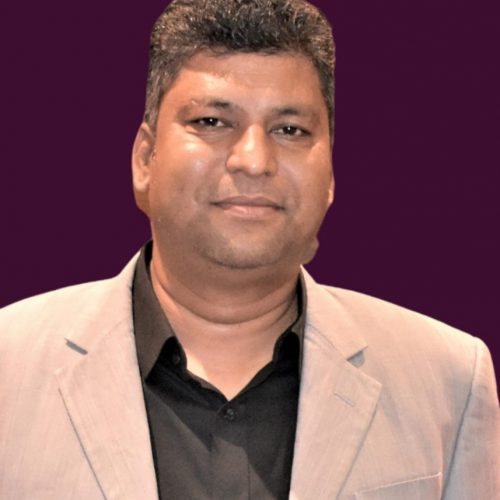
Saumitra Rajput
Saumitra Rajput is the founder of Kadamb Overseas Pvt. Ltd., India's leading Europe-focused study abroad consultancy based in Ahmedabad. With 14+ years of expertise in European education, he has personally counselled 2,500+ Indian families and helped 500+ students secure admission to top European universities including TU Munich, ETH Zurich, EPFL, KU Leuven, HEC Paris, Sapienza Rome, TU Wien, and Warsaw University of Technology. He has visited 25+ European universities, partners with 250+ EU institutions, and maintains a 500+ students placed.
Planning to Study Abroad?
Get free expert guidance from our experienced counselors

Saumitra Rajput
Saumitra Rajput is the founder and lead counsellor at Kadamb Overseas, India's trusted Europe education consultancy based in Ahmedabad. With 14+ years of hands-on experience, he has personally guided 500+ students to universities across Germany, Switzerland, France, Italy, Austria, and Spain. Saumitra has visited partner universities across Europe, holds deep expertise in European visa processes, scholarships, and student life, and has achieved a 97% visa success rate for his clients. He is the host of the YouTube channel "Europe with Saumitra", where he shares first-hand insights on studying and living in Europe. His mission: make Europe accessible to every Indian student, with zero consultancy fees.