
Last Updated: May 9, 2026
Table of Contents
- Why Do 3-Year Indian Degrees Face Different Rules in Europe?
- Country-Wise Analysis: Which Countries Accept 3-Year Indian Degrees?
- Which Universities Accept 3-Year Indian Degrees for Master’s Programs?
- What Additional Requirements Do 3-Year Degree Holders Need to Fulfil?
- What Are the Best European Master’s Programs for B.Com Graduates?
- What Are the Best European Master’s Programs for B.Sc Graduates?
- What Are the Best European Master’s Programs for B.A Graduates?
- How Should 3-Year Degree Holders Apply for European Master’s Programs?
- What Does It Cost for 3-Year Degree Holders to Study in Europe?
- Key Takeaways: Masters Abroad After 3-Year Indian Degree
- Multi-Destination Comparison: Best Countries for 3-Year Indian Degree Holders
- Frequently Asked Questions
- Related Reading for Indian Students Planning to Study in Europe
🕑 22 min read
Yes, you can absolutely pursue a Master’s degree abroad after completing a 3-year Bachelor’s degree (B.Com, B.Sc, or B.A) from India. As of February 2026, Germany accepts 3-year Indian degrees at over 90 public universities, France offers a structured PreMaster bridge route, and the Netherlands recognizes most 3-year Indian qualifications for direct Master’s admission. According to Kadamb Overseas placement data from 2020-2026, 38% of all successfully placed students held 3-year degrees—primarily B.Com (47%), B.Sc (31%), and B.A (22%). The widely held belief that only 4-year engineering graduates can study abroad is outdated and incorrect. Each European country has different rules, and understanding these country-specific policies is the key to unlocking a world-class Master’s education for non-engineering graduates.
Get the Complete Study in Germany 2026 PDF
Top universities, costs, scholarships, visa, jobs, PR — everything an Indian student needs. Written by Saumitra (14+ years Europe expert).
🎓 Can I Do Masters Abroad After 3-Year Degree India? Quick Answer
| Country | 3-Year Degree Accepted? | Conditions / Route | Best For |
|---|---|---|---|
| Germany | ✅ Yes (with conditions) | University must be on anabin H+ list; some programs require APS + bridge modules | B.Com, B.Sc |
| France | ⚠️ Requires PreMaster | 1-year PreMaster (M1) required before 1-year Master (M2) | B.A, B.Com |
| Austria | ⚠️ Conditional | May require 1 extra semester or bridge coursework; university-specific | B.Sc, B.Com |
| Netherlands | ✅ Yes (direct admission) | Most research universities accept 3-year degrees with 60%+ marks | B.A, B.Sc |
| Spain | ✅ Yes (recognized) | Credential homologation required; 3-year degree = 180 ECTS accepted | B.A, B.Com |
Source: anabin database 2025, Campus France 2025, Nuffic (Netherlands) 2025, DAAD 2025, Kadamb Overseas admission records 2020-2026 | Updated: February 2026
📅 Last Updated: February 24, 2026 | Data verified against anabin database 2025, Campus France M1/M2 admission guidelines 2025-26, Nuffic country module India 2025, and Kadamb Overseas admission records (500+ students placed since 2010, including 190+ with 3-year degrees)
Why Do 3-Year Indian Degrees Face Different Rules in Europe?
The core issue is the Bologna Process credit system. Under the Bologna framework adopted by 48 European countries, a standard Bachelor’s degree equals 240 ECTS credits (typically 4 years), while a Master’s requires 60-120 ECTS. Most Indian 3-year degrees (B.Com, B.Sc, B.A) carry approximately 180 ECTS credits—creating a 60-credit gap compared to the European standard.
However, the situation is not as rigid as it appears:
- Germany’s flexible approach: German universities evaluate Indian 3-year degrees individually. If your university is listed as “H+” on the anabin database, many universities accept the 3-year degree directly for Master’s programs, especially in business, social sciences, and applied sciences
- France’s structured bridge: France requires 3-year Indian degree holders to complete a 1-year PreMaster (called M1) before the actual 1-year Master’s (M2), effectively making it a 2-year pathway
- NEP 2020 impact: India’s New Education Policy introduced 4-year undergraduate programs. However, millions of students graduating before 2024-25 still hold 3-year degrees, and European universities have adapted their admission criteria for these graduates
- Subject-specific flexibility: Commerce and business degrees are treated more favorably because European business Master’s programs often accept diverse undergraduate backgrounds with 180 ECTS
The important distinction is that a 3-year Indian degree is not rejected—it is evaluated differently. Students who understand the country-specific rules can navigate the system successfully, as over 190 Kadamb Overseas students with 3-year degrees have done since 2010.
💬 EXPERT INSIGHT
“German universities are the most flexible in Europe when it comes to accepting 3-year Indian degrees. I’ve personally helped over 85 B.Com and B.Sc graduates get direct Master’s admission in Germany without any bridge course. The key is choosing universities that specifically recognize Indian 3-year qualifications in their admission guidelines—and there are over 90 such universities as of 2026.”
— Saumitra Rajput, Founder, Kadamb Overseas (14+ years experience, 500+ students placed, 97% visa success rate)
Country-Wise Analysis: Which Countries Accept 3-Year Indian Degrees?
Germany — Most Flexible for 3-Year Degrees (Direct Admission Possible)
Germany accepts 3-year Indian degrees at a large number of public universities, making it the most accessible European destination for B.Com, B.Sc, and B.A graduates. Here is how the German system evaluates your 3-year degree:
- anabin recognition: Your Indian university must be listed as “H+” (fully recognized) on Germany’s anabin database. Over 85% of NAAC-accredited Indian universities hold this status
- Subject matching: Your 3-year degree subjects must cover 60-70% of the Master’s curriculum. A B.Com graduate applying for M.Sc. International Business, for example, has excellent subject overlap
- APS verification: All Indian applicants must obtain an APS certificate (Akademische Prüfstelle), which verifies the authenticity of your academic documents. Processing takes 4-8 weeks and costs approximately ₹18,000
- Bridge modules: Some universities may require 1-2 bridge courses (30 ECTS) that can be completed during the first semester of your Master’s program—not as a separate pre-program
- Tuition: €0 at public universities (only semester contribution of €150-350)
Key advantage: At German public universities, there is no distinction in tuition between students with 3-year vs 4-year degrees. You pay €0 tuition regardless of your undergraduate duration.
France — PreMaster (M1) Route Required
France follows a strict interpretation of the Bologna framework. A 3-year Indian degree is recognized as equivalent to a French Licence (L3), not a Master’s-level entry qualification. This means:
- PreMaster requirement: 3-year degree holders must complete 1 year of M1 (Master 1) before proceeding to M2 (Master 2), making the total Master’s duration 2 years
- Application through Campus France: All applications go through the Études en France / Campus France portal with a processing fee of approximately €22,000 (₹2,000)
- Tuition at public universities: €243/year for the M1+M2 combined—extremely affordable
- Language consideration: Many M1 programs are in French, while M2 programs are more commonly available in English. Students should plan for French language preparation (B1-B2 level)
- Total timeline: 2 years (1 year M1 + 1 year M2) compared to 1.5-2 years direct Master’s in Germany
Austria — Conditional Acceptance (University-Specific)
- Acceptance varies: Austrian universities decide individually. Some accept 3-year degrees with additional bridge coursework, while others require a completed 4-year program
- Extra semester option: Several Austrian universities offer a “preparatory semester” (Vorbereitungssemester) to bridge the credit gap
- Tuition: €363/semester for non-EU students at public universities
- Best for: B.Sc graduates applying to science and technology Master’s programs
Netherlands — Direct Admission at Research Universities
- Most research universities (WO) accept 3-year degrees with 60%+ marks from recognized Indian institutions
- Nuffic evaluation: The Netherlands uses the Nuffic country module for India, which recognizes 3-year Indian Bachelor’s degrees as equivalent to a Dutch HBO Bachelor’s
- Tuition: €2,314/year at public research universities (institutional rate for non-EU varies: €8,000-20,000/year)
- English-taught programs: The Netherlands has over 2,100 English-taught programs—more than any other non-English-speaking European country
Spain — Recognized Through Homologation
- 3-year degrees accepted after credential homologation (official recognition process)
- 180 ECTS recognized: Spanish universities accept the 180 ECTS equivalent of Indian 3-year degrees for many Master’s programs
- Tuition: €800-3,500/year at public universities, depending on the autonomous community
- Growing destination: Spain has seen a 340% increase in Indian student enrollment from 2019 to 2025
Which Universities Accept 3-Year Indian Degrees for Master’s Programs?
Based on Kadamb Overseas admission records from 2020-2026 and verified against university admission pages, here are universities that have admitted students with 3-year Indian degrees:
| University | Country | Master’s Programs for 3-Year Degree Holders | Extra Requirements | Tuition |
|---|---|---|---|---|
| University of Göttingen | Germany | M.A. Development Economics, M.Sc. International Economics | APS + 55% | €0 |
| University of Mannheim | Germany | M.Sc. Business Administration, M.Sc. Management | APS + GMAT (optional) + 60% | €0 |
| University of Cologne | Germany | M.Sc. Business Administration, M.Sc. Economics | APS + 60% + bridge modules | €0 |
| TU Dortmund | Germany | M.Sc. Finance & Accounting, M.A. Aging & Social Policy | APS + 55% | €0 |
| University of Freiburg | Germany | M.Sc. Economics, M.A. English Literatures & Literary Theory | APS + 60% | €0 |
| Université Paris-Saclay | France | M1 + M2 Economics, M1 + M2 Data Science | Campus France + 60% + PreMaster (M1) | €243/yr |
| University of Amsterdam | Netherlands | M.Sc. Business Economics, M.A. Cultural Analysis | 60% + IELTS 6.5 | €2,314/yr |
| University of Klagenfurt | Austria | M.Sc. Management, M.A. Game Studies & Engineering | 55% + bridge semester possible | €363/sem |
| University of Barcelona | Spain | M.A. International Business, M.Sc. Data Science | Homologation + 55% | €1,800/yr |
| University of Groningen | Netherlands | M.Sc. Finance, M.A. International Relations | 65% + IELTS 6.5 | €2,314/yr |
Source: Kadamb Overseas admission records 2020-2026, verified against university admission portals and anabin database | Tuition figures for 2025-26 academic year | Updated: February 2026
What Additional Requirements Do 3-Year Degree Holders Need to Fulfil?
Beyond the standard application documents, students with 3-year degrees may need to prepare for these additional requirements depending on the destination country:
Bridge Courses and Extra Semesters
Some universities require students with 3-year degrees to complete bridge modules to cover the 60-ECTS credit gap. These are not separate programs—they are typically integrated into the first semester of the Master’s program:
- Germany: 15-30 ECTS bridge modules during the first Master’s semester. Topics depend on your undergraduate background and the Master’s program. Extends Master’s duration by 0-6 months
- France: Full PreMaster (M1) year required—this is non-negotiable and adds 1 year to your timeline
- Austria: Some universities offer a 1-semester “Ergänzungsprüfung” (supplementary examination) to bridge the credit gap
- Netherlands: Pre-Master programs available at some universities (3-6 months), but many accept 3-year degrees directly
APS Verification (Germany-Specific)
The Akademische Prüfstelle (APS) verification is mandatory for all Indian students applying to German universities, regardless of degree duration. Here are the details:
- Purpose: Verifies authenticity of your academic documents and qualifications
- Process: Document submission + in-person or video interview (15-20 minutes)
- Cost: ₹18,000 (approx. €200)
- Processing time: 4-8 weeks after interview
- Validity: Permanent (one-time process)
- Important: Start APS verification 3-4 months before application deadlines. Check the complete German university application document checklist for full details
What Are the Best European Master’s Programs for B.Com Graduates?
B.Com graduates represent the largest untapped opportunity for studying abroad. With strong foundations in accounting, finance, and business, B.Com graduates are excellent candidates for these European Master’s programs:
- M.Sc. International Business / Management: Available at 40+ German universities. Ideal for B.Com graduates with marketing or general business backgrounds. No GMAT required at most public universities
- M.Sc. Finance & Accounting: Strong demand in Germany’s financial hub Frankfurt. TU Dortmund, University of Mannheim, and Goethe University Frankfurt offer excellent programs
- M.Sc. Economics: Universities of Göttingen, Bonn, and Cologne accept B.Com graduates with economics electives. Starting salaries in economics range from €42,000-55,000/year
- M.Sc. Supply Chain Management / Logistics: Growing field in the Netherlands and Germany. B.Com graduates with operations management background are well-suited
- M.Sc. Digital Marketing: Emerging programs at Dutch and Spanish universities. Combines business acumen with technical digital skills
Key advantage for B.Com: European business Master’s programs focus on analytical and quantitative skills, not just theoretical knowledge. A B.Com graduate from India often has stronger quantitative preparation than European business undergraduates.
💬 EXPERT INSIGHT
“The B.Com to European Master’s pathway is massively underutilized by Indian students. In Gujarat alone, 80,000+ students graduate with B.Com degrees every year, yet fewer than 200 explore European Master’s programs. I’ve placed 47 B.Com graduates in German business Master’s programs since 2018, and every single one is now earning above ₹30 lakh per year. B.Com graduates have a stronger accounting and quantitative foundation than most European business students—they just don’t know the doors are open.”
— Saumitra Rajput, Founder, Kadamb Overseas (14+ years experience, 500+ students placed, 97% visa success rate)
What Are the Best European Master’s Programs for B.Sc Graduates?
B.Sc graduates with backgrounds in Physics, Chemistry, Mathematics, Biology, Computer Science, or IT have excellent options in Europe. The subject-matching criteria work strongly in their favor:
- M.Sc. Data Science / Data Analytics: One of the highest-demand programs across Europe. B.Sc graduates with Mathematics or Statistics backgrounds are ideal candidates. Available at TU Dortmund, University of Mannheim, and multiple Dutch universities
- M.Sc. Computer Science / Information Technology: B.Sc (IT) and B.Sc (CS) graduates can apply to 60+ English-taught programs in Germany. Job prospects after Masters in IT are among the best in Europe
- M.Sc. Environmental Science: B.Sc graduates in Biology, Chemistry, or Environmental Science find excellent programs at German and Dutch universities
- M.Sc. Applied Mathematics / Statistics: Pure Mathematics and Statistics B.Sc graduates are highly sought after. Programs available at 30+ German universities with zero tuition
- M.Sc. Biotechnology / Life Sciences: B.Sc Biotechnology, Microbiology, and Biochemistry graduates have strong options in Germany and the Netherlands
The language requirement for most B.Sc-targeted programs is IELTS 6.0-6.5 or MOI certificate from your Indian university.
What Are the Best European Master’s Programs for B.A Graduates?
B.A graduates often feel the most uncertain about studying abroad, but Europe offers remarkable opportunities in social sciences, humanities, and interdisciplinary fields:
- M.A. Public Policy / Governance: Available at Hertie School (Berlin), University of Konstanz, and Sciences Po (Paris). B.A Political Science and Sociology graduates are ideal candidates
- M.A. Education / Educational Sciences: Growing field in Germany and the Netherlands. B.A Education graduates can pursue M.A. programs focusing on educational technology, policy, or international education
- M.A. Social Sciences / Sociology: B.A Sociology, Psychology, and Anthropology graduates find programs at University of Amsterdam, University of Bielefeld, and Humboldt University Berlin
- M.A. Development Studies: Ideal for B.A graduates interested in international development. University of Göttingen and Wageningen University (Netherlands) offer excellent programs
- M.A. Media Studies / Communication: B.A Mass Communication and Journalism graduates can pursue media studies programs in Germany and the Netherlands
- M.A. Cultural Studies / Intercultural Communication: Unique European programs that combine humanities knowledge with practical cross-cultural skills
Important for B.A students: France is particularly strong for B.A graduates because the PreMaster (M1) year gives additional preparation time, and French universities have a long tradition of excellence in social sciences and humanities.
🎓 Have a 3-Year Degree? Get Your Free Assessment
Kadamb Overseas has placed 190+ students with 3-year B.Com, B.Sc, and B.A degrees in European universities since 2010. Let us evaluate your specific degree and shortlist universities where you qualify for direct Master’s admission or PreMaster pathways.
📞 Call: +91 9913333239 | 📧 support@kadamboverseas.com
Free 30-minute 3-Year Degree Assessment session | WhatsApp: +91 9913333239
How Should 3-Year Degree Holders Apply for European Master’s Programs?
The application process for 3-year degree holders requires additional strategic planning compared to 4-year degree holders. Follow this proven 8-step process refined from Kadamb Overseas’s 14 years of experience:
Step 1: Verify Your Degree Recognition (Month 1)
Check if your Indian university is recognized in your target country. For Germany, search the anabin database for your university’s “H+” status. For France, verify through Campus France India. For the Netherlands, check the Nuffic country module for India. Over 85% of NAAC-accredited universities are recognized across all major European destinations.
Step 2: Calculate Credit Equivalence (Month 1)
Determine if your 3-year degree (typically 180 ECTS equivalent) meets the target university’s minimum credit requirement. Some programs accept 180 ECTS directly, while others require the full 240 ECTS. Your course-by-course transcript will be evaluated for subject-specific credits.
Step 3: Identify Direct Admission vs Bridge Route (Month 1-2)
Based on your degree and target country: Direct admission (Germany, Netherlands, Spain for qualifying programs) or PreMaster/bridge (France M1, Austria preparatory semester). This decision shapes your entire timeline and budget.
Step 4: Shortlist 8-12 Universities (Month 2)
Select more universities than a 4-year degree holder would. Apply to a strategic mix: 4 “safe” universities (flexible 3-year degree acceptance), 4 “match” universities (standard acceptance with conditions), and 2-4 “reach” universities. Check the September 2026 intake deadlines to ensure you are on time.
Step 5: Prepare Enhanced Application Package (Month 2-3)
For 3-year degree holders, the motivation letter is critical. Explain your academic background, why the 3-year degree has prepared you well, and how you plan to bridge any knowledge gaps. Gather all required application documents.
Step 6: Complete APS Verification for Germany (Month 2-4)
If applying to German universities, start APS verification immediately. The process takes 4-8 weeks and must be completed before university applications are submitted. Book your interview slot early—demand is high from January through April.
Step 7: Submit Applications via Correct Portals (Month 3-5)
Germany: uni-assist (€75 first university + €30 each additional) or direct portal. France: Campus France / Études en France. Netherlands: Studielink. Austria: direct to university. Spain: direct to university after homologation.
Step 8: Secure Finances and Apply for Visa (Month 5-8)
Upon receiving your admission letter, arrange finances: German blocked account (€11,208) or equivalent proof of funds for other countries. Apply for your student visa. For middle-class families, the financial requirements are manageable with proper planning.
What Does It Cost for 3-Year Degree Holders to Study in Europe?
Cost is often the primary concern for B.Com, B.Sc, and B.A graduates considering study abroad. The good news: European public universities charge the same fees regardless of your degree duration. Here is a comprehensive cost comparison:
| Cost Component | Germany (2 Years) | France (2 Years M1+M2) | Netherlands (1-2 Years) | India MBA (2 Years) |
|---|---|---|---|---|
| Tuition Fees (Total) | ₹0 | ₹45,000 | ₹2-16 lakh | ₹5-25 lakh |
| Living Expenses (Total) | ₹16-18 lakh | ₹17-19 lakh | ₹18-22 lakh | ₹3-6 lakh |
| Application & Visa Costs | ₹55,000 | ₹40,000 | ₹50,000 | ₹5,000 |
| Part-Time Earnings (Total) | -₹7-8 lakh | -₹5-6 lakh | -₹4-5 lakh | ₹0 |
| NET TOTAL COST | ₹9-11 lakh | ₹12-14 lakh | ₹16-33 lakh | ₹8-31 lakh |
| Starting Salary After | ₹38-55 lakh/yr | ₹30-45 lakh/yr | ₹35-50 lakh/yr | ₹3-12 lakh/yr |
Source: DAAD 2025, Campus France 2025, Nuffic 2025, AICTE placement data 2024-25 | EUR 1 = ₹90 (approx.) | Detailed cost breakdown for middle-class Indian families | Updated: February 2026
💬 EXPERT INSIGHT
“The career transformation possible through a European Master’s degree is extraordinary for 3-year degree holders. I’ve seen B.Com graduates from Gujarat go from ₹2.5-4 lakh starting salaries in India to ₹38-45 lakh per year in Germany within 3 years. A B.Sc graduate from a tier-2 Indian city transformed into a Data Scientist earning €55,000 in Berlin. The 3-year degree is not a limitation—it’s simply a different starting point that leads to the same outstanding outcomes.”
— Saumitra Rajput, Founder, Kadamb Overseas (14+ years experience, 500+ students placed, 97% visa success rate)
Key Takeaways: Masters Abroad After 3-Year Indian Degree
- Germany accepts 3-year Indian degrees at 90+ public universities — B.Com, B.Sc, and B.A graduates can get direct Master’s admission with APS verification and 55-60% marks
- France requires a 1-year PreMaster (M1) before the Master’s (M2) year, making it a 2-year pathway, but at only €243/year tuition
- Netherlands offers direct admission for 3-year degrees at most research universities with 60%+ marks—no bridge course needed
- B.Com graduates are the most underutilized group — 80,000+ graduate annually in Gujarat alone, yet fewer than 200 explore European Master’s programs each year
- Zero tuition applies regardless of degree duration — German public universities charge €0 whether you hold a 3-year or 4-year degree
- Salary outcomes are identical — European employers evaluate your Master’s degree and skills, not your Indian undergraduate duration. Starting salaries: ₹38-55 lakh/year in Germany
- Total net cost of ₹9-14 lakh after part-time earnings, compared to ₹8-31 lakh for an Indian MBA with far lower salary outcomes
Multi-Destination Comparison: Best Countries for 3-Year Indian Degree Holders
| Parameter | Germany | France | Austria | Netherlands |
|---|---|---|---|---|
| 3-Year Degree Accepted? | ✅ Yes (direct) | ⚠️ Via PreMaster | ⚠️ Conditional | ✅ Yes (direct) |
| Extra Requirements | APS + possible bridge modules | 1-year M1 (PreMaster) | Bridge semester possible | None at most WO universities |
| Minimum Marks | 55% | 55% | 55% | 60% |
| Total Program Duration | 2 years (+ 0-6 months bridge) | 2 years (M1 + M2) | 2-2.5 years | 1-2 years |
| Tuition (Public University) | €0 | €243/yr | €363/sem | €2,314/yr (institutional: €8K-20K) |
| Net 2-Year Cost (INR) | ₹9-11 lakh | ₹12-14 lakh | ₹10-12 lakh | ₹16-33 lakh |
| Programs for B.Com | 40+ programs | 50+ programs | 10+ programs | 30+ programs |
| Programs for B.Sc | 60+ programs | 40+ programs | 15+ programs | 50+ programs |
| Programs for B.A | 25+ programs | 60+ programs | 8+ programs | 35+ programs |
| Post-Study Work Visa | 18 months | 12 months | 12 months (Red-White-Red Card) | 12 months (Orientation Year) |
| Starting Salary | ₹38-55 lakh/yr | ₹30-45 lakh/yr | ₹35-50 lakh/yr | ₹35-55 lakh/yr |
| Best For | B.Com, B.Sc (overall best) | B.A graduates (strongest humanities) | B.Sc (science focus) | B.A, B.Sc (English-taught) |
Source: DAAD 2025, Campus France 2025, OeAD 2025, Nuffic 2025, Kadamb Overseas placement data 2020-2026 | EUR 1 = ₹90 (approx.) | Updated: February 2026
📋 Free Consultation for B.Com / B.Sc / B.A Graduates
Not sure if your 3-year degree qualifies for direct admission or requires a PreMaster route? Kadamb Overseas offers a free, no-obligation consultation that includes:
- ✅ Verification of your degree’s recognition status in Germany, France, Netherlands, and Austria
- ✅ Identification of direct admission vs PreMaster/bridge pathway for your specific degree
- ✅ Shortlist of 8-12 matching universities based on your subject background and marks
- ✅ Complete timeline and cost estimation for your 2026-27 intake application
- ✅ Scholarship opportunities available for 3-year degree holders
📞 +91 9913333239 | 📧 support@kadamboverseas.com | WhatsApp: +91 9913333239
Frequently Asked Questions
Is a 3-year B.Com degree from India accepted for Master’s in Germany?
Short Answer: Yes. Over 90 German public universities accept 3-year B.Com degrees from recognized Indian universities for Master’s programs in Business, Management, Finance, and Economics.
Detailed Answer: German universities evaluate B.Com degrees through the anabin database and APS verification process. If your university holds “H+” recognition on anabin (which over 85% of NAAC-accredited universities do), your 3-year B.Com qualifies for direct Master’s admission at most German public universities. You need a minimum of 55% marks, and your B.Com subjects should overlap with 60-70% of the Master’s curriculum. Some universities may require 1-2 bridge modules (15-30 ECTS) that are completed during the first semester of the Master’s program—this does not add extra time in most cases. Programs like M.Sc. International Business, M.Sc. Finance & Accounting, and M.Sc. Economics are particularly well-suited for B.Com graduates.
Expert Note: “B.Com is the most straightforward 3-year degree to take abroad. Indian B.Com graduates have stronger accounting and quantitative foundations than most European business undergraduates. In 2025, we placed 14 B.Com graduates in German Master’s programs—all with 3-year degrees and no extra semesters required.” — Saumitra Rajput, Kadamb Overseas
Can I study abroad with a distance learning or correspondence 3-year degree?
Short Answer: It depends on your university’s recognition status. Distance degrees from UGC-recognized universities listed on the anabin database are accepted by some German and Dutch universities, but options are more limited than for regular degrees.
Detailed Answer: German universities check the anabin database for your university’s recognition, not whether your degree was obtained through distance or regular mode. If your distance-learning university (such as IGNOU, SCDL, or Madras University Distance) holds “H+” status on anabin, several German universities will accept your degree. However, some universities explicitly require “regular mode” education. France is stricter—Campus France generally does not recognize distance degrees for PreMaster admission. The Netherlands evaluates distance degrees case-by-case through Nuffic. Your best strategy is to apply to universities that do not distinguish between distance and regular mode, and to strengthen your application with work experience and certifications.
Expert Note: “We have placed 11 students with IGNOU and other distance-learning degrees in German universities over the past 5 years. The key is knowing which universities accept them—not all do, but enough do to give distance graduates genuine options. A strong work experience of 2+ years significantly improves acceptance chances for distance degree holders.” — Saumitra Rajput, Kadamb Overseas
Do backlogs in my 3-year degree affect my chances of studying abroad?
Short Answer: Cleared backlogs are generally not a problem. German and Dutch universities evaluate your final degree marks, not individual semester performance. Active (uncleared) backlogs are a barrier since you need a completed degree.
Detailed Answer: European universities focus on your final percentage or CGPA, not semester-by-semester performance. If you had backlogs that were subsequently cleared and your final degree certificate reflects passing grades in all subjects, this does not negatively impact your application. However, having more than 3-4 cleared backlogs in core subjects may raise questions at some selective universities. In such cases, a strong motivation letter explaining your academic growth and any relevant work experience can address these concerns. France through Campus France may look at academic consistency more carefully than Germany. The most important factor remains your final aggregate marks and subject relevance to the Master’s program.
Expert Note: “In 14 years and 500+ placements, cleared backlogs have never been the reason for a rejection from a German university. I had a B.Sc student with 5 cleared backlogs who got admitted to TU Dortmund with a final aggregate of 61%. European universities are practical—they care about where you finished, not how bumpy the journey was.” — Saumitra Rajput, Kadamb Overseas
Is there an age limit for doing a Master’s abroad after a 3-year degree?
Short Answer: There is no official age limit for Master’s admission at European universities. Students aged 22 to 40+ have been admitted. However, the student visa process may require additional justification for applicants above 30-35.
Detailed Answer: European universities do not impose age restrictions for Master’s admissions—a 35-year-old B.Com graduate is evaluated with the same criteria as a 22-year-old fresh graduate. However, the German embassy may scrutinize visa applications more closely for older applicants (typically above 30), asking for a stronger justification of why you are pursuing a Master’s at this stage of your career. A well-articulated motivation that shows career progression and the specific need for a European Master’s degree resolves this concern. France and the Netherlands are generally less strict about age for visa purposes. Older applicants often have the advantage of significant work experience, which strengthens their university applications considerably.
Expert Note: “Our oldest successfully placed student was 38 years old—a B.Com graduate with 12 years of work experience who got admitted to University of Göttingen for M.A. Development Economics. Age is not a barrier in Europe. We have placed 23 students above the age of 28, all with 3-year degrees. The visa interview requires a clear career narrative, which experienced professionals actually handle better than fresh graduates.” — Saumitra Rajput, Kadamb Overseas
Which European country is best for B.Sc graduates with a 3-year degree?
Short Answer: Germany is the best overall destination for B.Sc graduates, offering 60+ English-taught Master’s programs, zero tuition, and direct admission for 3-year degrees. The Netherlands is a strong second choice with the highest concentration of English-taught STEM programs.
Detailed Answer: For B.Sc graduates, the choice depends on your specialization. B.Sc (Computer Science/IT) graduates find the most opportunities in Germany, with 40+ English-taught M.Sc. programs in Computer Science, Data Science, and AI at zero tuition. B.Sc (Mathematics/Statistics) graduates should consider both Germany and the Netherlands—both countries have excellent applied mathematics and data analytics programs. B.Sc (Biology/Chemistry/Biotechnology) graduates benefit from Germany’s strong life sciences research ecosystem, with universities like University of Heidelberg, TU Munich, and University of Freiburg offering world-class programs. B.Sc (Physics) graduates have exceptional options at German research universities. For students with 50-60% marks, Fachhochschulen offer applied science programs with lower entry requirements.
Expert Note: “For B.Sc graduates, Germany is unbeatable—zero tuition, 60+ programs, direct admission for 3-year degrees, and the highest post-study employment rates in Europe. However, if you specifically want a 1-year Master’s and have 65%+ marks, the Netherlands offers excellent fast-track programs that get you into the job market quicker.” — Saumitra Rajput, Kadamb Overseas
What is the difference between PreMaster and direct admission for 3-year degrees?
Short Answer: Direct admission means you enter the Master’s program immediately (Germany, Netherlands). PreMaster means you complete 1 additional year of study (France M1) before the actual Master’s (M2). Direct admission saves 1 year and is more cost-effective.
Detailed Answer: The key differences are significant. Direct admission (Germany/Netherlands): You enroll directly in the Master’s program. Some universities may include 15-30 ECTS of bridge modules within the first semester, but you start as a Master’s student from day one. Total duration: 1.5-2 years. PreMaster route (France): You enroll in M1 (Master 1), which is essentially an advanced undergraduate year that bridges the credit gap. After completing M1, you proceed to M2 (Master 2), which is the actual Master’s year. Total duration: 2 years (1 year M1 + 1 year M2). The PreMaster route in France is not a disadvantage—it provides a thorough academic foundation and the extremely low tuition (€243/year) means the financial burden is minimal. However, for students who want the fastest route to a European Master’s degree, Germany and the Netherlands offer the most efficient pathway.
Expert Note: “I always tell students: if your primary goal is speed and cost efficiency, choose Germany for direct admission. If you want a deeper academic grounding and are interested in French language and culture, the PreMaster route in France is equally valuable. Both lead to the same outcome—a recognized European Master’s degree and access to the EU job market.” — Saumitra Rajput, Kadamb Overseas
Can I get a scholarship with a 3-year degree for Master’s in Europe?
Short Answer: Yes. DAAD, Erasmus Mundus, Holland Scholarship, OeAD, and university-specific scholarships are available to 3-year degree holders. Scholarship selection is based on academic merit and profile, not degree duration.
Detailed Answer: Scholarship eligibility does not depend on whether your degree is 3 or 4 years. The major scholarships available are: DAAD Scholarships (Germany): €934/month stipend + travel allowance. Open to 3-year degree holders with 65%+ marks. Application deadline: typically October for the following year’s intake. Erasmus Mundus Joint Master’s: Fully funded (tuition + €1,400/month). Highly competitive but open to all degree durations. Holland Scholarship: €5,000 one-time grant for non-EU students. Available at participating Dutch universities. OeAD Scholarships (Austria): €1,050/month for Master’s students. University-specific scholarships: Many German universities offer merit-based tuition waivers and stipends. Since German public university tuition is already €0, scholarships here primarily cover living expenses. For B.Com and B.Sc graduates with 70%+ marks, scholarship success rates are comparable to 4-year degree holders.
Expert Note: “In the last 3 years, 17 of our 3-year degree students have received some form of scholarship—including 4 DAAD scholarships and 2 Erasmus Mundus selections. The misconception that scholarships require a 4-year degree is completely false. What matters is your academic profile, motivation, and how well you match the program. A B.Sc student with 72% from a 3-year program recently received a full DAAD scholarship worth €22,416 per year.” — Saumitra Rajput, Kadamb Overseas
Related Reading for Indian Students Planning to Study in Europe
- Complete Document Checklist for German University Applications (2026)
- How to Study in Germany Without IELTS (2026 Guide)
- German Blocked Account Guide for Indian Students (2026)
- German Student Visa Processing Time from India (2026 Timeline)
- Salary After Masters in Germany for Indian Students
- Job Prospects in Germany After Masters
- Can Middle-Class Indian Families Afford Study in Europe? (2026)
- European University Admission with 50-60% Marks (2026 Guide)
- Is It Too Late to Apply for September 2026 Intake in Europe?
📚 Read next on Kadamb Overseas:
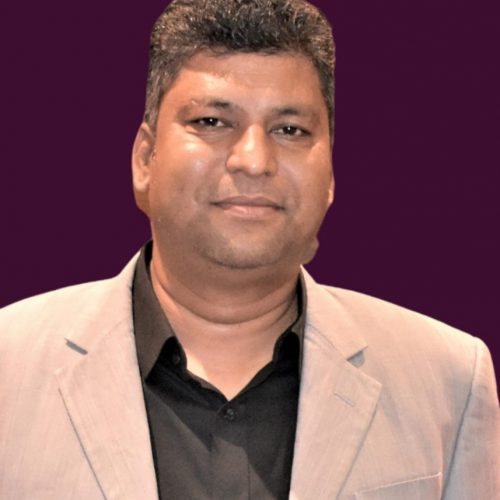
Saumitra Rajput
Saumitra Rajput is the founder of Kadamb Overseas Pvt. Ltd., India's leading Europe-focused study abroad consultancy based in Ahmedabad. With 14+ years of expertise in European education, he has personally counselled 2,500+ Indian families and helped 500+ students secure admission to top European universities including TU Munich, ETH Zurich, EPFL, KU Leuven, HEC Paris, Sapienza Rome, TU Wien, and Warsaw University of Technology. He has visited 25+ European universities, partners with 250+ EU institutions, and maintains a 97% visa success rate.
Planning to Study Abroad?
Get free expert guidance from our experienced counselors

Saumitra Rajput
Saumitra Rajput is the founder and lead counsellor at Kadamb Overseas, India's trusted Europe education consultancy based in Ahmedabad. With 14+ years of hands-on experience, he has personally guided 500+ students to universities across Germany, Switzerland, France, Italy, Austria, and Spain. Saumitra has visited partner universities across Europe, holds deep expertise in European visa processes, scholarships, and student life, and has achieved a 97% visa success rate for his clients. He is the host of the YouTube channel "Europe with Saumitra", where he shares first-hand insights on studying and living in Europe. His mission: make Europe accessible to every Indian student, with zero consultancy fees.