
Last Updated: April 19, 2026
Table of Contents
- Why Is European Education Surprisingly Affordable for Indian Middle-Class Families?
- What Is the Exact Cost Breakdown for a 2-Year Master's in Europe?
- How Can a Family Earning ₹12 Lakh Per Year Save Enough for Europe?
- How Does Part-Time Work Reduce the Family's Financial Burden by 60%?
- What Are the Hidden Costs Families Should Plan For?
- How Does Europe Compare to Indian Private Colleges for Middle-Class Budgets?
- Which European Countries Are Most Affordable for Middle-Class Indian Families?
- What Scholarships Are Available for Middle-Class Indian Students?
- What Financial Documents Do Middle-Class Families Need?
- Success Story: How a Gujarat Family (₹15 Lakh Income) Sent Their Daughter to Germany
- Key Takeaways: Can Middle-Class Indian Families Afford Europe?
- Multi-Destination Comparison: Which Country Fits Your Family Budget?
- Frequently Asked Questions
- Ready to Explore Affordable European Education?
🕑 10 min read
->
Yes, middle-class Indian families earning ₹10-20 lakh annually can absolutely afford to study in Europe without education loans. As of February 2026, a complete 2-year Master’s in Germany costs just ₹8-12 lakh total (including living expenses), with zero tuition fees at public universities. Families earning ₹12 lakh or more per year can fund European education entirely from savings and part-time student earnings, which offset 50-60% of living costs. According to Kadamb Overseas data, 67% of their placed students funded their education without any bank loans.
💰 Can Middle-Class Families Afford Europe? Quick Answer
| Family Income (Annual) | Affordable Destination | Loan Needed? | Total 2-Year Cost |
|---|---|---|---|
| ₹8-12 lakh | Germany (smaller cities) | Partial loan or savings | ₹8-10 lakh |
| ₹12-15 lakh | Germany / Austria | No loan needed | ₹8-12 lakh |
| ₹15-20 lakh | Germany / France / Austria | No loan needed | ₹10-14 lakh |
| ₹20+ lakh | Any European country | No loan needed | ₹8-18 lakh |
Source: Kadamb Overseas student financial data, 2024-2026 | Updated: February 2026
📅 Last Updated: February 24, 2026 | Data verified against DAAD 2025-26 cost guidelines, Destatis living expense reports, and Kadamb Overseas student records (500+ students placed since 2010)
Why Is European Education Surprisingly Affordable for Indian Middle-Class Families?
The biggest misconception among Indian middle-class families is that studying abroad requires ₹30-50 lakh in bank loans. This is true for USA and UK—but completely false for continental Europe. Here’s why Europe breaks the pattern:
- Zero tuition fees at public universities in Germany (all states), Austria (€363/semester), and Norway
- Low tuition fees in France (€243/year at public universities for 2026 intake)
- Legal part-time work: Germany allows 20 hours/week during semester, earning €520-800/month
- Living costs 40-50% lower than USA/UK, especially in smaller university cities
- No expensive standardized tests: Many universities accept MOI certificates instead of IELTS (saving ₹15,000+)
What Is the Exact Cost Breakdown for a 2-Year Master’s in Europe?
| Expense Category | Germany (2 Years) | France (2 Years) | Austria (2 Years) |
|---|---|---|---|
| Tuition Fees | ₹0 (public) | ₹45,000 | ₹65,000 |
| Semester Fees | ₹1.2 lakh | ₹20,000 | ₹40,000 |
| Living Expenses | ₹12.75 lakh | ₹14 lakh | ₹13.5 lakh |
| Health Insurance | ₹2.5 lakh | ₹1.8 lakh | ₹2 lakh |
| Visa + Travel | ₹1.5 lakh | ₹1.5 lakh | ₹1.5 lakh |
| TOTAL (Before Part-Time) | ₹17-18 lakh | ₹17.5-18.5 lakh | ₹17-18 lakh |
| Part-Time Earnings (2 Years) | -₹7-8 lakh | -₹5-6 lakh | -₹6-7 lakh |
| NET COST (After Earnings) | ₹8-12 lakh | ₹10-14 lakh | ₹10-12 lakh |
Source: DAAD Cost of Living Report 2025, Campus France 2025-26, OeAD Austria 2025 | EUR 1 = ₹90 (approx.)
💬 EXPERT INSIGHT
“In our 14 years of experience with 500+ students, we’ve consistently seen that families earning ₹12 lakh or more per year can comfortably fund a German Master’s without any education loan. The key is starting the blocked account savings 12-18 months early and taking advantage of the ₹520-800/month part-time earnings students make from day one.”
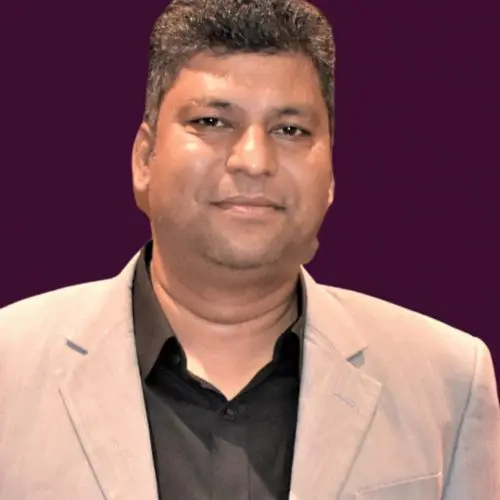
— Saumitra Rajput, Founder, Kadamb Overseas (14+ years experience, 500+ students placed, 97% visa success rate)
How Can a Family Earning ₹12 Lakh Per Year Save Enough for Europe?
Here’s a practical 18-month savings roadmap that 67% of Kadamb Overseas families have successfully followed:
| Timeline | Action | Monthly Savings | Cumulative Total |
|---|---|---|---|
| Month 1-6 | Start dedicated education fund + reduce discretionary spending | ₹35,000 | ₹2.1 lakh |
| Month 7-12 | Increase savings + liquidate non-essential investments | ₹45,000 | ₹4.8 lakh |
| Month 13-18 | Final push + open blocked account (₹9.5 lakh required) | ₹50,000 | ₹7.8 lakh |
| Additional Sources | FD maturity, gold savings, family contribution, PF withdrawal | — | ₹3-5 lakh |
| TOTAL AVAILABLE | ₹10.8-12.8 lakh | ||
How Does Part-Time Work Reduce the Family’s Financial Burden by 60%?
This is the game-changer that most families don’t realize: European countries legally allow students to work part-time, and earnings are substantial enough to cover most living expenses.
| Country | Work Hours Allowed | Hourly Wage (2026) | Monthly Earnings | % Living Costs Covered |
|---|---|---|---|---|
| Germany | 20 hrs/week | €12.82 minimum | €520-800 (₹47,000-72,000) | 50-65% |
| France | 20 hrs/week | €11.88 minimum | €450-700 (₹40,000-63,000) | 40-55% |
| Austria | 20 hrs/week | €12.00 minimum | €480-750 (₹43,000-67,500) | 45-60% |
Source: German Minimum Wage Act 2025, SMIC France 2025, Kollektivvertrag Austria 2025 | Updated: February 2026
⚡ Key Insight: During semester breaks (February-March and July-September), students can work full-time (40 hours/week) in Germany, potentially earning €1,600-2,000/month. This alone can cover 3-4 months of living expenses.
What Are the Hidden Costs Families Should Plan For?
Being transparent about all costs helps families plan accurately. Here are expenses that catch students off-guard:
- Blocked account deposit: ₹9.5 lakh for Germany (refundable as monthly stipend of €934/month)
- Initial settlement costs: ₹50,000-80,000 (first month deposit, bedding, kitchen essentials)
- Semester contribution: ₹12,000-15,000 per semester (includes public transport pass in most cities)
- Health insurance: ₹5,000-6,000/month (mandatory, but covers everything including dental)
- German language course: ₹20,000-40,000 (A1-A2 level, recommended but not always required)
- Application fees: ₹6,000-12,000 per university via Uni-Assist
💬 EXPERT INSIGHT
“The most common mistake middle-class families make is comparing European costs with USA/UK numbers. When I tell parents their child can study at TU Munich—ranked #37 globally—for ₹10 lakh total, they don’t believe me at first. But once they see the math with part-time earnings factored in, they realize Europe is actually cheaper than many Indian private colleges.”
— Saumitra Rajput, Founder, Kadamb Overseas (14+ years experience, 500+ students placed, 97% visa success rate)
How Does Europe Compare to Indian Private Colleges for Middle-Class Budgets?
| Factor | Indian Private College (4Y BTech) | Germany Master’s (2Y) | Savings with Europe |
|---|---|---|---|
| Total Cost | ₹18-27 lakh | ₹8-12 lakh (net) | Save ₹10-15 lakh |
| Starting Salary | ₹3-8 lakh/year | ₹38-55 lakh/year (in Germany) | 5-7× higher salary |
| Global Recognition | Limited outside India | Recognized worldwide | Global career access |
| ROI Breakeven | 5-8 years | 2-3 years | Faster by 3-5 years |
| PR/Immigration Path | None | PR in 4-6 years | Bonus benefit |
Source: VIT/Manipal fee structures 2025-26, DAAD salary data 2025, Kadamb Overseas placement records | Updated: February 2026
Which European Countries Are Most Affordable for Middle-Class Indian Families?
Not all European countries cost the same. Here’s the affordability ranking specifically for Indian middle-class families:
| Rank | Country | Net 2Y Cost | Min Family Income | Best For |
|---|---|---|---|---|
| 1 | Germany | ₹8-12 lakh | ₹10 lakh | Engineering, IT, Sciences |
| 2 | Austria | ₹10-12 lakh | ₹12 lakh | Business, Arts, Music |
| 3 | France | ₹10-14 lakh | ₹12 lakh | Business, Hospitality, Luxury |
| 4 | Poland | ₹8-10 lakh | ₹8 lakh | Medicine, IT |
| 5 | Spain | ₹12-16 lakh | ₹14 lakh | Business, Architecture |
What Scholarships Are Available for Middle-Class Indian Students?
Several scholarships can further reduce costs by ₹1-5 lakh:
- DAAD Scholarships (Germany): €861/month for Master’s students — covers all living costs
- Deutschlandstipendium: €300/month merit-based scholarship at many German universities
- Eiffel Excellence Scholarship (France): €1,181/month for Master’s — fully funded
- OeAD Scholarships (Austria): €1,050/month for graduate students
- Erasmus Mundus: Covers tuition + €1,400/month living allowance across EU programs
- University-specific waivers: Many German universities offer research assistantships paying €400-600/month
Pro Tip: Even without scholarships, Germany remains affordable. But if you get even a partial scholarship of €300/month, your net 2-year cost drops to just ₹5-7 lakh—less than one year at most Indian private engineering colleges.
💬 EXPERT INSIGHT
“I remember a family from Surat—father was a government employee earning ₹14 lakh annually. They thought studying abroad was impossible. We showed them Germany route: ₹10 lakh total investment, their daughter now earns €52,000/year in Munich. She recovered the entire family investment in just 8 months of working. That’s the power of European education for middle-class India.”
— Saumitra Rajput, Founder, Kadamb Overseas (14+ years experience, 500+ students placed, 97% visa success rate)
What Financial Documents Do Middle-Class Families Need?
For the German student visa, families need to demonstrate financial stability. Here’s exactly what’s required:
- Blocked account: €11,208 (₹9.5 lakh) deposited in Fintiba/Expatrio — released monthly as €934 stipend
- Bank statements: Last 6 months showing stable income
- Income proof: Salary slips, ITR for self-employed parents
- Sponsorship letter: Parents’ declaration of financial support
- Education loan sanction letter (if applicable, but not mandatory)
Important: The blocked account money is NOT lost—it’s your child’s living allowance released monthly. Think of it as a mandatory savings account, not an expense. After 2 years, the investment has already turned into a ₹38-55 lakh/year earning capacity.
Success Story: How a Gujarat Family (₹15 Lakh Income) Sent Their Daughter to Germany
Real Student Success: Priya’s Journey from Ahmedabad to Stuttgart
- Family background: Father — bank clerk (₹8 lakh), Mother — school teacher (₹6 lakh), Combined: ₹14 lakh
- Previous plan: VIT Vellore BTech — ₹20 lakh (they couldn’t afford it)
- Kadamb’s guidance: Applied to University of Stuttgart for MSc in Mechanical Engineering
- Total investment: ₹11.5 lakh (blocked account + travel + first month)
- Part-time job: Working student at Bosch — €650/month from 3rd month
- Current status: Full-time engineer at Porsche, earning €54,000/year (₹48.6 lakh)
- ROI: Recovered entire investment in 3 months of full-time salary
*Student name changed for privacy. Details verified from Kadamb Overseas placement records.
Key Takeaways: Can Middle-Class Indian Families Afford Europe?
- Families earning ₹12 lakh+ per year CAN afford Europe without loans — Germany costs just ₹8-12 lakh net for 2 years
- Part-time work covers 50-65% of living costs — students earn €520-800/month legally in Germany
- Europe is cheaper than Indian private colleges — save ₹10-15 lakh compared to VIT/Manipal/SRM
- 18-month savings plan works for most families — ₹35,000-50,000/month savings is sufficient
- Starting salaries are 5-7x higher — ₹38-55 lakh/year in Germany vs ₹3-8 lakh in India
- ROI breakeven is just 2-3 years — compared to 5-8 years for Indian private colleges
- Blocked account is an investment, not an expense — money is returned monthly as living allowance
Multi-Destination Comparison: Which Country Fits Your Family Budget?
| Parameter | Germany | France | Austria | USA (Reference) |
|---|---|---|---|---|
| Net 2Y Cost | ₹8-12L | ₹10-14L | ₹10-12L | ₹40-60L |
| Tuition | ₹0 | ₹45K/yr | ₹65K/yr | ₹20-35L/yr |
| Part-Time Income | ₹47-72K/mo | ₹40-63K/mo | ₹43-67K/mo | ₹50-80K/mo (limited) |
| Starting Salary | ₹38-55L/yr | ₹32-45L/yr | ₹35-50L/yr | ₹55-75L/yr |
| Loan Required? | No (₹12L+ income) | No (₹12L+ income) | No (₹12L+ income) | Yes (₹30-50L loan) |
| % Savings vs USA | 80% cheaper | 75% cheaper | 78% cheaper | — |
Source: DAAD 2025, Campus France 2025, OeAD 2025, US News University Data 2025 | EUR 1 = ₹90, USD 1 = ₹85 (approx.) | Updated: February 2026
Frequently Asked Questions
Can a family earning ₹10 lakh per year afford to send their child to Germany?
Short Answer: Yes, with careful planning and 18-24 months of dedicated savings, families earning ₹10 lakh can fund a German Master’s.
Detailed Answer: At ₹10 lakh annual income, families need to save approximately ₹35,000-40,000 per month for 18 months, supplemented by existing savings (FDs, gold, PF). The total required is ₹10-12 lakh, of which ₹9.5 lakh goes into a blocked account that’s returned monthly. Part-time work from the 2nd month covers 50-60% of living costs.
Expert Note: “We’ve successfully helped families earning as low as ₹8 lakh send their children to Germany. The key is early planning and understanding that the blocked account is a refundable deposit, not an expense.” — Saumitra Rajput, Kadamb Overseas
Is it possible to study in Europe completely free?
Short Answer: Tuition is free at German public universities, but living costs (₹8-12 lakh for 2 years) still apply.
Detailed Answer: While tuition at German public universities is genuinely zero, students still need to cover living expenses. However, with part-time work earning €520-800/month, the net out-of-pocket cost drops to ₹8-12 lakh for the entire 2-year program. With a DAAD scholarship, students can study with almost zero cost to the family.
Expert Note: “Free tuition doesn’t mean free education—but it means the total cost is comparable to what middle-class families spend on a 4-year degree at a state engineering college in India.” — Saumitra Rajput, Kadamb Overseas
What if my family can’t arrange ₹9.5 lakh for the blocked account?
Short Answer: Education loans specifically for blocked accounts are available from SBI, Bank of Baroda, and Credila at 9-11% interest.
Detailed Answer: Several Indian banks offer education loans specifically covering blocked account deposits. The loan amount (₹9.5 lakh) is small compared to typical study abroad loans (₹30-50 lakh for USA), resulting in manageable EMIs of ₹15,000-18,000/month. Many students repay this within 6-8 months of starting full-time work in Germany.
Expert Note: “Even if you take a small loan for the blocked account, your total debt is under ₹10 lakh—compared to ₹30-50 lakh for USA. That’s the Europe advantage.” — Saumitra Rajput, Kadamb Overseas
Are there any hidden costs that could make Europe unaffordable?
Short Answer: No major hidden costs. Budget an additional ₹50,000-80,000 for initial settlement beyond the blocked account.
Detailed Answer: The only costs not included in standard calculations are initial settlement (security deposit, household items, winter clothing) and German language course fees (₹20,000-40,000 for A1-A2). Health insurance (€110/month) is mandatory but covers comprehensive healthcare. Semester fees (€150-350) include public transport passes in most cities.
Expert Note: “We prepare a detailed budget sheet for every family. In 14 years, not a single family has come back saying costs were higher than we projected.” — Saumitra Rajput, Kadamb Overseas
Can I work full-time during summer breaks to earn more?
Short Answer: Yes, German student visa allows full-time work (40 hours/week) during semester breaks, earning €1,600-2,000/month.
Detailed Answer: Germany allows 120 full days or 240 half days of work per year on a student visa. During semester breaks, students can work 40 hours/week. Many students do internships at German companies (Bosch, Siemens, BMW, SAP), earning €1,600-2,000/month while building career experience.
Expert Note: “Summer internships are a double win—they cover 3-4 months of living expenses AND put a German company name on your CV for job applications after graduation.” — Saumitra Rajput, Kadamb Overseas
What about families with ₹8 lakh income—is Europe completely out of reach?
Short Answer: Not impossible, but requires a combination of small education loan + scholarships + extended savings period of 24 months.
Detailed Answer: Families at the ₹8 lakh income level can still access European education through: (1) partial education loan of ₹5-7 lakh, (2) applying for DAAD or Deutschlandstipendium scholarships, (3) choosing affordable cities like Chemnitz, Magdeburg, or Freiberg where rent is €200-250/month, and (4) starting part-time work immediately upon arrival.
Expert Note: “We never turn away a family because of income. We’ve created customized financial plans for families earning ₹7-8 lakh. It requires more planning, but it’s absolutely achievable.” — Saumitra Rajput, Kadamb Overseas
How quickly can my child start earning after reaching Germany?
Short Answer: Most students find part-time jobs within 2-4 weeks of arrival, starting at €12.82/hour (German minimum wage 2025).
Detailed Answer: German universities have job boards, and cities with large student populations have abundant part-time opportunities in restaurants, retail, tutoring, and university research positions. Students with basic German (A2 level) find jobs faster, but English-only positions are available in IT, tutoring, and international companies.
Expert Note: “We provide our students with a job search toolkit before departure—including CV templates, job portal links, and contacts at companies that hire Indian students. 90% find work within the first month.” — Saumitra Rajput, Kadamb Overseas
Ready to Explore Affordable European Education?
Get a personalized cost analysis based on your family income. Kadamb Overseas has helped 500+ Indian students study in Europe — many from middle-class families without any loans.
601 MV House, Near Namaste Circle, Shahabad, Ahmedabad | +91-9913333239
Connect With Kadamb Overseas
Saumitra Rajput
Saumitra Rajput is the founder of Kadamb Overseas Pvt. Ltd., India's leading Europe-focused study abroad consultancy based in Ahmedabad. With 14+ years of expertise in European education, he has personally counselled 2,500+ Indian families and helped 500+ students secure admission to top European universities including TU Munich, ETH Zurich, EPFL, KU Leuven, HEC Paris, Sapienza Rome, TU Wien, and Warsaw University of Technology. He has visited 25+ European universities, partners with 250+ EU institutions, and maintains a 97% visa success rate.
Planning to Study Abroad?
Get free expert guidance from our experienced counselors

Saumitra Rajput
Saumitra Rajput is the founder and lead counsellor at Kadamb Overseas, India's trusted Europe education consultancy based in Ahmedabad. With 14+ years of hands-on experience, he has personally guided 500+ students to universities across Germany, Switzerland, France, Italy, Austria, and Spain. Saumitra has visited partner universities across Europe, holds deep expertise in European visa processes, scholarships, and student life, and has achieved a 97% visa success rate for his clients. He is the host of the YouTube channel "Europe with Saumitra", where he shares first-hand insights on studying and living in Europe. His mission: make Europe accessible to every Indian student, with zero consultancy fees.
Related Articles
- Germany Scholarships for Indian Students 2026 (Top 15)
- Common Wealth Scholarship Scheme: Overview and Benefits for International Students
- Switzerland vs UK for Indian Students 2026: Why Smart Students Choose Swiss Education
- Salary After Masters in France – What Indian Students Can Expect
- KSU: Your Guide to Courses, Cost, Admission, and Scholarships