

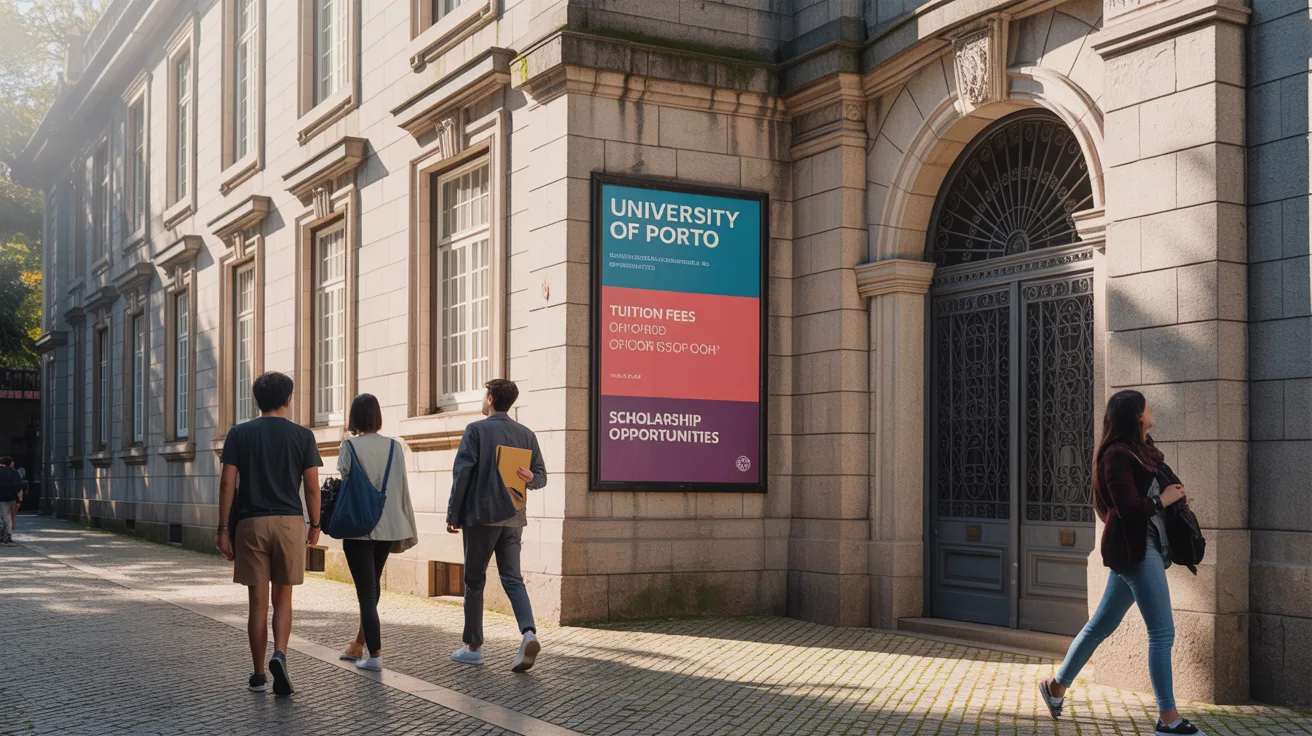
The University of Porto offers competitive tuition fees that vary depending on the degree program and level of study. Tuition fees for undergraduate programs typically range from €1,000 to €3,000 per year, while postgraduate programs may have higher costs.
Scholarship opportunities are available for both international and domestic students, based on academic merit, financial need, or specific eligibility criteria. Admission requirements include a recognized secondary school diploma for undergraduate programs and a relevant bachelor’s degree for postgraduate studies, alongside language proficiency in Portuguese or English depending on the course.
Understanding the tuition fees, scholarships, and admission criteria is essential for prospective students planning to study at the University of Porto. This guide provides clear details to help applicants navigate their options efficiently.
Overview of University of Porto Tuition Fees for Students
Tuition fees at the University of Porto vary depending on the study level and type of program. Fees differ for EU and non-EU students and are influenced by the number of academic credits.
Undergraduate Tuition Fees for International students
Undergraduate fees for EU students typically range from €1,000 to €1,500 per academic year. These rates cover bachelor’s degrees across most faculties.
Non-EU students pay significantly higher fees, usually between €3,500 and €7,000 annually, depending on the program. Medicine and engineering tend to be at the upper end.
Fees are charged per credit, with most undergraduate programs requiring 180 to 240 ECTS credits. Students must budget for additional costs such as registration and examination fees.
Postgraduate Tuition Fees
Master’s degree fees for EU students usually fall between €1,200 and €2,000 per year. Some specialized or professional programs may charge closer to €3,000.
Non-EU postgraduate fees are higher, generally ranging from €4,000 to €8,000 annually. Fees vary significantly by faculty and course.
Most Master’s programs require 60 to 120 ECTS credits. Students should consider extra costs related to internships or mandatory study materials.
PhD Tuition Fees
PhD candidates at the University of Porto typically pay between €900 and €1,500 per year for EU status students.
Non-EU PhD students face fees up to €3,000 per year, though some research grants or funding options can help reduce costs.
Doctoral programs are structured by annual enrollment fees rather than credit hours, reflecting the research-focused nature of the degree. Additional expenses may include conference participation and publication fees.
Breakdown of Costs and Payment Methods
The University of Porto charges tuition fees based on faculty and program type. Students can choose flexible payment options, paying either annually or by semester.
Fee Structure by Faculty
Tuition fees vary significantly depending on the faculty and degree level. For example, undergraduate programs in the Faculty of Arts have lower fees compared to Engineering or Medicine.
| Faculty | Undergraduate Fees (per year) | Graduate Fees (per year) |
|---|---|---|
| Arts and Humanities | €1,065 | €1,250 |
| Sciences and Engineering | €1,800 | €2,200 |
| Medicine | €3,000 | €3,500 |
Professional programs generally have higher fees due to specialized resources and equipment. International students usually pay fees equivalent to those of domestic students.
Annual and Semester Payment Options
Students can pay tuition in one full annual installment or split payments into two semesters. Early payment may offer benefits such as simplified processing.
Payment methods include bank transfer, direct debit, or online platforms linked to the university portal. Deadlines are strictly enforced to avoid late fees or registration issues.
The university provides payment schedules and reminders to assist students in managing their tuition fees efficiently.
Scholarships and Financial Aid
The University of Porto offers various financial support options to help students manage tuition costs. These include scholarships based on academic merit, financial need, and specific provisions for international students.
Merit-Based Scholarships
Merit-based scholarships reward students with outstanding academic records. The university evaluates candidates based on their previous grades, standardized test scores, and sometimes interviews.
These scholarships can cover part or all of the tuition fees. They often require maintaining a minimum grade point average during the study period to continue eligibility.
Application deadlines vary but usually align closely with admission cycles. Students must submit academic transcripts and sometimes letters of recommendation.
Need-Based Financial Support
Financial aid based on economic necessity targets students from low-income families. The university uses documented proof of income and family expenses to assess eligibility.
This support mechanism helps cover tuition, accommodation, and other educational costs. Some aid comes as grants, while others may be interest-free loans.
Students must reapply each academic year to confirm their financial situation. Supporting documents include tax returns, income statements, and household expense reports.
International Student Scholarships
International students at the University of Porto can access specific scholarships designed to ease their financial burden. These programs may focus on students from certain countries or regions.
They are often merit-based but try to encourage diversity and international collaboration. Scholarships might cover tuition fully or partially and occasionally include a stipend for living expenses.
The application process requires proof of academic achievement, a motivation letter, and sometimes visa or residency documentation. Deadlines are typically earlier than regular university admissions.
Admission Requirements for Undergraduate Programs
The University of Porto sets clear standards for admission to its undergraduate programs. Prospective students must meet specific academic, language, and procedural criteria to qualify.
Academic Qualifications
Applicants need a recognized secondary school diploma equivalent to the Portuguese 12th-grade certification. The diploma must cover relevant subjects aligned with the intended degree.
Specific subjects or minimum grades may be required depending on the program. For example, engineering degrees often demand strong mathematics grades.
The university also accepts international qualifications like the International Baccalaureate or A-levels, provided they match the university’s equivalency standards.
In some cases, entrance exams or additional tests may be necessary for competitive programs or certain nationalities.
Language Proficiency
Courses are primarily taught in Portuguese, so proficiency is essential. Non-native speakers must demonstrate their ability through recognized language tests.
Accepted certifications include the CAPLE CIPLE, DEPLE, or DIPLE exams. A minimum level of B2 according to the CEFR scale is typically required.
Some programs are offered in English, especially at the postgraduate level, but undergraduate studies generally require Portuguese.
Applicants should check specific program language demands and ensure submission of valid test scores by the application deadline.
Application Procedures for Students
Applications are submitted through the national portal for higher education admission. International students often need to coordinate with local Portuguese consulates or official representatives.
Documents required include academic transcripts, proof of language proficiency, identification, and sometimes motivation letters or portfolios.
Deadlines are strict, with applications usually due by mid-July for the autumn intake. Late applications are generally not accepted.
Applicants must also pay an application fee and might be invited for interviews or additional testing depending on the program.
Admission Criteria for Postgraduate and PhD Programs
Applicants must meet specific academic and documentation standards tailored to each program level. Language proficiency and relevant experience are essential parts of the evaluation.
Master’s Admission Guidelines
Candidates need a recognized bachelor’s degree or equivalent in a related field. Some programs require a minimum GPA, usually around 14 out of 20 or its equivalent.
Proof of proficiency in Portuguese or English is mandatory, depending on the program’s language of instruction. Accepted tests include TOEFL, IELTS, or Cambridge exams.
Supporting documents like motivation letters, CVs, and recommendation letters strengthen the application. Certain faculties may require entrance exams or interviews.
International students must provide legal residence or visa documentation alongside academic certificates. Applications are typically submitted online through the university portal.
PhD Entry Requirements
Applicants must hold a relevant master’s degree with strong academic performance, usually above a 15/20 GPA or comparable.
A research proposal aligned with the chosen doctoral program is necessary. It should clearly outline objectives, methodology, and expected contributions.
Candidates provide academic references and proof of language skills, mostly in English or Portuguese. Interviews or entrance exams may be required in some departments.
Acceptance depends on the availability of a supervising professor and research funding. Candidates must submit a detailed CV and copies of previous degrees during application.
Visa and Residency Considerations for International Students
International students must navigate specific visa and residency rules to study at the University of Porto. They need to fulfill detailed application steps and prepare precise documentation for approval.
Student Visa Application Process
Students from non-EU/EEA countries must obtain a D-type student visa before arriving in Portugal. The application must be submitted to the Portuguese consulate or embassy in the student’s home country.
The process usually begins three months before the intended travel date. Applicants must schedule an appointment and may need to attend an interview.
After approval, the visa is typically valid for four to six months. Upon arrival, students must apply for a residence permit with the Portuguese Immigration and Borders Service (SEF) within 90 days.
Required Documents
The visa application requires several mandatory documents:
- Valid passport with at least six months’ validity beyond the stay
- Proof of University of Porto admission (acceptance letter)
- Proof of financial means (bank statements, scholarship letters)
- Health insurance covering the entire stay
- Criminal record certificate from the home country
- Two recent passport-sized photos
Applicants may also need to provide a housing declaration verifying accommodation in Portugal. All documents must usually be translated into Portuguese and notarized if necessary.
Cost of Living and Additional Expenses for International students
The cost of living in Porto is generally affordable compared to other European cities. Students should budget for housing, food, transportation, and personal expenses.
Rent prices vary depending on the location and type of accommodation. Shared apartments cost around €200 to €350 per month, while single studios can range from €350 to €600 monthly.
Food expenses typically range between €150 and €250 per month if students cook at home. Dining out occasionally will increase this budget.
Transportation within Porto is efficient and cost-effective. A monthly public transport pass costs about €30 to €40. Many students use bikes or walk, reducing travel expenses.
Additional costs include books, study materials, and healthcare. These can add another €50 to €100 monthly. Health insurance is mandatory for some international students.
Other personal expenses like mobile plans, leisure, and clothes should be considered. These might cost an additional €100 to €150 per month. Budgeting carefully helps manage overall expenses effectively.
Frequently Asked Questions
Tuition fees at the University of Porto vary depending on the student’s nationality and program level. Scholarships are available through specific applications, and admission requires particular documents and proof of language skills. Application deadlines differ by faculty and academic year.
What are the tuition fees for international students at the University of Porto?
International students typically pay between €1,000 and €3,500 per academic year, depending on the program and level of study. Exact fees depend on the faculty and the degree pursued.
How can I apply for a scholarship at the University of Porto?
Applications for scholarships must be submitted through the university’s official portal. Eligibility criteria and documents vary by scholarship type, often requiring academic excellence or financial need evidence.
What documents are required for applying to the University of Porto?
Applicants must submit a completed application form, academic transcripts, identification documents, and proof of payment of the application fee. Additional documents like motivation letters or recommendation letters may be required for some programs.
Are there any language proficiency requirements for admission to the University of Porto?
Yes, proficiency in Portuguese or English is required, depending on the program language. Accepted tests include IELTS, TOEFL, or university-specific language exams.
What are the deadlines for submitting an application for the upcoming academic year at the University of Porto?
Deadlines vary by program but generally fall between March and July. Early application is advisable to secure a place and any available scholarships.
Do tuition fees differ between undergraduate and postgraduate programs at the University of Porto?
Yes, postgraduate programs usually have higher tuition fees than undergraduate courses. The exact difference depends on the faculty and the specific degree program.