

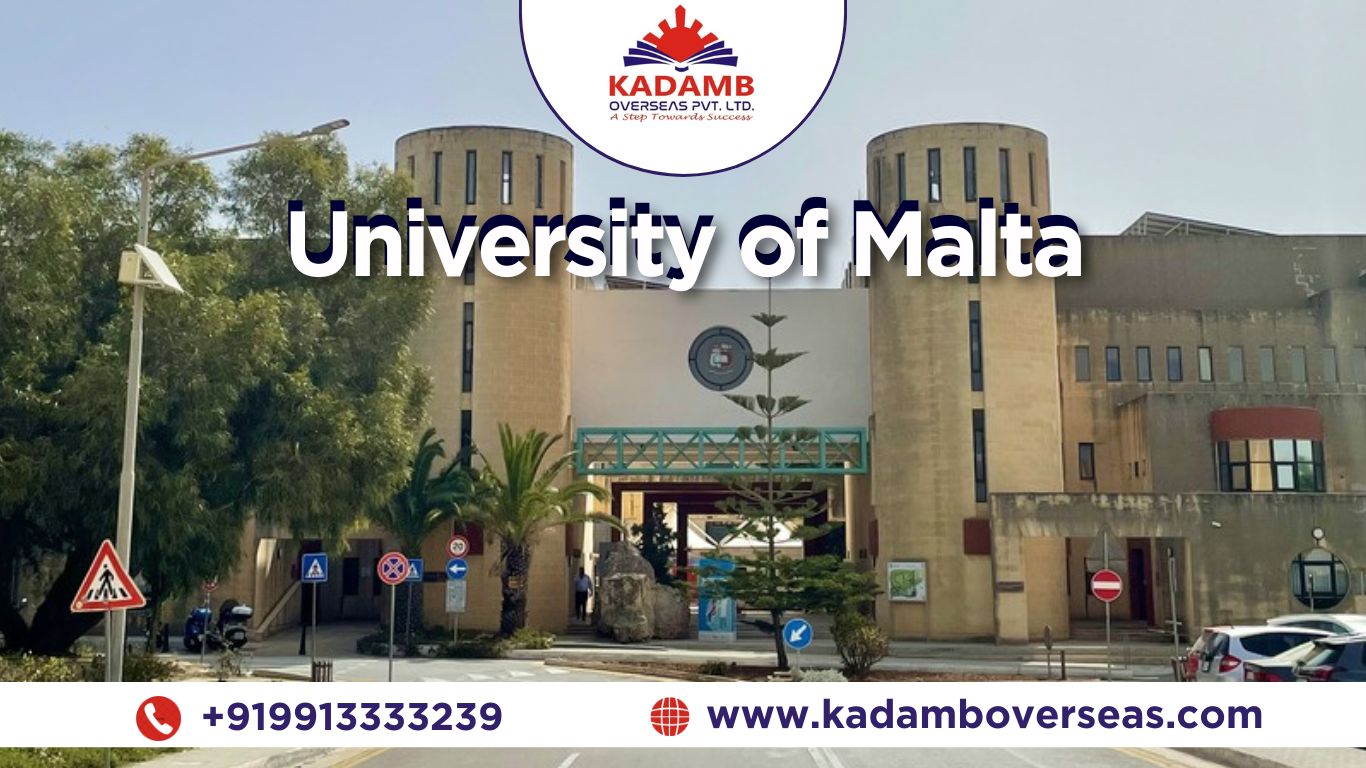
University of Malta Tuition Fees vary by program, level and residency: EU (including Maltese) students benefit from subsidized rates while non‑EU (international) students generally pay higher fees. Admission requirements differ by faculty but typically require recognized secondary qualifications for undergraduate entry and a relevant bachelor’s degree for postgraduate study.
The university publishes scholarships and financial‑aid options for both EU and non‑EU students (merit‑based, need‑based and international grants); check the scholarships section below for how these can reduce tuition and living costs. The University of Malta is listed in the QS World University Rankings (see the rankings section for the current band and explanation).
For clarity, this guide focuses on University of Malta fees and admissions — not to be confused with the American University of Malta — and helps prospective students estimate costs, admission steps, and support options. See program-specific fees below or consult the University of Malta site for the latest official rates.
University of Malta Tuition Fees Overview
Tuition fees at the University of Malta vary by level (undergraduate, postgraduate), by program or course, and by residency status. The university sets different fee bands for Maltese/EU students and international (non‑EU) students, so it’s important to check program‑specific rates on the official fee pages — figures below are indicative and may vary depending on the program and academic year.
Undergraduate Tuition Fees Structure
For full‑time undergraduate students, Maltese and EU students typically pay heavily subsidized fees (often a low fixed contribution each academic year). International students (non‑EU) pay substantially higher tuition: indicative ranges for many bachelor programs are roughly €9,000–€12,000 per academic year. These ranges are program-dependent — professional degrees (medicine, certain engineering or laboratory‑intensive courses) can incur higher tuition or additional lab/equipment fees.
What tuition typically covers: core teaching, access to campus resources and assessment. What it usually does not cover: registration charges, exam fees, optional field trips, special course materials or equipment — those may be charged separately.
Postgraduate Tuition Fees Structure
Postgraduate master’s fees for EU students commonly fall in a midrange (for many programs roughly €1,500–€2,500 per year), while part‑time postgraduate study is often charged per ECTS credit.
International postgraduate students should expect higher rates — starting around €12,000 per year for many professional or specialized master’s programs, though some research‑led degrees and PhD programs may have different arrangements, including tuition waivers or reduced fees for funded research students.
Example program differences: a laboratory‑heavy engineering program or the Medicine degree normally costs more than a humanities program because of extra facilities, placements, or professional accreditations — check faculty pages for exact program fees.
International Student Fee Differences
International students (non‑EU) should plan for higher tuition and additional mandatory costs such as visa fees, health insurance and living expenses. Indicative undergraduate international tuition commonly falls in the €9,000–€12,000 band, while some specialized programs or private arrangements may list higher maximums — always verify the exact “12,000 per” program rate on the official university fee schedule.
Action steps: consult the University of Malta’s official fees page for program-specific tuition, check whether your chosen program has extra equipment or placement fees, and contact the university fees office for up‑to‑date figures. If you are comparing options, note that the University of Malta is the national public university (distinct from the American University of Malta), and fees and funding vary accordingly.
Admission Requirements at University of Malta

Admissions at the University of Malta are faculty‑specific: academic requirements, documentation and the application process differ between undergraduate and postgraduate courses. Below is a concise, copy‑ready checklist to help applicants prepare — international students should read the “International applicants — extra steps” note.
Undergraduate Entry Criteria
Typical requirements:
- Recognized secondary school leaving certificate or equivalent to the Maltese Matriculation Certificate.
- Strong grades in subject(s) relevant to the chosen course (e.g., high math for engineering; science prerequisites for medicine).
- Some programs require entrance exams or interviews — check the faculty page for specifics.
Example: Medicine often requires specific science subjects and an interview; Engineering may require a strong math background — always verify program prerequisites on the official faculty page.
Postgraduate Application Conditions
Typical requirements for master’s and doctoral programs:
- A relevant bachelor’s degree (or equivalent) with the minimum class/grade required by the faculty — grade thresholds vary by program (2:2 may be acceptable for some courses but many demand a higher class).
- For research degrees, a research proposal and evidence of research ability can strengthen an application.
- Certain professional master’s programs may ask for documented work experience or entrance assessments.
Tip: If your degree classification system differs from Malta’s, use the university’s qualification comparability guidance or contact admissions to confirm equivalence.
Required Documentation
Common documents to upload in the online application:
- Certified copies of academic transcripts and diplomas (translated and certified if not in English).
- Valid passport or national ID.
- Proof of English language proficiency (IELTS, TOEFL or accepted equivalents) — check faculty pages for minimum scores.
- Curriculum vitae (CV) and a personal statement or motivation letter (especially for postgraduate programs).
- Letters of recommendation and a portfolio where applicable (e.g., arts, architecture).
All documents must be uploaded via the university’s online application system before the stated deadlines. Incomplete submissions may delay or disqualify your application.
International applicants — extra steps
International students should:
- Check qualification recognition and provide certified translations if documents are not in English.
- Submit proof of English language ability (e.g., IELTS/TOEFL) with scores that meet faculty minimums.
- Prepare for visa processing and budget for health insurance, accommodation and living expenses alongside tuition.
- Contact the International Students Office for guidance on pre-arrival requirements and required certifications.
If you are unsure about specific requirements or equivalency, use the faculty contact links on the University of Malta website — confirming details early avoids delays during the application and admission process.
Available Scholarships and Financial Aid
The University of Malta offers several scholarship and financial aid routes to make education more affordable for both local and international students. Support is usually awarded on the basis of academic merit, financial need, or targeted international schemes — below is a practical breakdown to help you identify likely options and next steps.
Scholarship types at a glance
- Merit‑based scholarships — target high‑achieving students; can cover part or all tuition depending on award level.
- Need‑based funding — for students experiencing financial hardship; awards range from tuition waivers to grants or monthly stipends after evidence of income is reviewed.
- International grants and mobility funding — Erasmus+ exchanges, Commonwealth awards and bilateral country scholarships that can help cover tuition, travel or living costs.
Merit-Based Scholarships
Merit awards are allocated to students with outstanding academic records or exceptional examination results. Eligibility often requires a high GPA, top exam rankings or demonstrable research potential. Some departments include extracurricular or leadership achievements as selection criteria. Award amounts and the exact GPA thresholds are published each academic year on the University’s scholarships page — check those pages for up‑to‑date eligibility and deadlines.Details on merit scholarship amounts and eligibility criteria are published on the University’s official website each academic year.
Need-Based Funding
Students with demonstrated financial hardship can apply for need‑based support by submitting income documentation and a formal application form. The university assesses household income and circumstances to determine eligibility and award level. Typical support can include partial tuition waivers, one‑off grants or monthly stipends — priority is usually given to full‑time degree students.
International Scholarships and Grants
International students can access university awards and external grants. Common opportunities include Erasmus+ mobility funding for exchanges, Commonwealth scholarships for eligible countries, and country‑specific government or agency grants. These awards often require proof of university acceptance and adherence to additional eligibility rules — verify deadlines early as international awards often have separate timelines.
Scholarships can help reduce both tuition and living expenses, but awards are limited in number and competitive. Applicants should prepare strong supporting documents (transcripts, CV, motivation letter and references) and submit by the published deadline.
How to find and apply — quick steps
- Visit the University of Malta Scholarships & Financial Aid web page for current schemes and application forms.
- Check faculty pages for program‑specific awards (some departments run their own merit scholarships).
- Prepare required documents: transcripts, proof of income (for need‑based), CV, personal statement and references.
- Submit by the scholarship deadline and follow up with the Scholarships Office if you have special circumstances.
Note: scholarship program names, eligibility and award levels are updated annually. Always confirm current details on the University of Malta’s official pages and consider applying early — funding opportunities (“malta offers”) are competitive and usually limited in number.
QS World University Rankings Performance
The University of Malta’s QS ranking reflects a mixture of academic reputation, research output and internationalization — factors that influence how employers and students perceive the university internationally. Rankings provide a high‑level view of performance but should be considered alongside program quality, employability outcomes and local context.
2025 QS World Ranking Position
According to the latest QS release cited in this article, the University of Malta sits in a global ranking band (check the QS page linked below for the precise 2025 band). While the university ranks below major global research leaders, it remains the highest‑ranked public university in Malta — a useful signal for prospective students comparing universities in Malta and the region.
Strengths that typically support the University of Malta’s ranking include employer reputation and faculty/student ratio; areas with room to grow often include citations per faculty (research output). Keep in mind that rankings are one factor — program accreditation, course content and local industry links are equally important when choosing where to study.
Ranking Methodology Explained
QS evaluates universities using six core metrics that are weighted to produce an overall score:
- Academic reputation — based on an international survey of academics.
- Employer reputation — employers’ perception of graduates (important for employability).
- Faculty/student ratio — a proxy for teaching capacity and availability of staff.
- Citations per faculty — measures research impact and scholarly output.
- International faculty ratio — proportion of academic staff from outside the country.
- International student ratio — share of students who are international.
Reputation surveys and citation analysis play outsized roles: universities with strong global research networks and high citation counts tend to score better on the research metrics, while universities with strong employer connections perform well on employer reputation. For an in‑depth view of the University of Malta’s profile and the exact 2025 band, consult the QS World University Rankings page linked earlier in this article.
What this means for students
- Employability: a good employer reputation can help graduates find jobs locally and regionally.
- Research exposure: strong programs and faculty links offer opportunities for research‑minded students, though citation metrics indicate room for growth.
- Internationalization: moderate international student and faculty ratios mean an increasingly global campus environment, which benefits students seeking international opportunities.
Remember: rankings are a useful indicator but should be one of several factors when choosing a university. Check program accreditation, course content, industry links and student support services to make a rounded decision.
Cost of Living for University of Malta Students
When planning studies at the University of Malta, factor in accommodation and daily living costs alongside tuition. Living expenses in Malta vary with lifestyle, location and whether you choose student halls, shared flats, or a private studio — below are typical ranges to help you build a realistic monthly and annual budget.
Accommodation Expenses
Rent is usually the largest single monthly cost. Typical accommodation options and ranges:
- University residence halls: €250–€350 per month (more affordable but limited availability; apply early).
- Shared apartments: €300–€450 per person per month (common choice for students; good balance of cost and convenience).
- Single rooms / studios: €450–€700+ per month (higher cost near prime locations or with modern amenities).
Budget for utilities (electricity, water, internet) at around €50–€100 monthly when not included in rent. Note that accommodation costs can vary depending on proximity to campus, season and demand.
Daily Living Costs
Estimate typical monthly living expenses (groceries, transport, personal):
Miscellaneous (study materials, leisure): variable — allow €50–€100+ per month.
Groceries: €150–€250 per month, depending on diet and shopping habits.
Eating out: €10–€15 for an inexpensive meal; budget more if dining out often.
Public transport: Single trips €1.50–€2; monthly student passes approximately €25–€35.
Sample monthly budget (indicative)
Example for a student in a shared flat: Rent €350 + Utilities €75 + Groceries €200 + Transport €30 + Misc. €60 = ≈ €715 per month (≈ €8,580 per year). Adjust these figures according to accommodation choice and personal spending.
Money‑saving tips for students
- Apply early for university residence halls to access lower rents.
- Share utilities and cook at home to reduce food costs.
- Use student discounts and consider a monthly travel pass instead of single tickets.
- Buy used textbooks or use library/online resources where possible.
For up‑to‑date accommodation listings, residence hall application details and official student cost guidance, visit the University of Malta accommodation pages and the International Students Office — these pages will help you plan realistic living expenses for your studies.
Application Process for Prospective Students
Applying to the University of Malta is done through the university’s online portal and requires careful preparation of documents and adherence to deadlines. Follow the checklist below to complete a correct application and reduce the risk of delays.
Online Application Steps
- Create an account on the University of Malta application portal and start a new application for your chosen program.
- Complete the form with personal details, academic history and preferred program/course choices.
- Upload supporting documents in PDF format (see the Documents checklist below).
- Pay the non‑refundable application fee through the portal (amount and payment methods are shown on the portal).
- Submit the application and monitor your online account for status updates, additional requests or interview invitations.
Documents checklist (upload as PDFs)
- Certified academic transcripts and diplomas (translated and certified if not in English).
- Copy of passport or national ID.
- Proof of English language proficiency (IELTS, TOEFL or accepted equivalents) — check program requirements for minimum scores.
- CV / résumé and a personal statement (especially for postgraduate applications).
- Letters of recommendation and a portfolio where required (arts, architecture, etc.).
After submission, some programs may request interviews, entrance tests or additional supporting materials. Decisions and communications are posted to your online account — check regularly and respond promptly to any requests to avoid delays.
Key Application Deadlines
Typical timelines (confirm faculty‑specific dates on the university website): undergraduate intakes commonly open in January and close by late July for the autumn term; postgraduate deadlines vary by program and often close earlier (May–July). Always check your faculty page for exact closing dates and scholarship application cutoffs.
International students should apply at least three months before the semester start to allow time for visa processing, arranging health insurance, and securing accommodation. If you plan to live in university halls, apply early — spaces are limited and allocated on a first‑come basis.
Tips for international applicants
- Ensure documents are certified and translated where required — the equivalence process can add time.
- Apply early for visas and read the International Students Office guidance on pre‑arrival requirements.
- Prepare scanned PDFs of all documents and keep originals for verification at enrolment.
- Contact admissions or your faculty’s international officer if you have unusual circumstances (equivalency, late documents).
Ready to apply? Start on the University of Malta application portal and follow the faculty instructions carefully to ensure your application is complete and submitted before the deadline.
Student Support Services and Resources
The University of Malta provides a wide range of student support designed to help you succeed academically and professionally. From academic tutoring to career guidance, these services improve study outcomes, build employability and connect students with local and international opportunities.
Academic Support Programs
Students can access targeted tutoring, workshops and study groups across subjects such as mathematics, sciences, languages and research methods. The Learning Support Office runs writing and research skills sessions and provides tailored help for students with specific learning difficulties or disabilities.
Online learning resources — lecture recordings, e‑books and academic databases — are available to students (access requires university credentials). These materials let you review lectures on your schedule and support blended or distance study.
Career Guidance Services
The Career Office supports students preparing for the job market with one‑to‑one career counseling, CV and cover letter reviews, interview practice, and sector‑specific workshops. They also help arrange internships and placements that improve practical skills and employability.
The university runs regular job fairs and networking events that connect students with local and international employers — valuable opportunities to explore job openings and internships. Workshops cover job search strategies, professional communication and career planning.
How to access services
To access support, log into your student portal and search for the Learning Support or Careers section. You can usually book appointments online (e.g., “Book a CV review”), sign up for workshops, or contact offices for one‑to‑one help. International students should also contact the International Students Office for tailored guidance.
Example: a recent graduate used the Career Office’s CV review and employer networking event to secure a paid internship that led to a full‑time job (anonymized student case). These practical supports translate into real opportunities for students who engage early and often.
Make use of these services early in your studies — book workshops, sign up for job fairs and contact tutors as soon as you identify academic or career needs. These resources are part of the university’s commitment to supporting students’ education and future careers.

Frequently Asked Questions
This section answers specific questions about tuition fees, admission criteria, scholarship options, ranking, acceptance rate, and application procedures for the University of Malta.