

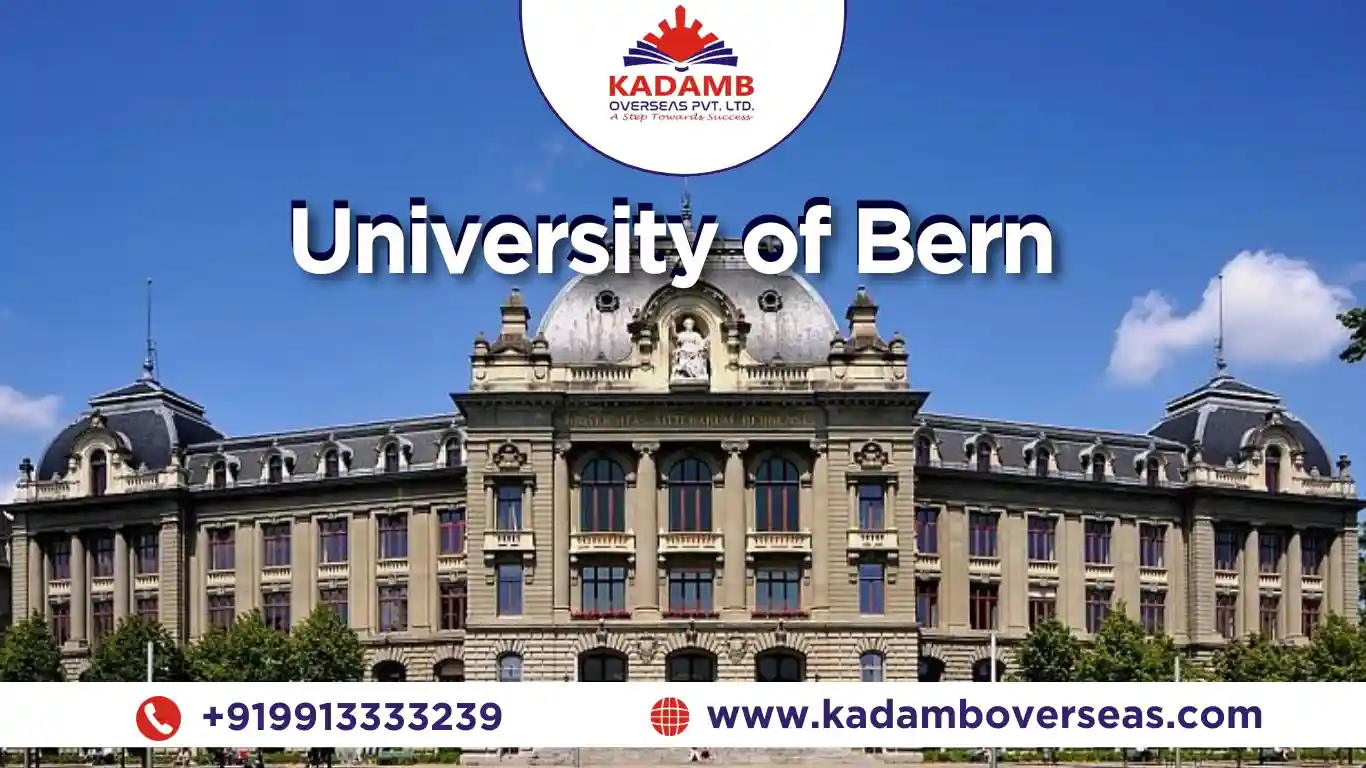
The University of Bern sits in the Swiss capital, Bern. Founded in 1834, it combines longstanding academic traditions with contemporary research and attracts students from around the world, including India. The university offers a wide range of programmes and the chance to study in a compact, attractive city close to the Alps.
Over nearly two centuries the University of Bern has developed a strong research profile and a broad portfolio of undergraduate, graduate and doctoral courses. That mix of teaching and research makes it a compelling choice for students seeking rigorous study and practical opportunities in science, social sciences and health fields.
Key Takeaways
- University of Bern is a well-established Swiss university (founded 1834) with a reputation for research and high-quality teaching.
- It offers a wide range of undergraduate, graduate and doctoral programmes across many faculties, suitable for international students seeking study and research opportunities.
- Studying here means combining academic life with the cultural and outdoor attractions of Bern — a compact capital city with UNESCO-listed Old Town and easy access to the Alps.
- There are various tuition bands, scholarships and financial-aid options to support international students; check official pages for up‑to‑date details.
- Admission focuses on academic records, relevant experience and potential; strong extracurriculars and a clear personal statement strengthen applications.
Overview of University of Bern
The University of Bern is located in the Swiss capital, Bern, and has been part of Switzerland’s higher education landscape since its foundation in 1834. Over the past one and a half centuries the university has expanded from a small regional institution into a comprehensive research university with strong links across the sciences, social sciences and health disciplines.
Historical Background
Founded in 1834, the university marked a significant step in Bern’s development as an educational centre. Key early faculties included law, theology and medicine; since then the institution has added faculties across the humanities, natural sciences and social sciences, reflecting a steady growth through the 19th and 20th centuries.
Academic Excellence and Recognition
The University of Bern is recognised for its research and teaching quality. It regularly appears in global university rankings — check the latest QS World University Rankings or Times Higher Education listings for precise positions and year-specific metrics. Its strengths are particularly notable in areas such as climate and environmental studies, public health, and selected natural-science disciplines.
Campus Location and Facilities
Based in Bern’s compact city centre — whose Old Town is a UNESCO World Heritage Site — the university combines historic buildings with modern classrooms, laboratories and dedicated research centres. Students have access to up‑to‑date labs, university libraries and interdisciplinary institutes that support both teaching and research.
“The University of Bern has always been at the forefront of academic excellence, fostering a culture of innovation and critical thinking.”
Why Choose University of Bern for Higher Education
The University of Bern combines a compact urban campus in the Swiss capital with a strong research profile and a broad range of programmes. It is especially well regarded in fields such as health sciences, environmental and climate research, and the social sciences — making it an attractive choice for students who want rigorous study plus practical research experience.
Programmes span undergraduate to doctoral levels across numerous faculties, so whether you aim to study science, social sciences, medicine or management you will find specialist courses and research-led teaching. Many courses offer opportunities to work alongside researchers on funded projects.
The university’s research strengths and links with industry and government support graduate employability. For prospective international students, studying in Bern also means living in a UNESCO-listed Old Town with excellent transport links and easy access to the Alps for outdoor activities.
If you want to explore courses or apply, check the university’s course catalogue and admissions pages for programme-specific entry requirements and up-to-date information on world university rankings and faculty strengths.
“The University of Bern has provided me with a truly exceptional educational experience. The diverse academic programs, world-class research facilities, and vibrant campus life have been instrumental in shaping my personal and professional growth.”
– *Samantha, International Student at the University of Bern*
Academic Programs and Course Structure
The University of Bern offers a broad range of programmes across its faculties — from bachelor’s degrees to taught masters and doctoral studies. Programmes are research-informed and designed to combine theory with practical experience in many fields, including health, environmental science, social sciences and management.
Undergraduate Programmes
Bachelor programmes typically provide a strong foundational curriculum and usually last three years. Popular undergraduate fields include Biology and Environmental Sciences, Business and Economics, Law, and Psychology. Many bachelors include optional modules, internships or project work to give practical experience.
International students should check the language of instruction for each programme (German, English or other) and specific entry requirements on the course catalogue.
Graduate Programmes
Master’s (taught) degrees usually run for one to two years and focus on advanced knowledge and specialised skills. The university’s graduate portfolio includes programmes in Health Sciences, Climate Science, Digital Innovation, Social Sciences and Management. Many masters include research projects or collaboration with researchers and industry partners.
The university runs scheduled intakes and application windows for most masters; check programme pages for precise deadlines and any English/German language minima.
Doctoral Studies
Doctoral programmes are research-led and normally last three to four years. PhD candidates work closely with faculty supervisors and research groups; many are funded through research grants or fellowships. The university’s strengths in interdisciplinary research create opportunities in areas such as public health, environmental studies and digital humanities.
If you are deciding which level to apply to, consider the following quick comparison: Bachelor — foundational study (3 years); Master — specialisation and applied projects (1–2 years); PhD — independent research (3–4 years).
“The University of Bern’s comprehensive academic offerings empower students to explore their passions, expand their knowledge, and unlock their full potential for success.”
University of Bern Tuition Fees, Scholarships Eligibility, Admission
Tuition and funding at the University of Bern vary by programme, level of study and student category (Swiss, EU/EFTA or international). Fees at Swiss public universities are generally moderate compared with many other countries, but exact amounts change — always consult the university’s official fees page for the current figures before you apply.
Indicative fee ranges (for guidance only): undergraduate tuition is commonly in the lower-mid CHF range per semester, master’s programmes typically charge a modest semester fee plus possible course-specific contributions, and doctoral candidates often pay reduced registration fees while many are funded through research grants or scholarships. Fee levels depend on residence status and the specific faculty; verify the exact semester amount on the University of Bern website.
Scholarships and grants are available through several channels: university merit scholarships, faculty or departmental awards, research grants for graduate students, and external fellowships. Eligibility typically considers academic achievement, research potential and financial need. Many doctoral researchers receive funding via projects or fellowships; masters students should explore faculty-specific scholarships and external sources.
To find up‑to‑date tuition figures and available scholarships, check the University of Bern’s official fees and scholarships pages (link via the university site). For admissions, look up programme-specific entry requirements: these list required qualifications, language conditions (German/English), and any additional documents such as portfolios or research proposals for specialised fields.

Practical tip: when budgeting, allow for living costs in Bern (rent, food, transport and insurance) in addition to tuition. If you need assistance identifying scholarships or preparing an application, contact the university’s admissions or international office for personalised guidance.
Scholarship Opportunities at University of Bern
The University of Bern provides a variety of funding routes to support students at different stages: merit awards, research grants and need‑based financial aid. These options exist across faculties and encourage both local and international students to pursue study and research in Switzerland.
Merit‑based Scholarships
Merit awards recognise academic excellence, leadership or outstanding research potential. Recipients may receive partial tuition waivers, one‑off grants or monthly stipends depending on the scheme. Check the faculty pages for named scholarships and application details.
Research Grants
Graduate students and early‑career researchers can apply for project grants and fellowships that fund research costs and stipends. Many PhD candidates are funded through research projects (Interdisciplinary Sustainability, Global Health, nano‑imaging and similar centres) — these awards typically require a convincing research proposal and supervisor support.
Financial Aid Programs
Need‑based support, university hardship funds and work‑study opportunities can help with living costs. International students should also explore external foundations and government scholarships from their home countries to complement university funding.
| Scholarship Type Typical Eligibility Notes / Deadlines | ||
| Merit‑based Scholarships | High academic performance, leadership, research promise | Varies by award — some have fixed dates, others are rolling; check faculty pages |
| Research Grants | Enrolment in a graduate programme, research proposal, supervisor support | Typically linked to project timelines — apply early with supervisor |
| Financial Aid / Hardship Funds | Demonstrated financial need plus academic progress | Often assessed on a rolling basis; apply as soon as you have an offer |
Practical note: scholarship names, amounts and deadlines change frequently. For the most reliable guidance, consult the University of Bern’s scholarships and research funding pages and contact the relevant faculty or the graduate school. International students should also confirm whether funding affects visa conditions or permitted working hours.

Admission Requirements and Application Process
Applying to the University of Bern is a clear, mostly online process. Entry rules differ by level and by programme, so check the specific programme page. In general you will need certified academic transcripts, proof of language ability for the language of instruction (German, English or French as applicable), and any programme‑specific documents such as portfolios or research proposals.
Undergraduate applicants should check whether their secondary qualification is recognised for admission in Switzerland. For many masters, a relevant bachelor’s degree and certain credit requirements are mandatory. Doctoral applicants usually apply with a detailed research plan and a confirmed supervisor.
Common application documents: academic transcripts (officially certified), a curriculum vitae, letters of recommendation, a statement of purpose, and recognised language certificates (for example IELTS/TOEFL for English; university pages give exact score requirements). Note: SAT/ACT are generally not required for European bachelor admissions — verify on the programme page.
- Confirm programme eligibility on the official course page and note required documents and language tests.
- Prepare and certify documents (translated where necessary) — transcripts, CV, recommendation letters and statement of purpose or research plan.
- Submit the online application by the programme deadline and upload all supporting documents.
- Await the admission decision; some programmes hold interviews or request further material.
- If admitted, follow enrolment steps and begin visa/residence‑permit arrangements if you are a non‑EU/EFTA student.
Below is a compact checklist and the typical intake deadlines — always verify the dates for your chosen faculty, as they can vary.
| Application Requirements Typical Deadlines |
- Online application form
- Certified academic transcripts
- Language proficiency certificates (programme specific)
- Letters of recommendation
- Statement of purpose / research proposal
- Portfolio (if applicable)
- Fall intake (most programmes): typically March – April (check faculty)
- Spring intake (selected programmes): typically September – October
- Doctoral admissions: often flexible but require supervisor confirmation — apply early
If you need help preparing your application, request guidance from the admissions or international office — they can advise on recognised qualifications, translation requirements and next steps for study and visa applications.
Important Academic Intakes and Deadlines
The University of Bern follows a clear academic calendar that helps applicants plan their studies and arrival. Key intake windows and document deadlines vary by faculty and programme, so always check the programme page for exact dates. Below are the typical semester dates and a practical timeline for applicants.
Semester Start Dates
The academic year is usually divided into two semesters. The Fall semester normally begins in mid‑September and the Spring semester in mid‑February. Exchange and continuing‑education courses may follow different timetables.
Application Timeline (Typical)
- Fall intake applicants: prepare documents in January–March and submit by the faculty deadline (commonly mid‑April). Decisions are usually communicated by June.
- Spring intake (selected programmes): application windows typically open in mid‑September with deadlines around the end of October; notifications follow in November/December.
Document Submission Deadlines
All required documentation — certified transcripts, language test scores, references and any programme‑specific materials — must be submitted by the stated deadline. Late or incomplete applications can affect eligibility. Some faculties operate rolling review for scholarships or hardship funds.
- For Fall intake: aim to have documents ready by mid‑April (faculty deadlines may vary).
- For Spring intake: ensure all materials are submitted by the end of October where applicable.
Example timeline for an international applicant: submit application (mid‑April) → receive admission decision (June) → apply for visa and arrange accommodation (June–August) → arrive for orientation (late August/early September). Doctoral candidates should begin supervisor contact and funding discussions well in advance.
University of Bern intakes and eligibility can differ by programme and student category. For the latest, authoritative dates consult the university’s academic calendar and your chosen faculty’s admissions page.
“The University of Bern’s academic calendar is designed to provide a streamlined and efficient experience for students, ensuring they can focus on their studies and reach their full potential.”
Student Accommodation Options
Studying at the University of Bern means finding the right place to live. The university offers a variety of accommodation options to suit different budgets and lifestyles — from university managed halls to private flats and shared apartments in the city.
On‑campus student housing is convenient for new and international students: rooms are furnished and utility costs are often included, creating a sociable campus environment. Places are limited, so apply early via the university housing portal.
For greater independence, off‑campus apartments are available near the university and in Bern’s city centre. These often cost more but provide privacy and flexibility. Shared flats are a popular, cost‑effective choice that also helps you meet fellow students.
When budgeting, remember to include utilities, food, transport and insurance; Bern’s cost of living is generally higher than many European cities but offers excellent public services and safety.
| Accommodation Type Approximate Cost (CHF/month) Typical Amenities | ||
| On‑campus residence halls | 500 – 800 (indicative) | Furnished rooms, shared kitchens, common areas |
| Off‑campus apartments | 800 – 1,200 (indicative) | Independent living, utilities may be extra |
| Shared living arrangements | 400 – 600 (indicative) | Shared flats, split bills, social environment |
Notes: the cost ranges above are indicative — prices vary by location, season and facility. Apply early for university housing; for private rentals use reputable portals and check local tenancy rules (deposits, contract terms). The university’s housing service can help you find options and explain application steps and deadlines.
Campus Life and Student Services
Campus life at the University of Bern goes far beyond lectures. The university fosters a lively community with clubs, sports, cultural activities and dedicated student services that support academic progress and personal development throughout your studies.
Student Organisations
The university hosts numerous student groups spanning academic clubs, cultural societies, volunteer groups and special-interest associations. These organisations are ideal places to build networks, practise leadership and engage with the wider Bern community.
Sports and Recreation
Students can access sports facilities and organised programmes, including gymnasiums, swimming pools and outdoor playing fields. Whether you prefer team sports, intramural competition or individual fitness, there are structured opportunities and informal drop‑in sessions.
Career Services
The university’s career services help students prepare for the job market with career counselling, résumé and interview workshops, and support finding internships and graduate roles. Many faculties maintain employer links that assist with placements and research collaborations.
Overall, campus life and student services at the University of Bern are designed to complement academic study with extracurricular growth, networking and practical support for career development.
| Student Organisations Sports & Recreation Career Services |
- Academic clubs and societies
- Cultural and language groups
- Volunteer and student leadership opportunities
- Gymnasiums and fitness classes
- Swimming pools and outdoor fields
- Intramural and competitive teams
- Career counselling and mentoring
- Résumé and interview workshops
- Internship and job placement support
“The University of Bern’s campus life is truly vibrant and engaging, offering countless opportunities for personal growth and development beyond the classroom.”
Research Opportunities and Facilities
The University of Bern is a research‑intensive university with well‑equipped laboratories, interdisciplinary centres and extensive library resources. Students and staff collaborate on projects that span the natural sciences, social sciences and health disciplines, creating opportunities to contribute to work with real societal impact.
Undergraduates, masters and doctoral researchers can join funded projects, apply for research assistant positions or pursue independent enquiries under faculty supervision. The university supports researchers with grant‑writing advice, shared facilities and mentorship from experienced academic staff.
Key research focus areas include climate and environmental science, public health and biomedical research, social sciences and digital innovation. These fields are supported by specialised centres and cross‑faculty initiatives that foster collaboration between researchers and external partners.
| Research Focus Areas Specialised Facilities | |
| Climate & Environmental Science; Biodiversity; Sustainability | Interdisciplinary Sustainability Institute; field sites and environmental labs |
| Public Health, Biomedical & Clinical Research | Center for Global Health; clinical research facilities and laboratories |
| Social Sciences, Humanities & Digital Innovation | Digital Humanities Lab; nano‑imaging and specialised research infrastructure |
Students interested in joining research projects should contact potential supervisors, explore funded positions on faculty pages, and review calls for doctoral positions and research assistant roles. Funding and positions are competitive; strong proposals and alignment with faculty research priorities increase success.
“The University of Bern is at the forefront of groundbreaking research, offering students the chance to make a real impact through their studies and contributions.”
For the most current details on research centres, funding opportunities and how to join research projects, consult the university’s research pages and contact the relevant research group or faculty office.
International Student Support Services
The University of Bern provides dedicated services to help international students settle academically and socially. The International Office offers hands‑on guidance from application through to graduation, helping you navigate academic procedures, local systems and everyday life in Bern.
Services include orientation, language support, visa advice and cultural integration initiatives. Many of these services are free or subsidised for enrolled students; check the International Office pages for exact details and registration links.
Orientation and Acclimation
- Comprehensive on‑campus orientation to introduce university systems, local customs and practicalities of living in Bern.
- Language courses and tutoring to improve German, French or English proficiency depending on your programme’s needs.
- Peer‑mentoring schemes that pair new international students with experienced students for practical advice and social support.
Visa and Immigration Assistance
- Personalised advice on visa application and residence‑permit procedures; guidance on required documents and deadlines.
- Support with extensions, work permits and liaising with cantonal migration authorities when needed.
- Clear instructions on how funding or employment may affect immigration status — crucial for international researchers and students with scholarships.
Cultural Integration Initiatives
- Events and workshops that promote intercultural exchange and help international students build networks with local students.
- Student clubs and societies celebrating cultural diversity and offering regular social activities and excursions.
- Field trips and orientation outings to familiarise students with Swiss heritage, transport and regional opportunities.
Next steps: consult the International Office pages on the University of Bern website for exact timetables and registration links for orientation and language courses. If you need individual help, contact the International Office (details on the university site) to arrange a meeting — they can advise on visas, housing and faculty‑specific support to help your transition to study and life in Bern.
Life in Bern for International Students
Studying at the University of Bern is an opportunity to immerse yourself in Swiss culture while pursuing high‑quality studies. Bern, the city bern and political capital of Switzerland, combines a compact urban centre with easy access to nature — ideal for students who value both city life and outdoor activities.
The city’s Old Town is a UNESCO World Heritage Site, with cobbled streets, historic architecture and a lively cultural calendar. Beyond the city, the Swiss Alps are within easy reach for hiking, skiing and weekend escapes — making student life varied and active.
International students often praise Bern for its safe streets, efficient public transport (buses, trams and regional trains) and welcoming communities. You can enjoy local festivals, markets and Swiss cuisine while connecting with fellow students through clubs and events.
Living in Bern can be more expensive than some cities, so budget for rent, food, transport and health insurance. As a rough guide (indicative): rent and utilities 500–1,200 CHF/month depending on accommodation; food and essentials 300–500 CHF; transport (monthly) 50–100 CHF with student discounts available. Check current figures before you move.
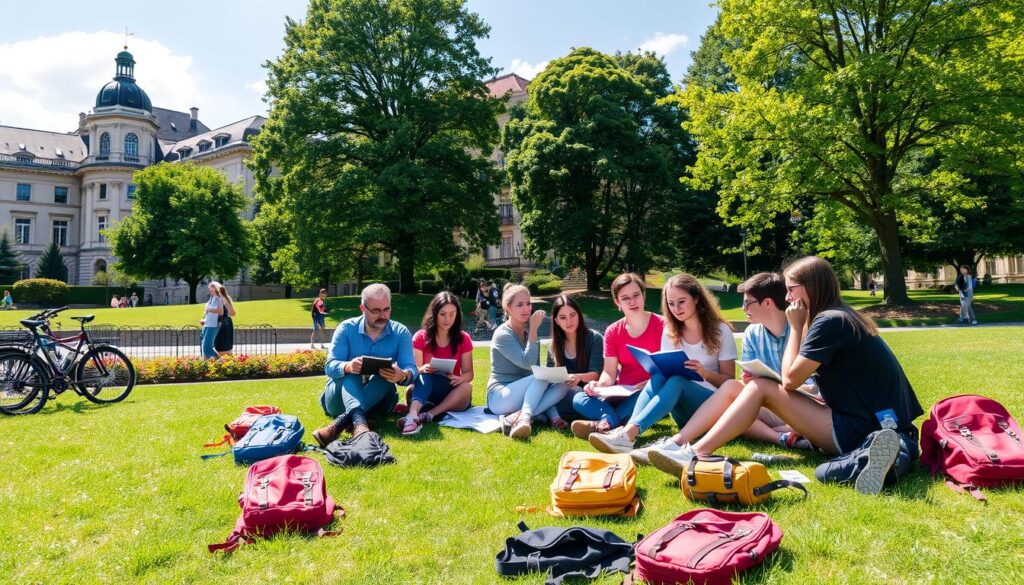
Bern offers excellent healthcare services and student health insurance schemes; ensure you understand the university’s requirements for health coverage before arrival. For local information, the city’s student services and the university international office provide practical guides on transport passes, cultural events and safety.
Overall, life in Bern offers a high quality of life, a compact and walkable city environment, and many opportunities to combine studies with outdoor and cultural experiences — a rewarding setting for international studies.
University of Bern Document Checklist
Preparing a complete application speeds up consideration and reduces delays. Below is a practical checklist of the most commonly required documents for applications to programmes and faculties at the University of Bern. Always check the specific programme page for any additional or differing requirements.
- Certified academic transcripts and diplomas (high school for bachelor applicants; bachelor degree for master applicants). Provide officially translated copies where necessary; follow the faculty’s guidance on certification or notarisation.
- Proof of identity: a clear copy of passport or national ID (valid passport recommended for international students).
- Language proficiency certificates: required tests and minimum scores differ by programme (e.g. IELTS/TOEFL for English; German or French tests where instruction is in those languages). Confirm exact thresholds on the programme page.
- Letters of recommendation (usually two) — academic referees preferred for research and graduate applications.
- Statement of purpose / motivation letter outlining your study objectives and fit with the programme or research group.
- Curriculum vitae (CV) with academic and professional experience; include publications or research outputs if applicable.
- Portfolio or research proposal (where required — common for arts, design or PhD applications). Follow faculty guidelines on format and length.
- Proof of funding or scholarship documents if already secured (useful for visa/residence permit applications).
Document format and translation notes: submit PDFs where possible. If original documents are not in the required language, supply certified translations and keep original copies. Some faculties require certified or notarised copies — check the programme page for instructions on legalisation or apostille requirements.
File naming and upload: follow the online application portal’s guidance for filenames and file size limits. Incomplete uploads are a common cause of delays — use the portal checklist and download any available PDF checklist from the faculty pages.
Programme‑specific extras: some programmes (for example in the arts, architecture, medicine or specialised research fields) request additional materials such as portfolios, evidence of clinical experience, GRE/GMAT (where specified) or extended research outlines. Check the faculty’s application page for exact details.
Final tip: create a folder with certified copies and scanned originals early, and keep a checklist (PDF) ready for upload. For any uncertainty, contact the admissions or faculty office directly — they can confirm required documents, formats and translation rules for your chosen course of studies.
Conclusion
The University of Bern combines strong academic programmes, active research opportunities and comprehensive student support — a compelling choice for those wishing to study in Switzerland.
Whether you are interested in science, social sciences, health or management, the university’s faculties and research centres offer a wide range of study options and funding pathways to support your goals.
Ready to take the next step? Visit the official admissions and course pages to request a prospectus, check current intakes, or apply now — the University of Bern can be the start of a rewarding international study experience and a strong foundation for your future.
FAQ
Why should I consider studying at the University of Bern in Switzerland?
The University of Bern combines respected academic programmes and active research centres with a compact campus in the Swiss capital. You gain access to strong teaching and research (science, health and social sciences), international networks and Bern’s high quality of life — a good fit if you want rigorous study and practical research experience.
What are the tuition fees and scholarship opportunities?
Tuition varies by programme and student status (Swiss/EU/international). The university and faculties offer merit scholarships, research grants and need‑based aid. Always consult the official fees and scholarships pages for current figures and application details.
What are the admission requirements for international students?
Requirements depend on level and programme: certified academic transcripts, proof of language ability (German/English/French as required), references and a statement of purpose or research proposal where relevant. Check the specific programme page for exact entry criteria and recognised qualifications.
What accommodation options are available?
Options include on‑campus residence halls, off‑campus apartments and shared living arrangements. Availability and costs vary, so start housing searches early and consult the university housing service for application steps and recommended portals.
What student support services and campus life opportunities exist?
The university provides orientation, language classes, visa and immigration assistance, counselling and career services. Campus life includes many student organisations, sports facilities and cultural activities — all designed to support academic success and personal development.
What research opportunities and facilities are available?
Students can join research projects across areas such as environmental science, public health, social sciences and digital innovation. The university hosts specialised centres (sustainability, global health, digital humanities, nano‑imaging) and provides labs, libraries and support for researchers and doctoral candidates.
How can I learn more about the document checklist for international applications?
The University of Bern publishes detailed document checklists on each programme page. Typical items include certified transcripts, passport copy, language certificates and references. Download the programme checklist PDF and contact the admissions office if you need clarification on translations or certification.