

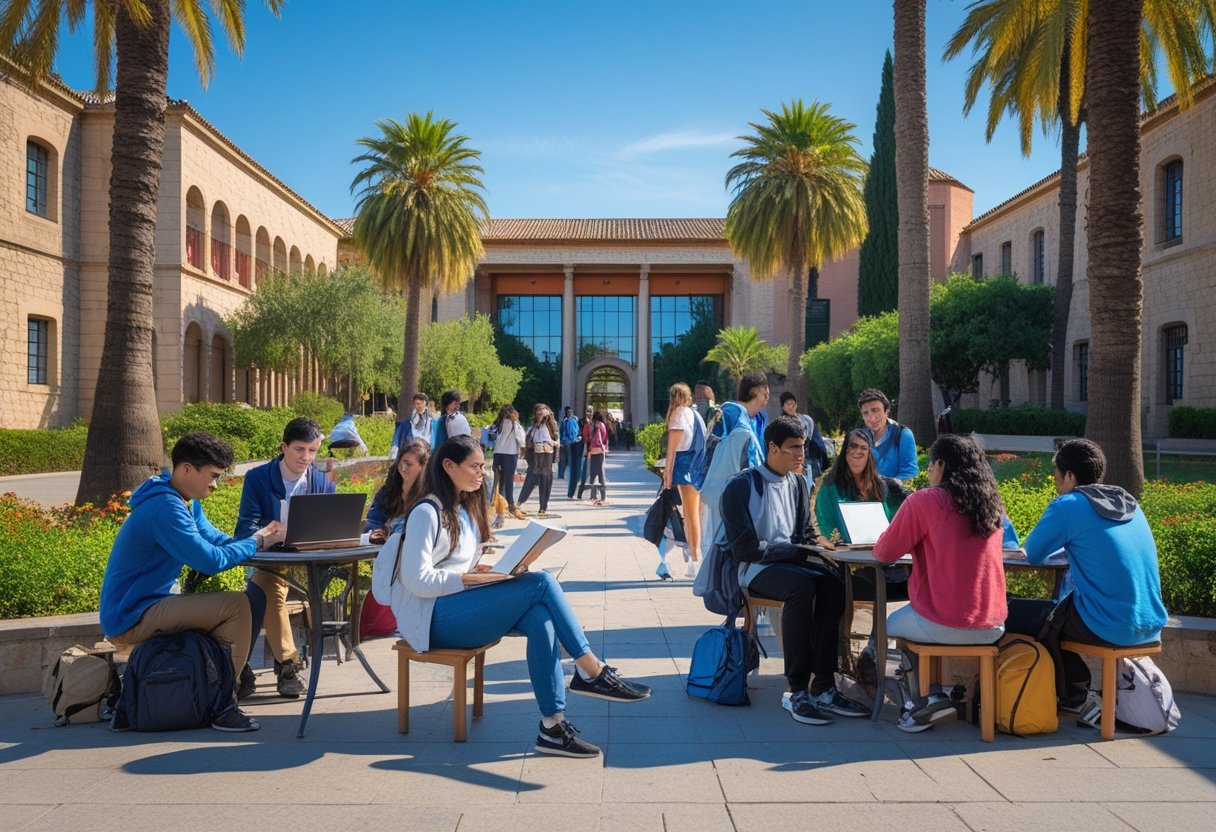
Spain offers a growing number of master’s degree programmes tailored to international students seeking quality education abroad. Many universities provide courses in English and Spanish, allowing students to choose based on their language skills and career goals.

A master’s degree in Spain combines affordable tuition fees, a rich cultural experience, and access to esteemed institutions recognised across Europe and beyond. This makes Spain an attractive destination for international students looking for both academic and personal growth.
Studying in Spain also offers opportunities for networking, internships, and exploring diverse industries. Students benefit from a vibrant student life and the chance to immerse themselves in a country known for its history, innovation, and lifestyle.
Overview of Master’s Programmes in Spain
Spain offers a broad range of master’s programmes designed to cater to diverse academic and professional goals. These programmes vary in degree types, areas of study, and delivery formats, providing options for full-time, part-time, and online learning.
Types of Master’s Degrees Available
Spanish universities primarily offer two types of master’s degrees: Master Universitario and Máster Propio. The Master Universitario is officially recognised and regulated by the Spanish government and the European Higher Education Area (EHEA), allowing holders access to doctoral programmes.
The Máster Propio is a specialised degree created by universities independently. It usually focuses on professional development and may not provide access to PhD studies. These are common in fields like business or technology.
Both degrees generally award a diploma, but the Master Universitario holds more academic weight internationally. The choice depends on career goals and whether the student seeks further research opportunities.
Popular Fields of Study
Master’s degrees in Spain cover a wide array of disciplines. The most sought-after include:
- Business and Management: MBAs and specialised courses in finance or marketing
- Engineering and Technology: Software, telecommunications, and renewable energy
- Humanities and Social Sciences: History, international relations, and education
- Health Sciences: Public health, biomedical sciences, and nursing
- Arts and Design: Fashion, graphic design, and audiovisual communication
Popular fields reflect Spain’s growing economic sectors and international demand, making these programmes attractive for both academic progression and career development.
Duration and Format of Courses
Most master’s programmes in Spain take one to two years to complete. The standard workload is 60 to 120 ECTS credits, with one academic year usually representing 60 credits.
Programmes often offer full-time study but part-time and blended learning options have grown recently. Some universities provide online or hybrid courses to accommodate international students’ schedules.
Classes are mostly held during weekdays, and assessment includes exams, coursework, and a research or professional practice project. The flexibility in format suits students balancing studies with internships or jobs.
Admission Requirements for International Students

International students must meet specific educational, language, and procedural criteria to apply for a master’s degree in Spain. These requirements ensure students are academically prepared and can follow coursework in the language of instruction.
Academic Qualifications
Applicants need a recognised bachelor’s degree or equivalent undergraduate qualification. The degree should ideally be in a field related to the chosen master’s programme. Spain’s universities generally require a minimum GPA, often equivalent to a 2:1 UK degree or higher.
Some programmes may ask for additional documents like transcripts, course descriptions, or letters of recommendation. Equivalency is assessed case-by-case, especially for degrees obtained outside Europe. Certain technical or specialised courses may require practical experience or a portfolio.
English and Spanish Language Proficiency
Proof of language skills is mandatory depending on the medium of instruction. For English-taught programmes, tests such as IELTS (minimum 6.5) or TOEFL (minimum 90) are usually required. Spanish-taught courses typically require DELE or SIELE certification at B2 level or above.
Universities may accept alternative language certifications or interviews as proof. In some cases, students can take language courses before starting their master’s if their proficiency falls slightly below requirements.
Application Process and Deadlines
Applications are submitted directly to the university or via its online platform. Required documents typically include academic records, language certificates, a CV, motivation letter, and sometimes a medical certificate.
Deadlines vary but generally fall between March and July for programmes beginning in September. Early application is advised to allow time for visa processing. Some universities offer rolling admissions but recommend applying well in advance.
Top Spanish Universities Offering Master’s Degrees
Spain has a diverse range of universities known for quality master’s programmes. These institutions vary between public and private, offering specialised courses and international recognition crucial for global career paths.
Leading Public Universities
The University of Barcelona stands out with over 150 master’s programmes, especially strong in sciences and humanities. It benefits from a large research network and extensive Erasmus+ partnerships.
Complutense University of Madrid is one of the oldest and largest universities in Spain. Its master’s courses cover fields like law, economics, and engineering, with affordable tuition fees for international students.
The Autonomous University of Madrid also offers robust master’s degrees, particularly in business and technology. It is well-regarded for its research output and modern campus facilities.
Notable Private Institutions
IE University is prominent for business and international relations master’s degrees. It combines practical learning with global networking opportunities, attracting a diverse student body.
Universidad de Deusto offers master’s programmes in law, social sciences, and management. The university emphasises ethics and social responsibility, which appeals to students seeking a values-driven education.
ESADE Business School provides top-ranked master’s degrees in business administration and finance. It maintains strong links with multinational companies, enhancing internship and job placement prospects.
Internationally Recognised Schools
Pompeu Fabra University in Barcelona is recognised for economics, health sciences, and technology programmes. It consistently ranks well in Europe for research and teaching quality.
The University of Navarra has a global reputation, especially for health sciences and journalism master’s degrees. It draws international faculty and offers extensive scholarship options.
IESE Business School, part of the University of Navarra, is world-renowned for executive education and MBA programmes. Its master’s offerings attract professionals seeking leadership roles in global firms.
Tuition Fees and Cost of Living in Spain
Spain offers a range of tuition fees depending on the university and the programme. Living costs vary by city but generally remain affordable compared to other European countries. Students should plan carefully to manage both tuition and daily expenses during their studies.
Typical Tuition Ranges
Public universities in Spain charge between €1,000 and €3,500 per year for a master’s degree. Fees depend on the autonomous community and the specific course.
Private universities have higher fees, typically ranging from €5,000 to €15,000 annually. Some specialised programmes or MBAs may cost more.
International students can expect similar fees to domestic students at public universities, although some exceptions exist. Scholarships may reduce costs for eligible students.
Estimated Living Expenses
Monthly living expenses in Spain usually fall between €700 and €1,000. This covers accommodation, food, transport, and other essentials.
Rent is the largest expense. In cities like Madrid and Barcelona, shared flats cost around €400 to €600 per month. Smaller cities may offer cheaper options, as low as €300.
Food expenses can be kept to about €150 to €250 per month by shopping locally and cooking at home. Public transport monthly passes cost between €40 and €60 depending on the city.
Budgeting Tips for Students
Students should prioritise affordable housing, preferably shared flats near campus or public transport.
Buying weekly groceries instead of eating out reduces costs significantly. Many cities offer student discounts on transport and cultural activities.
It is wise to allocate funds for unexpected expenses like medical visits or course materials. Opening a local bank account helps avoid international fees and eases payments.
Scholarships and Financial Aid for International Students
Funding options for international students in Spain include government scholarships, university grants, and external funding opportunities. Each source has specific eligibility criteria, application deadlines, and award amounts.
Government Scholarships
The Spanish government offers scholarships for international students through programmes like the MEC-AECID Scholarships. These are aimed at non-EU students and cover tuition fees, monthly stipends, and sometimes travel expenses.
Eligibility often requires academic excellence and acceptance into a recognised Spanish university. Applications usually open in the spring and demand supporting documents such as transcripts and recommendation letters.
Some autonomous communities, like Catalonia and Madrid, provide regional scholarships that international students can also apply for. These tend to be less competitive but offer smaller grants.
University Grants
Many Spanish universities award grants and scholarships directly to international postgraduate students. These are based on merit, financial need, or specific study fields.
For example, Universidad Autónoma de Madrid offers partial tuition waivers and research grants for international master’s students. Eligibility criteria vary between institutions but typically require academic excellence and enrolment confirmation.
Universities list available scholarships on their websites with details about application procedures and deadlines. Students are encouraged to contact the admissions or financial aid office for personalised guidance.
External Funding Opportunities
International students can also pursue scholarships from external organisations such as foundations, cultural institutes, and multinational companies.
Examples include the Fulbright Programme, the Erasmus+ Grant, and country-specific scholarships offered by embassies or development agencies. These awards often cover tuition, living costs, or both.
Application processes for external funding vary in requirements and deadlines. Students should research early and prepare relevant documents like motivation letters, CVs, and academic records.
Student Visa Application Process
Applying for a student visa to study a master’s degree in Spain requires fulfilling specific conditions, gathering necessary paperwork, and following a detailed timeline. These steps must be carefully managed to avoid delays or application rejection.
Eligibility Criteria
Applicants must have official university acceptance for a master’s programme in Spain. The course should exceed 90 days in duration, as shorter stays do not require a student visa.
Applicants must prove sufficient financial means to cover tuition, living expenses, and health insurance for the entire stay. Criminal record checks from the home country may also be requested.
Health insurance valid in Spain is mandatory before the visa is issued. Proof of accommodation or an address in Spain is usually required as well.
Document Preparation
Essential documents include:
- Passport valid for the entire duration of the studies.
- Letter of acceptance or enrolment from the Spanish university.
- Proof of financial resources such as bank statements or scholarship letters.
- Medical certificate confirming good health.
- Health insurance coverage valid in Spain.
Applicants must complete the national visa application form and provide recent passport-sized photos. All documents not in Spanish may need official translation and apostille certification.
Timeline and Important Steps
Applicants should submit their visa application to the Spanish consulate or embassy in their home country at least 1 to 3 months before the course start date.
The visa approval process typically takes 2 to 4 weeks, but this can vary based on consulate workload. Early application is advised to allow for unexpected delays.
After arrival in Spain, students must register with local authorities within 30 days. They also need to apply for a student residence card (TIE) within this period to legalise their long-term stay.
Life as an International Student in Spain
International students in Spain experience a blend of cultural immersion, practical living arrangements, and vibrant social opportunities. They often rely on university resources and local networks to adapt while enjoying a dynamic lifestyle.
Cultural Integration and Support Services
Universities in Spain offer various support services to help international students adjust. These include orientation programmes, language classes, and cultural workshops. Many institutions have dedicated international offices that assist with paperwork, visa issues, and academic queries.
Students can join local clubs or participate in exchange events, which provide chances to meet Spaniards and other internationals. This helps improve Spanish language skills and fosters cultural understanding.
Additionally, some cities provide multicultural centres where newcomers can access counselling and guidance on integration into the community.
Accommodation Options
Accommodation for international students varies widely. University residences are common in major cities like Madrid, Barcelona, and Valencia, offering affordable and convenient living close to campus. These halls often include shared kitchens and social areas to encourage networking.
Private rentals and shared flats are popular among those seeking more independence or specific locations. Websites and agencies specialising in student housing facilitate these arrangements. Costs vary, with central city areas generally more expensive.
Homestays with Spanish families are available in some areas, providing a more immersive cultural experience and language practice. These options should be arranged through trusted programmes or university contacts.
Student Life and Activities
Student life in Spain is lively and diverse, catering to many interests. Universities organise sports teams, arts clubs, and volunteer opportunities. Participation promotes both physical wellness and social connections.
Local festivals and cultural events, such as Feria de Abril or La Tomatina, attract students and offer unique experiences outside the academic sphere.
Nightlife is notable, with cafés, bars, and discos open late, especially in student districts. However, many students balance social activities with focused study schedules.
Public transport is affordable and reliable, facilitating easy access to city centres and nearby attractions for recreational activities.
Frequently Asked Questions
Admission requirements, application procedures, and tuition fees vary significantly for international students pursuing a master’s degree in Spain. Some programmes offer instruction in English, with varying fees depending on the university and course reputation.
What are the eligibility criteria for pursuing a master’s degree at public universities in Spain?
Applicants must hold a recognised undergraduate degree equivalent to a Spanish bachelor’s degree. Some programmes may require specific subject backgrounds or professional experience. Proof of language proficiency in Spanish or English is often necessary depending on the course language.
How can international students apply for master’s programmes in Spain that are taught in English?
Students need to check the university’s official website for available English-taught courses. Application materials generally include academic transcripts, a CV, a motivation letter, and English language test scores like IELTS or TOEFL. Deadlines and additional entrance exams vary by institution.
Which are the top-ranked master’s programmes available in Spain for international candidates?
Popular options include Business Administration (MBA) at IE Business School, Engineering at Universitat Politècnica de Catalunya, and Fine Arts at Universidad Complutense de Madrid. These programmes are well recognised for their academic quality and international orientation.
What are the tuition fees for international students undertaking a master’s degree in Spain?
Fees range widely, typically between €1,000 and €6,000 per year at public universities. Private institutions may charge between €10,000 and €30,000 annually, depending on the course and university prestige. Additional costs include health insurance and living expenses.
Can international students study for a master’s degree in Spain for free, and if so, under what conditions?
Full tuition waivers are rare but sometimes possible through scholarships or grants. European Union citizens may have lower tuition fees, similar to domestic students. Some universities offer financial aid based on academic merit or country of origin.
What is the application process for international students seeking to enroll in master’s courses in Spain?
Applications are submitted online through the university’s admission portal. Required documents include academic records, identification, proof of language proficiency, and sometimes letters of recommendation. Once accepted, students must apply for a student visa if they are non-EU citizens.