


Spain offers a diverse range of top universities known for quality education and affordable tuition. Students can choose from popular courses in business, engineering, arts, and science, among others. Studying in Spain presents excellent opportunities through competitive fees and various scholarships designed to ease financial burdens.

The universities in Spain combine modern facilities with rich cultural experiences, making it an attractive destination for international students. Many institutions offer programs in both Spanish and English, catering to a wide audience. Understanding fees and scholarship options upfront helps students make informed decisions about their education in Spain.
Why Study in Spain?
Spain offers a strong combination of quality education, vibrant cultural experiences, and cost-effective living. These factors attract students from around the world seeking a balanced academic and personal life.
Academic Excellence and Global Recognition
Spain is home to universities that rank well internationally, such as the University of Barcelona and Autonomous University of Madrid. These institutions provide a wide variety of programs taught in both Spanish and English.
The country emphasizes research and innovation, with many universities collaborating on global projects. Degrees from Spanish universities are recognized across Europe through the Bologna Process, facilitating professional mobility.
Many universities offer practical learning opportunities, internships, and connections with industries in sectors like engineering, business, and arts. This practical focus prepares students for competitive job markets worldwide.
Cultural Diversity and Lifestyle
Spain’s diverse regions deliver unique cultural experiences, from the Mediterranean coast to historic cities like Seville and Granada. These varied environments allow students to explore different traditions, languages, and cuisines.
Spanish lifestyle promotes work-life balance with a focus on social interaction, festivals, and outdoor activities. Students can immerse themselves in experiences like flamenco, local markets, and regional celebrations.
International student populations are significant, fostering multicultural campuses. This makes it easier for new students to find communities and support networks while adapting to life abroad.
Affordable Living Costs
Compared to other Western European countries, Spain offers relatively low living expenses. Monthly housing, food, and transportation costs are generally lower, especially outside major cities like Madrid and Barcelona.
Public transportation is efficient and affordable, helping students travel conveniently. Many cities also provide discounts for students on cultural events and public services.
Tuition fees are moderate, particularly at public universities. Combined with the availability of scholarships and part-time job opportunities, Spain becomes financially accessible for international students.
Top Universities in Spain
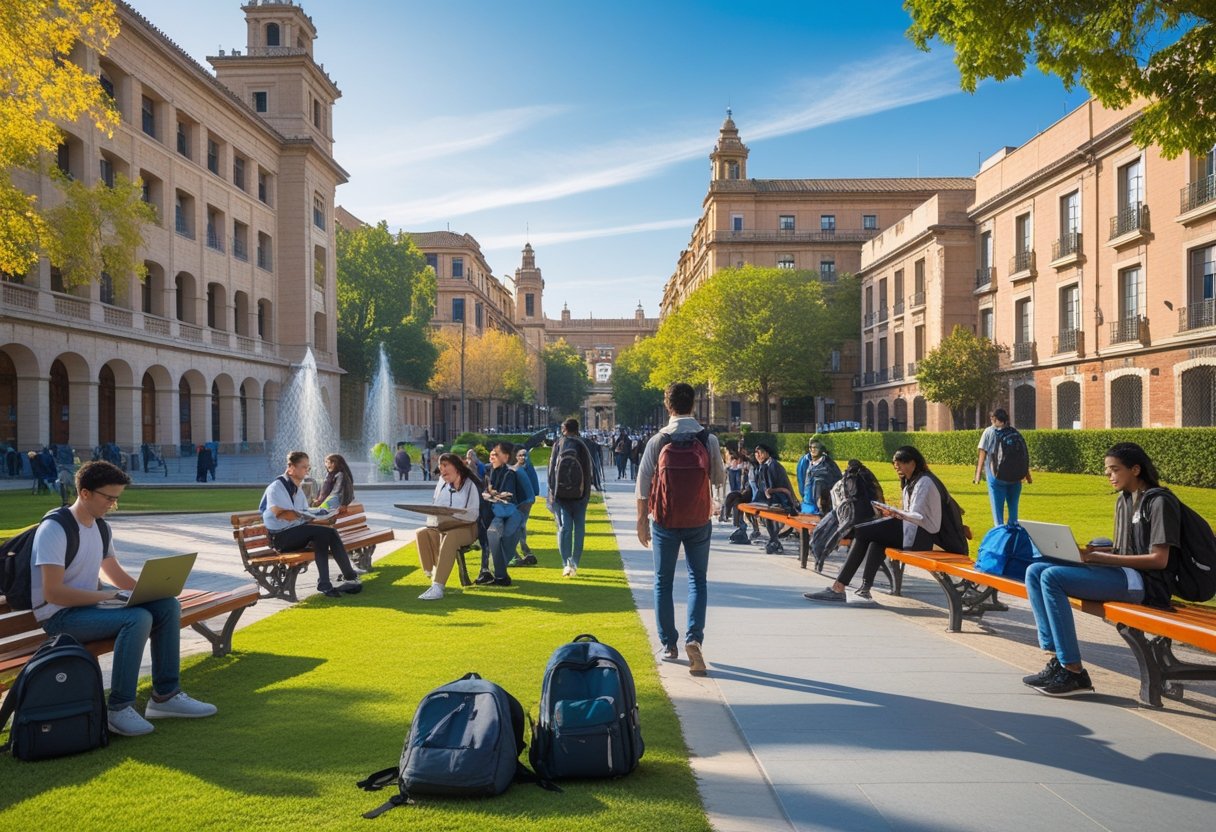
Spain offers a diverse range of universities known for academic rigor and strong research focus. These institutions provide quality education with competitive tuition fees and numerous scholarship opportunities.
University of Barcelona
The University of Barcelona (UB) is one of the oldest and largest universities in Spain. It excels in fields such as humanities, law, economics, and sciences. UB is recognized for its research output and international collaborations.
The campus is located in the city center, offering modern facilities and access to cultural activities. Its programs are mostly taught in Spanish and Catalan, with several master’s and doctoral courses available in English. UB also has a comprehensive scholarship system for international students.
Autonomous University of Madrid
The Autonomous University of Madrid (UAM) is known for strength in science, engineering, and social sciences. It emphasizes research with several research institutes and technology transfer offices.
UAM boasts a well-structured campus with libraries, laboratories, and sports facilities. It provides numerous scholarships aimed at international and EU students. Many graduate programs are taught in English, especially in fields like biotechnology and economics.
Pompeu Fabra University
Pompeu Fabra University (UPF) specializes in economics, political science, and communication. It is highly regarded for its international outlook and small class sizes, encouraging student-teacher interaction.
Located in Barcelona, UPF offers courses primarily in Spanish and English. It has partnerships with global institutions and a strong presence in international rankings. Scholarship options are available, particularly for master’s students and exchange participants.
Complutense University of Madrid
The Complutense University of Madrid (UCM) is one of the largest universities in Spain with a broad range of disciplines. It is prominent in arts, humanities, social sciences, and health sciences.
UCM’s campus includes extensive libraries, research centers, and cultural venues. Programs are mainly delivered in Spanish, though some master’s degrees are offered in English. UCM provides various scholarships tailored for both domestic and international students.
Popular Courses for International Students
Spain offers diverse academic programs with strong industry connections and practical training. Many courses focus on global standards and employability, attracting students worldwide.
Business and Management
Business programs in Spain emphasize international trade, marketing, and finance. Top universities offer MBA degrees and specialized courses in digital marketing, entrepreneurship, and supply chain management.
Students gain exposure to European markets and multicultural business practices. Internships and partnerships with multinational companies are common, enhancing practical skills.
Language options include Spanish, English, or bilingual formats. This flexibility accommodates international students aiming for careers in Europe or Latin America.
Engineering and Technology
Engineering in Spain covers fields like civil, mechanical, electrical, and computer engineering. Programs underline innovation, sustainable development, and modern technologies such as AI and robotics.
Universities offer state-of-the-art labs and collaboration with industries. Students often work on real-world projects and research, improving technical expertise.
Courses frequently include internships and exchanges with European firms. Engineering degrees are recognized across the EU, facilitating career mobility.
Arts and Humanities
Spain has a rich cultural heritage reflected in its arts and humanities courses. Students can study history, literature, philosophy, and fine arts with strong emphasis on European and Spanish contexts.
Programs integrate theory with practical workshops, museum visits, and cultural events. Language studies, including Spanish and regional dialects, are widely available.
Universities encourage interdisciplinary approaches and support creative expression. This prepares students for careers in education, cultural management, or media.
Medicine and Health Sciences
Medical and health sciences programs in Spain are rigorous and research-driven. Courses include medicine, nursing, pharmacology, and public health with a focus on EU medical standards.
Students benefit from clinical rotations in teaching hospitals and training in advanced diagnostic and treatment technologies. Programs often involve collaboration with health institutions.
International students must meet language requirements, with many universities offering courses partially in English. Spain’s healthcare system provides practical experience in diverse settings.
Admission Requirements
Applicants must provide specific academic qualifications, demonstrate language proficiency, and meet strict application deadlines. These essential elements determine eligibility and ensure readiness for studies in Spain.
Academic Qualifications
Candidates applying for undergraduate programs need a secondary school diploma or equivalent. For graduate studies, a relevant bachelor’s degree or equivalent is mandatory.
Universities may require additional documents such as transcripts, curriculum vitae, and letters of recommendation. Some courses, especially in medicine or engineering, demand entrance exams or portfolios.
Recognition of foreign qualifications is necessary, often through official validation or equivalency procedures. Meeting the minimum grade point average set by the university is critical.
Language Proficiency
Spanish-taught programs require a B2 or higher level on the DELE exam or equivalent. Some universities accept other Spanish proficiency tests as proof.
For English-medium courses, IELTS (6.0-6.5) or TOEFL (80-90) scores are commonly accepted. Requirements vary by institution and program level.
Proof of language proficiency must be submitted during application or registration. Applicants are advised to verify specific university standards for language certifications early.
Application Deadlines
Most universities have two main intakes: fall (September) and spring (February). Application deadlines are usually 3-6 months before the start date.
Early applications improve chances of admission and scholarship consideration. International students should account for visa processing time when planning.
Deadlines vary by program and institution, so consulting the university’s official website is essential for accurate dates. Missing deadlines often results in the next intake opportunity.
Tuition Fees and Living Costs
Studying in Spain requires budgeting for tuition and daily expenses. Costs vary between degree levels and cities but remain competitive compared to other European countries. Understanding these expenses helps students plan their finances effectively.
Undergraduate Tuition Fees
Public universities in Spain charge tuition fees ranging from €750 to €2,000 per academic year for undergraduate programs. The variation depends on the university and the specific course of study. Medicine and engineering tend to be at the higher end of this range.
Private universities charge significantly more, with annual fees between €6,000 and €20,000, depending on the institution and specialization. International students usually pay the same tuition as domestic students at public universities but should confirm each university’s policy.
Additional costs like registration fees and exam fees can add a few hundred euros annually but are generally minor compared to tuition.
Postgraduate Tuition Fees
Postgraduate programs at public universities typically cost between €1,000 and €4,000 per year. Business and specialized master’s courses may fall at the upper end or above this range. Some programs, especially MBAs, can cost up to €15,000 at both public and private institutions.
Private university fees for postgraduate courses are usually higher, ranging from €7,000 to €25,000 annually. Scholarships or assistantships may help reduce costs.
Students should verify fees for specific master’s programs, as these vary greatly by university and subject.
Accommodation and Daily Expenses
Monthly living costs in Spain depend on the city. In major cities like Madrid or Barcelona, students can expect to pay €400 to €700 for shared apartments and €700 to €1,200 for private studios.
Food, transportation, and utilities average around €300 to €400 per month. Public transportation passes cost about €40 to €60 monthly in larger cities.
Student residence halls offer more affordable options, typically between €250 and €500 a month, often including some utilities. Students should also budget for study materials and personal expenses, which can add another €50 to €100 monthly.
Scholarships and Financial Aid
Students in Spain can access a variety of financial support options, including government grants, university scholarships, and international funds. Each source has distinct eligibility criteria and benefits that cater to different student needs.
Government Scholarships
The Spanish government offers scholarships mainly through the Ministry of Education, Culture and Sport. These scholarships typically support undergraduate and postgraduate studies.
Applicants must usually demonstrate academic merit and financial need. Some programs target specific groups, such as low-income families or students from underrepresented regions.
Amounts vary, but many cover tuition fees partially or fully and sometimes include allowances for living expenses. Deadlines and application procedures are announced annually on official government websites.
University-Specific Scholarships
Many Spanish universities provide their own scholarships to attract top talent. These are often merit-based or designed to assist students facing financial challenges.
For example, the University of Barcelona and Complutense University of Madrid offer scholarships with benefits such as tuition reductions, monthly stipends, or research grants.
Application requirements can include academic transcripts, motivation letters, and recommendation letters. Students should check individual university websites for detailed criteria and deadlines.
International Scholarships
Several scholarships target international students aspiring to study in Spain. The Erasmus+ program is a prominent example, enabling exchange students to receive funding for short-term studies.
Additionally, organizations like Fundación Carolina provide scholarships for Latin American and other international students, covering tuition and living costs.
Certain bilateral agreements between Spain and other countries also offer financial aid. Students should investigate options related to their home country or university partnerships.
Student Visa Process
Obtaining a student visa for Spain involves specific categories, clear application steps, and a set of required documents. Each part plays a crucial role in securing legal permission to study.
Types of Student Visas
Spain offers several types of student visas based on the course duration and study level.
The short-term student visa is for courses lasting less than 90 days. It is ideal for language courses or exchange programs.
The long-term student visa applies to programs over 90 days, including undergraduate, postgraduate, and research studies. This visa also allows limited work hours, typically up to 20 hours per week.
There are also visas for traineeships and internships if linked to academic programs.
Application Procedure
Students must apply at the Spanish consulate or embassy in their home country before arriving.
The process begins with filling out the visa application form online or on paper. An appointment is required for document submission and biometric data collection.
Consulates typically process applications within 15-30 calendar days. Early application is recommended, ideally 1 to 3 months before the course start date.
Fees vary but usually range around €60-€80. After approval, students receive a visa sticker in their passport allowing entry into Spain.
Required Documents
Applicants must present a completed visa form and a valid passport with at least six months’ validity beyond the stay.
Proof of enrollment or acceptance from a recognized Spanish educational institution is mandatory.
Applicants also need to show financial means. This can include bank statements or scholarship letters proving enough funds to cover tuition and living expenses.
Health insurance covering the entire stay in Spain is a must. Police clearance certificates and medical certificates may also be requested.
A recent passport-sized photograph following visa photo guidelines is required along with the visa fee receipt.
Student Life in Spain
Student life in Spain balances academic resources with social and cultural activities. Universities provide modern facilities and services to support student needs, promoting a well-rounded campus experience.
Campus Facilities
Spanish universities typically offer well-equipped libraries with extensive digital and physical collections. Many campuses include advanced computer labs and multimedia centers to support various fields of study.
Sports facilities are common, with gyms, swimming pools, and outdoor fields for football, basketball, and other activities. On-campus housing is available at several universities, often featuring communal areas to foster interaction.
Cafeterias and study lounges provide comfortable spaces for meals and group work. Wi-Fi access is generally widespread, ensuring students stay connected throughout the campus.
Extracurricular Activities
Universities in Spain encourage students to join clubs and societies related to sports, arts, culture, and professional development. Popular options include language exchange groups, theater clubs, and volunteer organizations.
Annual events and festivals organized by student unions offer opportunities to engage in cultural traditions and make social connections. Some universities host international student days to promote diversity.
Sports teams compete at local and national levels, boosting school spirit. Workshops and seminars facilitate skill-building outside the classroom.
Integration and Support Services
Most universities provide dedicated offices for international student support, helping with visa processes, accommodation, and orientation. Language support services offer Spanish classes for non-native speakers.
Counseling and mental health services are accessible, aiming to assist students facing academic or personal challenges. Career services help prepare students for internships and job placements with resume reviews and interview guidance.
Peer mentoring programs connect new students with experienced ones, easing adaptation. Many institutions also promote inclusion initiatives targeting diverse student populations.
Employment Opportunities After Graduation
Students graduating from Spanish universities have access to specific visa options, growing job sectors, and career support services to aid in employment. Understanding visa regulations, key industries, and available resources is essential for maximizing post-study job prospects in Spain.
Post-Study Work Visas
Spain offers a residence permit for job seekers called the “Student Residence Permit Extension.” Graduates can apply for this permit to stay for up to 12 months after completing their studies to seek employment or start a business.
To qualify, they must have completed a degree or higher qualification in Spain. The extension does not grant work rights immediately but allows time to find a job or an entrepreneurial opportunity. Once employed, graduates should apply for a work visa or residence permit linked to employment.
Additionally, Spain participates in the EU Blue Card program, which facilitates work permits for highly skilled workers, often relevant to international graduates with in-demand qualifications.
Job Sectors in Demand
Spain’s economy prioritizes several sectors where graduates typically find employment:
- Information Technology (IT): Software development, cybersecurity, and data analysis are growing fields.
- Tourism and Hospitality: Roles in hotel management, event planning, and travel agencies are common due to Spain’s tourism industry.
- Engineering and Renewable Energy: Civil, mechanical, and environmental engineers benefit from investment in sustainable energy projects.
- Health and Social Care: Nursing and healthcare support roles have consistent demand, especially for EU-qualified professionals.
- Business and Finance: Graduates with skills in finance, marketing, and international trade are sought after, especially in cities like Madrid and Barcelona.
Proficiency in Spanish increases employability, particularly in client-facing roles and smaller companies.
Career Support Services
Many universities in Spain provide dedicated career centers offering services such as:
- CV and interview preparation tailored to the Spanish job market.
- Job fairs connecting students with local and multinational employers.
- Internship and apprenticeship placement programs.
- Networking events and workshops focused on industry skills.
These centers often maintain relationships with companies actively seeking graduates. Additionally, alumni networks and online portals help access job listings and professional contacts.
Private agencies and government employment offices also offer support to graduates seeking work experience or permanent positions.
Tips for Successful Application
Applicants should start by carefully reviewing the specific admission requirements of each university. These can vary widely depending on the program and level of study.
It is crucial to prepare all necessary documents well in advance. Common documents include transcripts, letters of recommendation, a statement of purpose, and proof of language proficiency, such as IELTS or TOEFL scores.
Meeting deadlines is essential. Universities in Spain typically have strict submission dates, so applicants should track these on official university websites or admission portals.
Being clear and concise in the statement of purpose helps highlight academic goals and motivation. This document should align closely with the chosen course and demonstrate the applicant’s interest and preparation.
Applicants are advised to verify visa requirements early. Obtaining a student visa can take time, so starting this process shortly after admission confirmation reduces delays.
Language proficiency matters. While many programs are offered in English, a basic understanding of Spanish can improve integration and daily life in Spain.
| Tip | Reason |
|---|---|
| Check requirements early | Avoid missing important criteria |
| Prepare documents timely | Smooth application process |
| Meet deadlines | Prevent rejection or delays |
| Write a clear statement | Show motivation effectively |
| Start visa process soon | Avoid last-minute issues |
| Improve Spanish skills | Easier cultural adaptation |