

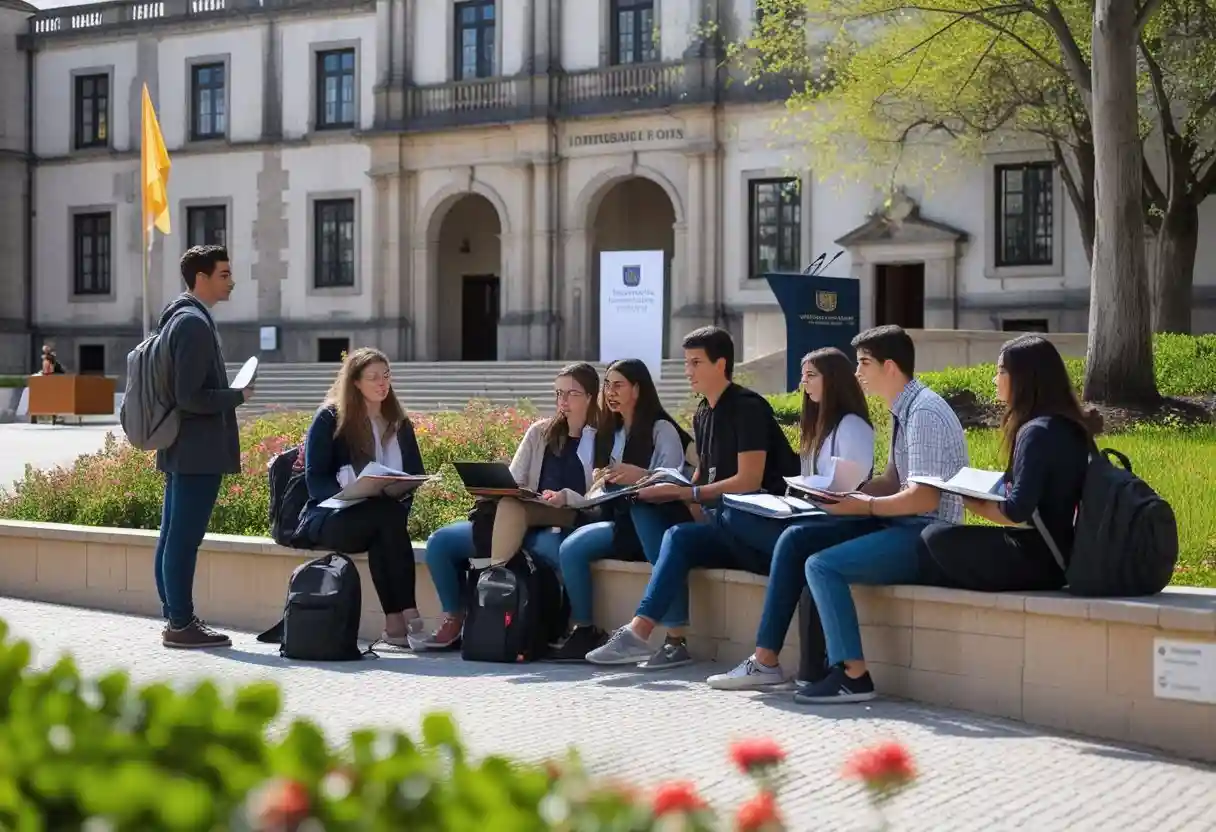
The University of Évora offers competitive tuition fees that make it an attractive option for both local and international students. Tuition fees vary depending on the program but generally remain affordable compared to other European universities. Admission requirements include academic transcripts, proof of language proficiency, and specific criteria depending on the degree level.
Scholarships are available to support students based on merit and financial need, helping to reduce the financial burden. The university’s QS World University Ranking reflects its growing reputation, placing it among recognized institutions in Portugal and Europe, which adds value to the degree earned there.
Overview of University of Évora
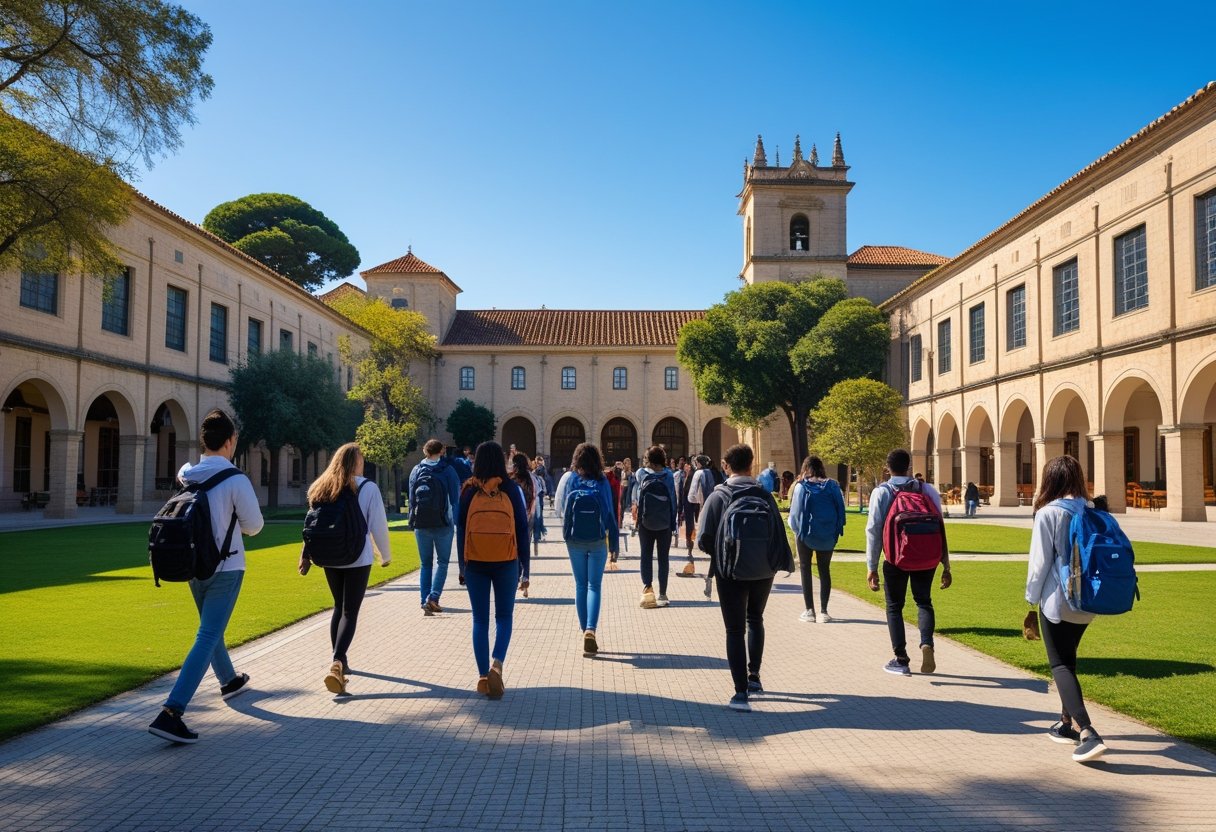
The University of Évora is a public university located in Évora, Portugal. It is one of the oldest higher education institutions in the country, founded originally in 1559 and re-established in 1973.
The university offers a wide range of undergraduate, graduate, and doctoral programs across various fields such as arts, science, technology, and humanities. It is known for combining tradition with modern teaching methods.
Key facts about the University of Évora:
| Attribute | Details |
|---|---|
| Location | Évora, Portugal |
| Year Established | 1559 (re-founded in 1973) |
| Type | Public University |
| Student Population | Approximately 8,000 |
| Academic Structure | Faculties, research centers |
The campus features historical buildings mixed with modern facilities. It supports research innovation and community engagement.
University of Évora places emphasis on international collaboration and has partnerships with numerous global institutions. It also encourages student mobility through exchange programs.
University of Évora Tuition Fees
Tuition fees at the University of Évora vary based on the program level and residency status. Costs are clearly defined for undergraduate and postgraduate studies. Payment options and schedules offer flexibility to students. Additional expenses must also be considered.
Undergraduate Tuition Fees
Undergraduate tuition fees for Portuguese and EU students typically range from €760 to €1,500 per academic year. The exact amount depends on the specific degree program and credit load.
Non-EU international students usually pay higher fees, often between €2,000 and €3,500 annually. These fees align with the program’s structure and course requirements.
Additional registration fees apply each semester, generally around €50 to €75. These charges cover administrative and student services.
Postgraduate Tuition Fees
Postgraduate fees are higher than undergraduate fees and vary by course type.
Master’s programs for EU students generally cost between €1,200 and €2,000 per year. Research-based and professional programs may exceed this range.
Non-EU postgraduate students pay between €2,500 and €4,000 yearly, depending on the discipline.
PhD fees follow a similar structure but can include arrangements based on research projects and funding.
Payment Methods and Deadlines
Students can pay tuition fees via bank transfer, credit/debit card, or in-person at the university’s finance office.
Payment deadlines occur before the start of each semester. Typically, the first installment is due in September for the academic year and the second in February.
Late payments may incur penalties or prevent course registration.
Installment options may be available, subject to university approval.
Additional Costs
Students should budget for supplementary expenses, such as laboratory fees, study materials, and administrative costs.
Accommodation and transportation are not included in tuition but represent significant costs for many.
Health insurance is mandatory for non-EU students, with fees varying by provider and coverage.
Optional services like meal plans or gym memberships carry separate fees.
Admission Requirements
The University of Évora sets specific criteria tailored to different academic levels. These encompass academic qualifications, application procedures, and language proficiency benchmarks necessary for admission.
Undergraduate Entry Criteria
Applicants for undergraduate programs must have completed secondary education equivalent to the Portuguese 12th-grade diploma. Specific subject prerequisites vary by degree but generally include a focus on relevant scientific or humanities areas.
Entrance may require passing entrance exams or submitting national exam scores, depending on the program. International students must provide certified copies of diplomas and transcripts. The university also evaluates candidates’ motivation letters and, occasionally, interviews.
Postgraduate Admission Process
For master’s or doctoral programs, candidates must hold a relevant bachelor’s or master’s degree, respectively. Academic transcripts and proof of degree completion are mandatory.
Additional documentation includes a curriculum vitae, research proposal (for doctoral programs), and two letters of recommendation. Some programs demand specific entrance exams or interviews. International students must also meet visa and residency requirements.
Language Proficiency Standards
Courses are primarily taught in Portuguese, so applicants must demonstrate proficiency in the language. This is typically proven by certificates such as the Diploma de Português Língua Estrangeira (DIPLE) or equivalent.
Certain programs offer courses in English and accept IELTS (minimum 6.0) or TOEFL (minimum 80) scores. Proof of language skills is required at the time of application and is critical for non-native speakers.
Application Process and Important Dates
The University of Évora requires a clear application process with specific documentation deadlines. Candidates must prepare carefully to meet the university’s requirements on time.
Required Documents
Applicants must submit the following documents: a completed application form, a copy of their valid ID or passport, and official academic transcripts. For international students, a certificate of Portuguese language proficiency is necessary.
Additional requirements include a motivation letter and two letters of recommendation. Depending on the program, a portfolio or research proposal may also be required.
All documents should be officially translated into Portuguese or English if not originally in those languages. Copies must be certified, and originals may be requested during enrollment.
Application Timeline
The general application period opens in March and closes by the end of June for the autumn semester. Late applications are typically not accepted except under special circumstances.
Applicants will receive admission decisions by mid-July. Those applying for scholarships should meet earlier deadlines, usually in May, to allow time for processing.
Enrollment and registration deadlines fall in August. Missing these dates can result in the loss of admission or scholarship offers.
Scholarships and Financial Aid
The University of Évora offers various financial support options for students based on academic performance and financial need. Applicants must meet specific criteria and follow clear steps to apply.
Merit-Based Scholarships
Merit-based scholarships reward students with strong academic records. These scholarships often require a minimum GPA and evidence of outstanding achievements during previous studies.
The university prioritizes candidates demonstrating excellence in subjects relevant to their chosen degree. Scholarships may cover partial or full tuition fees, sometimes including a monthly stipend.
Students receiving merit-based awards must maintain a high academic standard throughout their studies. Renewal depends on continuous performance reviews each semester.
Need-Based Financial Support
Need-based financial aid targets students with limited economic resources. Applicants submit proof of income, family expenses, and other financial documentation.
The support can include tuition fee reductions, monthly allowances, or accommodation assistance. Priority is given to students with challenging financial backgrounds who would otherwise be unable to continue their education.
This aid is subject to annual reassessment. Students must provide updated financial information regularly to remain eligible.
Scholarship Application Procedure
The application process requires submitting an online form through the university’s portal by specified deadlines. Supporting documents include transcripts, financial statements, and letters of recommendation.
Applicants must clearly state the scholarship type they seek (merit-based or need-based). Selection involves an evaluation committee reviewing academic merits and financial documents.
Final decisions are communicated within a few weeks after the deadline. Successful candidates receive official award letters outlining terms and conditions.
QS World Ranking of University of Évora
The University of Évora is evaluated by QS to measure its global academic reputation, research impact, and teaching quality. Its ranking reflects factors like faculty research output, employer reputation, and internationalization. These aspects show how the university stands on both national and international stages.
Current QS World Ranking Status
As of the latest QS World University Rankings, the University of Évora holds a position within the 801-1000 band globally. It is not ranked among the top universities but has shown steady improvements in recent years. Nationally, it ranks among the recognized public universities in Portugal.
The university performs best in specific areas such as social sciences and humanities. It faces challenges competing with more prominent research-intensive institutions. However, its inclusion in the rankings highlights its commitment to enhancing academic standards.
Ranking Methodology
QS uses six key indicators to assess universities: Academic Reputation (40%), Employer Reputation (10%), Faculty/Student Ratio (20%), Citations per Faculty (20%), International Faculty Ratio (5%), and International Student Ratio (5%). The University of Évora scores more highly in teaching quality and reputation.
Research output, measured through citations, is a critical indicator where the university has room for growth. Its internationalization scores are moderate due to ongoing efforts to increase foreign faculty and students. These metrics provide a balanced view of strengths and weaknesses.
University of Évora Performance in Rankings
The university’s academic reputation score benefits from its long history and role in regional education. Employer reputation is steady but lower compared to larger Portuguese universities. Faculty-to-student ratio is favorable, reflecting smaller class sizes and personalized teaching.
Citation impact is currently the weakest metric, limiting its climb in global ranking positions. The university aims to boost research publications and collaborations to improve this area. Efforts to diversify international partnerships are underway to enhance global visibility.
International Student Experience
International students at the University of Évora benefit from tailored assistance and resources that ease their transition. The city itself offers a balanced lifestyle combining affordability and cultural richness, which supports both academic and personal growth.
Support Services for International Students
The university provides a dedicated International Relations Office that assists students with enrollment, visa procedures, and orientation. Language support is available through Portuguese courses designed to improve communication skills and integration.
Counseling services are offered to address academic and personal challenges. Workshops on adaptation, culture shock, and career planning help students adjust to life in Portugal.
Key support features include:
- Orientation programs before the semester starts
- Assistance with accommodation searches
- Access to student networks and international clubs
These services aim to create a supportive environment throughout the study period.
Living in Évora
Évora is a small, historic city with a population under 60,000, offering a calm and personal atmosphere. Housing costs are generally lower than in Portugal’s major cities, with shared apartments costing between €150–€300 per month.
Public transportation is limited but affordable, with several bus lines connecting key areas. Biking and walking are common due to the city’s compact size.
Daily expenses such as food, utilities, and leisure are manageable on a student budget, with groceries averaging around €150 monthly. Local markets and affordable dining options are easily accessible.
Safety is high, and the city’s cultural heritage, including UNESCO World Heritage sites, provides enriching opportunities outside of academic life.
Frequently Asked Questions
The University of Évora has specific tuition fees based on program type. Admission requires defined academic qualifications. Scholarship options target both domestic and international candidates. Its QS World Ranking positions it among emerging universities. Application deadlines and acceptance rates vary by faculty.
What are the tuition fees for various programs at the University of Évora?
Tuition fees for bachelor’s degrees typically range from €1,000 to €1,500 per academic year. Master’s programs may cost between €1,200 and €2,000 annually. Fees vary depending on the course and student residency status.
What are the general admission requirements for undergraduate courses at the University of Évora?
Applicants must have completed secondary education equivalent to the Portuguese 12th grade. Proof of proficiency in Portuguese or English is often required. Entrance exams or specific subject prerequisites apply to some programs.
What scholarship opportunities does the University of Évora offer to international students?
The university offers merit-based scholarships and need-based financial aid. Some scholarships cover tuition partially or fully. International students can apply through the university’s International Relations Office.
Where does the University of Évora rank in the latest QS World University Rankings?
In the most recent QS rankings, the University of Évora is placed within the 801-1000 band globally. It is recognized for academic reputation and research impact in select fields.
What is the deadline for submitting an application to the University of Évora?
The main application deadline for undergraduate courses is usually in mid-July. Master’s program deadlines vary, often between June and September. Early application is recommended to ensure consideration.
What is the acceptance rate for prospective students at the University of Évora?
The acceptance rate is estimated to be between 60% and 70%. Rates fluctuate depending on program demand and available capacity. Competitive programs may have lower acceptance rates.